

We help caregivers perform their jobs more efficiently and enhance patient care.
Stryker is one of the world’s leading medical technology companies and, together with our customers, is driven to make healthcare better. We offer innovative products and services in Orthopaedics, Medical and Surgical, and Neurotechnology and Spine that help improve patient and hospital outcomes.
Together with our customers, we are driven to make healthcare better.
At Stryker, quailty is first in everything we do. We are driven to make healthcare better for our customers by providing innovative products and services that meet regulatory requirements through our effective quality system.

Dr. Antonio M. Lacy, Dr. Alberto Arezzo, Dr. Delia Cortes, Dr. Daniel Hashimoto, Dr. Salva Morales, Dr. Debby Keller, Dr. Venkatesh Munikrishnan, Dr. John Marks, Dr. Pietro Valdastri and Dr. Richard J. Heald present The Future of Colorectal Surgery. Program: Part 1: Automated colonoscopy - Dr. Pietro Valdastri AI in Surgical workflows - Dr. Daniel Hashimoto AI Robotics - Dr. Venky Munikrishnan Telementoring using 5G - Dr. Antonio M. Lacy Discussion - All faculty moderated by Dr. Antonio M. Lacy and Dr. Manish Chand Part 2: Smart fluorescence – beyond ICG - Dr. Delia Cortes Endoluminal robotics – The Future of MIS - Dr. Alberto Arezzo ICG and uses in GI Surgery - Dr. Salva Morales Single port robotics - Dr. John Marks Modern Approaches to Rectal Cancer - Dr. Richard J. Heald Discussion - All faculty moderated by Dr. Steve Wexner and Dr. Manish Chand Closing remarks - Dr. Steve Wexner, Dr. Antonio M. Lacy and Dr. Manish Chand
Published
Dec 2020
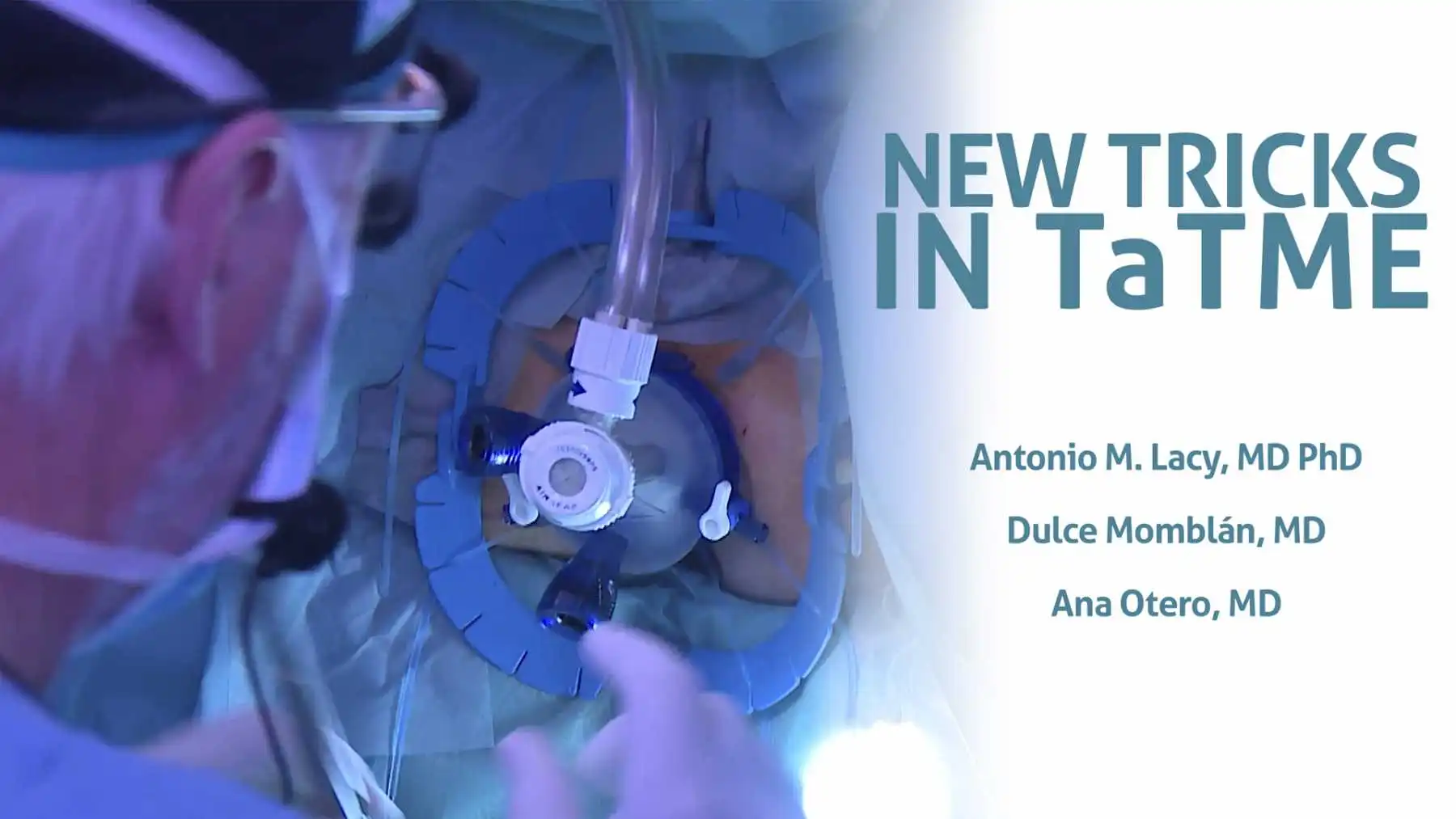
Minimal invasive surgery for locally advanced rectal cancer is challenging and requires advanced technological assistance to make the procedure feasible and safe. The Transanal Total Mesorectal Excision is an innovative approach for rectal cancer. It provides several advantages compared to the fully laparoscopic technique. Issues such as transection of the distal margin and difficult cases may have found a solution with this procedure. You have been able to see this procedure many times on AIS Channel. This time we want to show you transanal surgery from another point of view. This surgery will focus on the main steps for the combined transanal and transabdominal approach (Cecil approach) for rectal cancer, highlighting the most frequent mistakes and how to prevent them. Program: Minimal invasive surgery for locally advanced rectal cancer is challenging and requires advanced technological assistance to make the procedure feasible and safe. The Transanal Total Mesorectal Excision is an innovative approach for rectal cancer. It provides several advantages compared to the fully laparoscopic technique. Issues such as transection of the distal margin and difficult cases may have found a solution with this procedure. You have been able to see this procedure many times on AIS Channel. This time we want to show you transanal surgery from another point of view. This surgery will focus on the main steps for the combined transanal and transabdominal approach (Cecil approach) for rectal cancer, highlighting the most frequent mistakes and how to prevent them.
Published
Apr 2018
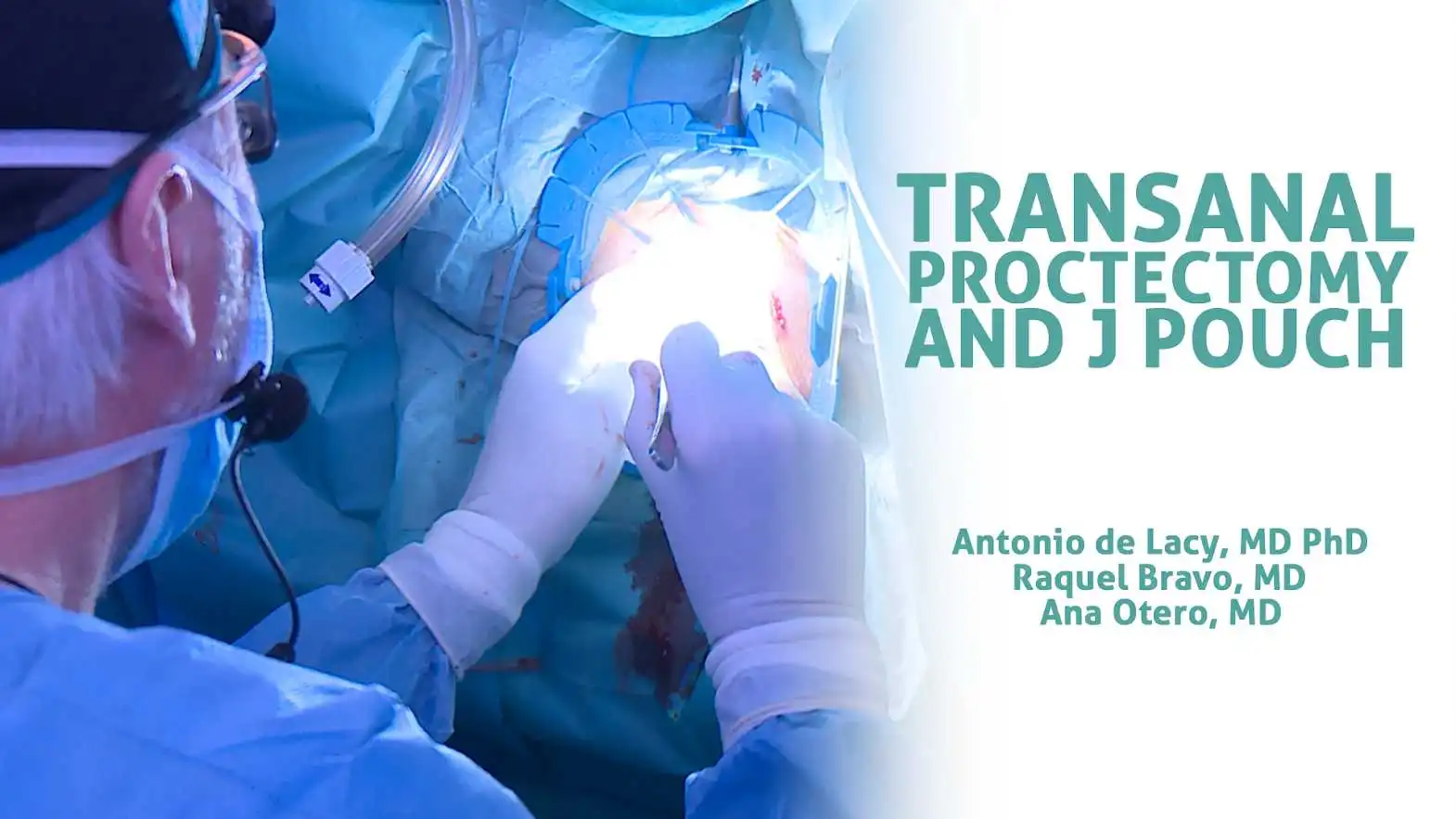
Ulcerative colitis (UC) usually involves the rectum and may extend proximally to the rest of the colon. In an emergency setting, total colectomy with a terminal ileostomy is usually performed. In selected cases, the emergency surgery is followed by further completion of the proctectomy with a J-pouch and an ileal pouch-anal anastomosis (IPAA). Total mesorectal excision has been the preferred way to perform the proctectomy, although a close rectal dissection (CRD), without following the holy plane, has also been described and has the potential to better preserve the autonomic function. The transanal approach has evolved and is no longer limited to oncological indications, but can also be used in cases of UC requiring surgery. Hybrid transanal CRD seems to be a valid alternative for proctectomy. Program: Ulcerative colitis (UC) usually involves the rectum and may extend proximally to the rest of the colon. In an emergency setting, total colectomy with a terminal ileostomy is usually performed. In selected cases, the emergency surgery is followed by further completion of the proctectomy with a J-pouch and an ileal pouch-anal anastomosis (IPAA). Total mesorectal excision has been the preferred way to perform the proctectomy, although a close rectal dissection (CRD), without following the holy plane, has also been described and has the potential to better preserve the autonomic function. The transanal approach has evolved and is no longer limited to oncological indications, but can also be used in cases of UC requiring surgery. Hybrid transanal CRD seems to be a valid alternative for proctectomy.
Published
Feb 2018
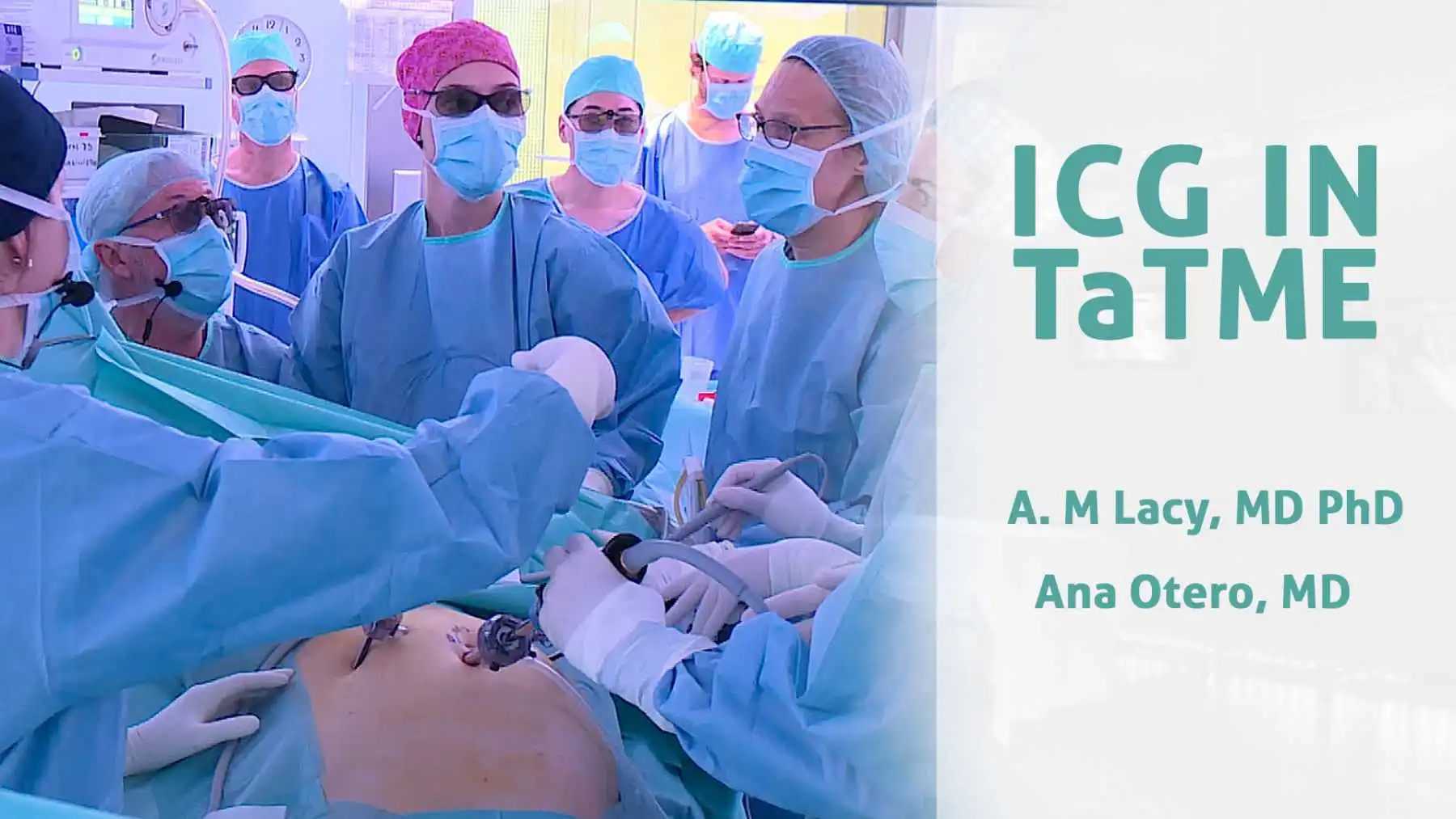
The etiology of anastomotic leaks is a multifactorial problem. Besides technical aspects, adequate bowel perfusion is the main factor in ensuring the integrity of an anastomosis. Current literature suggests that additional visualization of tissue perfusion with fluorescence imaging-indocyanine green can add relevant information to determine a well-perfused location for colorectal transections, thus leading to fewer leaks. Low/ultralow rectal anastomoses in transanal total mesorectal excisions (TaTME) have a higher risk for leak for this reason ICG should be considered a routine assessment for taTME, as a guide for the creation of a successful anastomosis. On September 15, Antonio Lacy and Ana Otero demonstrated the usefulness of perfusion assessment using the PINPOINT Endoscopic Fluorescence Imaging System ® (Novadaq) in taTME for rectal cancer by the Cecil approach. Program: The etiology of anastomotic leaks is a multifactorial problem. Besides technical aspects, adequate bowel perfusion is the main factor in ensuring the integrity of an anastomosis. Current literature suggests that additional visualization of tissue perfusion with fluorescence imaging-indocyanine green can add relevant information to determine a well-perfused location for colorectal transections, thus leading to fewer leaks. Low/ultralow rectal anastomoses in transanal total mesorectal excisions (TaTME) have a higher risk for leak for this reason ICG should be considered a routine assessment for taTME, as a guide for the creation of a successful anastomosis. On September 15, Antonio Lacy and Ana Otero demonstrated the usefulness of perfusion assessment using the PINPOINT Endoscopic Fluorescence Imaging System ® (Novadaq) in taTME for rectal cancer by the Cecil approach.
Published
Sep 2017





Colorectal Surgery


Colorectal Surgery

Colorectal Surgery


Colorectal Surgery



Colorectal Surgery

Colorectal Surgery




Colorectal Surgery
Share it with your network and help spread clinical knowledge.