
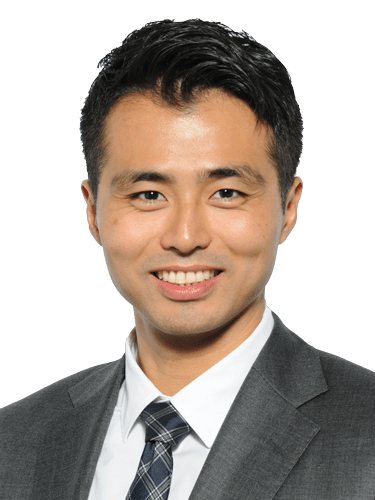
General Surgery
MD, MS, Assistant Professor, Department of Surgery, University of Pennsylvania Perelman School of Medicine, Senior Fellow, Institute for Biomedical Informatics and Director, Penn Computer Assisted Surgery and Outcomes (PCASO) Laboratory; Assistant…
Dr. Daniel Hashimoto graduated from Boston University with a degree in biology/neuroscience and completed his medical degree and master's of science in translational research degrees at the University of Pennsylvania Perelman School of Medicine. His general surgery training was completed at Massachusetts General Hospital and Harvard Medical School. Subsequently, he completed a fellowship in foregut surgery and comprehensive flexible endoscopy at University Hospitals Cleveland Medical Center. Dr. Hashimoto currently holds the position of assistant professor of surgery at HUP and is affiliated faculty in the Penn School of Engineering and Applied Science's General Robotics, Automation, Sensing, and Perception (GRASP) Laboratory.
He is dedicated to working closely with patients to help them achieve their goals for their gastrointestinal conditions. Dr. Hashimoto offers surgical and endoscopic treatments for gastrointestinal diseases, with a specific interest in disorders of the foregut, including diaphragmatic/paraesophageal hernias, gastroesophageal reflux (GERD), diaphragm dysfunction and paralysis, achalasia, and other GI motility disorders. He provides complex minimally invasive approaches to diseases such as robotic paraesophageal and hiatal hernia repair, per oral endoscopic myotomy (POEM) for achalasia, ZPOEM for Zenker's diverticulum, laparoscopic common bile duct exploration, endoscopic GI tract defects such as strictures and leaks, diaphragm pacing, and robotic abdominal wall hernia repair and reconstruction. Additionally, he offers bariatric endoscopy procedures including endoscopic sleeve gastroplasty and transoral outlet reduction.
Dr. Hashimoto's laboratory, the Penn Computer Assisted Surgery and Outcomes (PCASO) Laboratory, focuses on using technology to enhance surgeon performance and decision-making, particularly in the translation of artificial intelligence and computer vision for surgical video analysis. He has authored over 60 publications in prestigious journals such as the New England Journal of Medicine, Nature Biotechnology, and Annals of Surgery, and serves as the editor of the textbook Artificial Intelligence in Surgery: Understanding the Role of AI in Surgical Practice.
Selected publications from PubMed
Integrating Artificial Intelligence and Technology in Surgical Practice.
Boyd N, Hashimoto DA, DeLong JC
Surg Clin North Am. 2026 Oct;106(5):663-673 doi: 10.1016/j.suc.2026.04.004.
Conversion surgery for unresectable pancreatic ductal adenocarcinoma with liver metastasis at initial diagnosis: a nationwide multicenter study.
Hashimoto D, Ikeura T, Maekawa A, Nakajima T, Ishido K, Hayasaki A, Asano T, Hayashi M, Yoshioka I, Ishii H, Kimura A, Motobayashi H, Murakawa M, Okada K, Abe T, Hirooka Y, Imamura M, Kamei K, Kobayashi S, Maruo T, Matsumoto J, Miyabe K, Nagai M, Nakashima S, Shindo Y, Shinzeki M, Suzuki S, Suzuki T, Tanaka M, Tanno S, Yokota T, Murotani K, Nakai Y, Inoue Y, Mizuma M, Unno M, Matsumoto I, Fujii T, Uemura K, Sho M, Hirano S, Satoi S, Masamune A, Takeyama Y, A project study group of the Japan Pancreas Society
J Gastroenterol. 2026 Sep;61(9):1346-1360 doi: 10.1007/s00535-026-02432-2.
Regulating digital surgery to balance safety and innovation: a SAGES white paper.
Guzman NM, Marwaha JS, Keller DS, Feldman LS, Hashimoto DA, Madani A, Telem DA
Surg Endosc. 2026 Jul;40(7):5480-5490 doi: 10.1007/s00464-026-12875-6.
Surgeons' awareness, expectations, and involvement with artificial intelligence: a survey pre and post the GPT era.
Arboit L, Schneider DN, Collins T, Hashimoto DA, Perretta S, Dallemagne B, Marescaux J, EAES Working Group, Padoy N, Mascagni P
Eur J Surg Oncol. 2025 Dec;51(12):110525 doi: 10.1016/j.ejso.2025.110525.
Artificial intelligence and the education of future surgeons.
Leon S, Lee S, Perez JE, Hashimoto DA
Am J Surg. 2025 Aug;246:116257 doi: 10.1016/j.amjsurg.2025.116257.
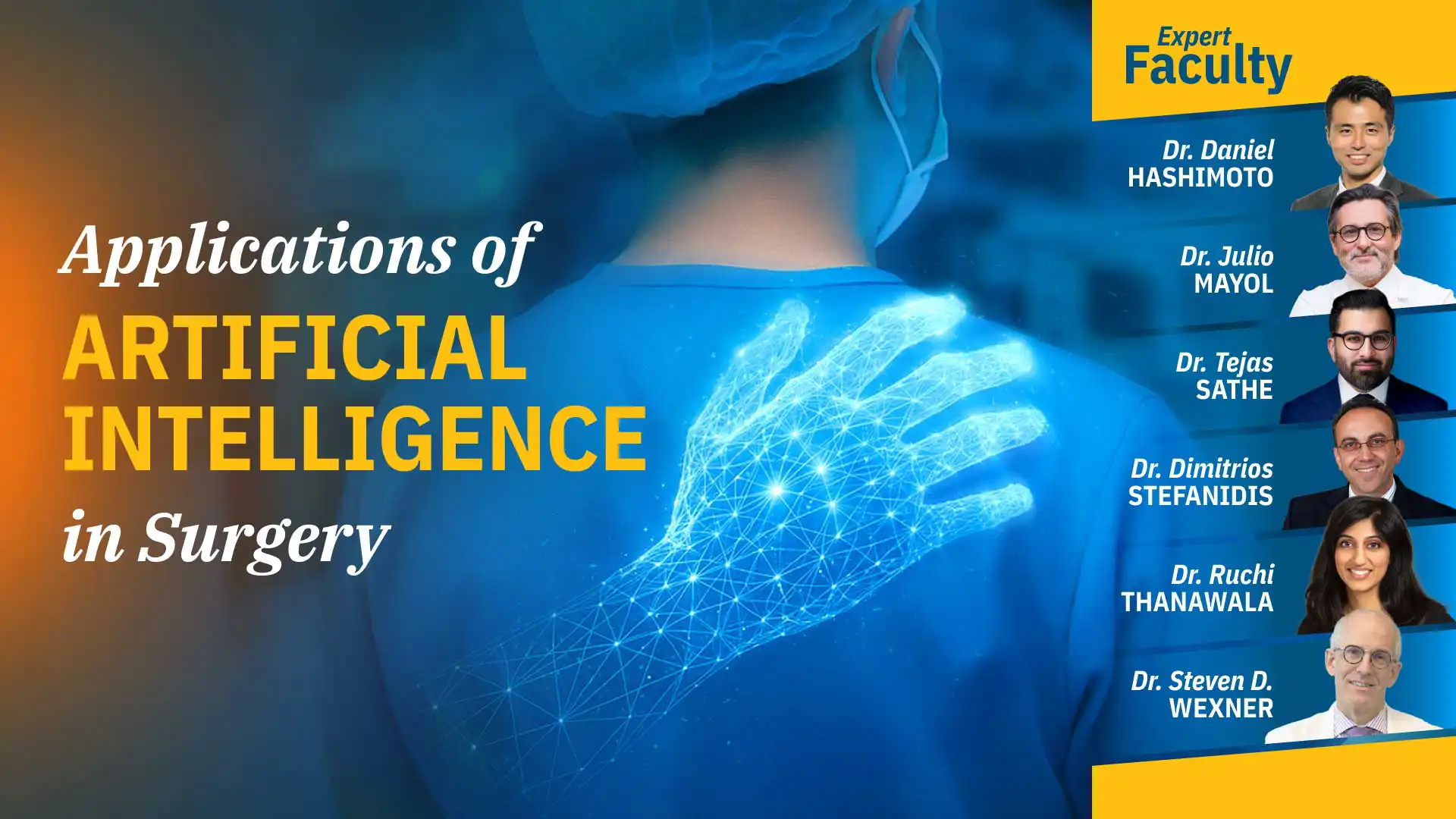
Artificial Intelligence (AI) is transforming the way surgery is practiced, researched, and taught. For residents, understanding AI is no longer optional, it is becoming an essential part of modern surgical education and practice. From clinical decision-making and research support to future innovations that may reshape surgical procedures, AI offers powerful tools that can improve outcomes, efficiency, and training.
With Johnson & Johnson MedTech
Published
Sep 2025

The integration of Artificial Intelligence (AI) into residency training is reshaping medical education, focusing on improving surgical performance and preparing future healthcare professionals.
With Johnson & Johnson MedTech
Published
Jun 2024

Published
Jun 2022

Nowadays, there is a large number of devices in the market. This is why it’s common for surgeons to have difficulties choosing the correct one for the complication they are facing. In this video, Dr. Daniel Hashimoto describes different hemostatic devices and agents. He starts by giving a demonstration of the energy devices. However, he doesn’t explain monopolar devices as most surgeons are familiar with them. Rather he explains the characteristics and give a performance demonstration of a bipolar device and ultrasonic shears. He then describes the different characteristics of each kind of hemostatic agent. Finally, he gives some tips and ideas on the situations in which would be better to use each one of them.
With Johnson & Johnson MedTech
Published
Mar 2022
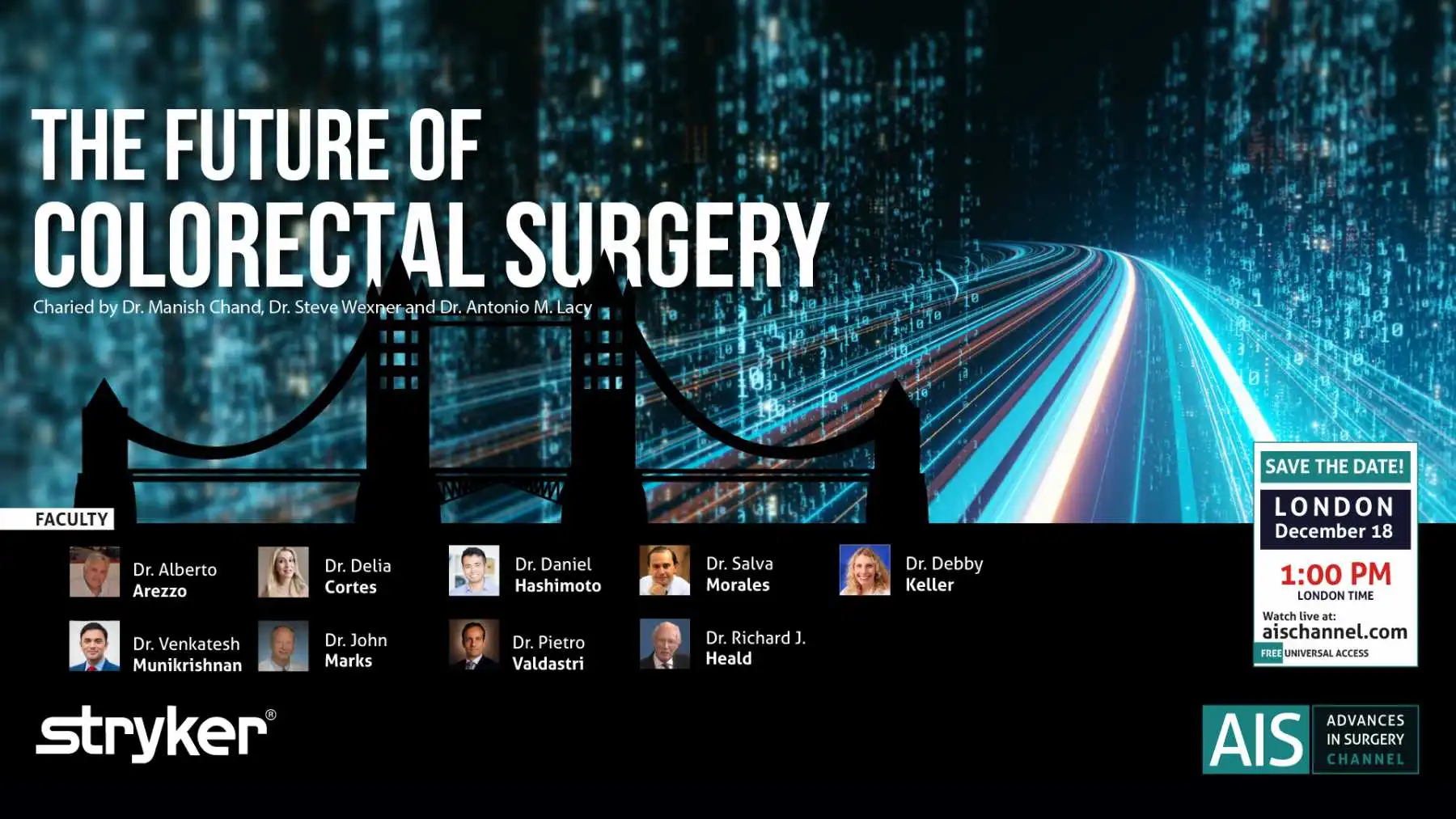
Dr. Antonio M. Lacy, Dr. Alberto Arezzo, Dr. Delia Cortes, Dr. Daniel Hashimoto, Dr. Salva Morales, Dr. Debby Keller, Dr. Venkatesh Munikrishnan, Dr. John Marks, Dr. Pietro Valdastri and Dr. Richard J. Heald present The Future of Colorectal Surgery.
With Stryker
Published
Dec 2020
Help your network discover Dr. Daniel Hashimoto's clinical expertise.