
Deborah S. Keller, MD, MS is an Associate Professor at Marks Colorectal Surgical Associates, Lankenau Medical Center in Wynnewood, PA and Surgical Scientist at Lankenau Medical Research Institute. She also serves as a Visiting Professor at IRCAD in Strasbourg, France. She was previously an Assistant Professor of Surgery and a member of the Population Sciences Group in the Herbert Irving Comprehensive Cancer Center at NewYork-Presbyterian/Columbia University Medical Center. Dr. Keller has a Masters Degree in healthcare policy and management from Carnegie Mellon University, worked as a healthcare business analyst for several years and then completed her MD at Rutgers University. She did her surgical residency at Temple University Hospital, Philadelphia, followed by a Colorectal Surgery research fellowship at University Hospitals-Case Medical Center, Cleveland and a clinical Colorectal fellowships at St. Vincent Medical Center/Cleveland Clinic Foundation and Baylor University Medical Center in Dallas, as well as advanced MIS training in Houston. Dr. Keller's clinical expertise includes laparoscopic, robotic and minimally invasive colorectal surgery, anorectal procedures and the management of pelvic floor disorders. Dr. Keller is an outstanding researcher with numerous peer-reviewed journal articles, presentations, book chapters, and books to her name. She has an interest in surgical quality with a focus on perioperative management including enhanced recovery after surgery (ERAS) pathways, multimodal opioid-sparing pain relief, and expanding use of minimally invasive technique to optimize patient outcomes.
Selected publications from PubMed
Video-based assessment tool for workflow analysis in minimally invasive colorectal surgery: expert consensus-based development and multicentre validation of ColoWorkflow.
Jain PP, Mascagni P, Massimiani G, Banik N, Goglia M, Arboit L, Baby B, Balla A, Baldari L, Silecchia G, Fiorillo C, CompSurg Colorectal Experts Group, Alfieri S, Morales-Conde S, Keller DS, Boni L, Padoy N
BJS Open. 2026 May 12;10(3) doi: 10.1093/bjsopen/zrag038.
Single-port robotic colorectal surgery: a scoping review of outcome reporting and future directions for standardisation.
Borgas P, Shakir T, Francis N, Keller DS
J Robot Surg. 2026 Apr 21;20(1) doi: 10.1007/s11701-026-03402-9.
First clinical report of the international single-port robotic rectal cancer registry.
Marks JH, Kim HJ, Choi GS, Idrovo LA, Chetty S, De Paula TR, Keller D
J Gastrointest Surg. 2025 Feb;29(2):101929 doi: 10.1016/j.gassur.2024.101929.
One year follow-up of the colon cancer patient cohort treated with a novel miniaturized robotic-assisted surgery device (mRASD).
Marks JH, Jobst MA, Keller DS, Lagares-Garcia JA, Schoonyoung HP, Farritor SM, Oleynikov D
Surg Endosc. 2024 Dec;38(12):7512-7517 doi: 10.1007/s00464-024-11179-x.
EAES/SAGES evidence-based recommendations and expert consensus on optimization of perioperative care in older adults.
Keller DS, Curtis N, Burt HA, Ammirati CA, Collings AT, Polk HC Jr, Carrano FM, Antoniou SA, Hanna N, Piotet LM, Hill S, Cuijpers ACM, Tejedor P, Milone M, Andriopoulou E, Kontovounisios C, Leeds IL, Awad ZT, Barber MW, Al-Mansour M, Nassif G, West MA, Pryor AD, Carli F, Demartines N, Bouvy ND, Passera R, Arezzo A, Francis N
Surg Endosc. 2024 Aug;38(8):4104-4126 doi: 10.1007/s00464-024-10977-7.
.webp)
Anastomotic leak remains one of the most feared complications following bowel anastomosis. Although anastomotic techniques have changed from suturing to stapling, and both staplers and stapling techniques have evolved and improved, leak rates for pelvic anastomoses remain high. Although compression anastomosis has been intermittently used for almost 100 years, it was only about 10 years ago that its superiority over circular stapled anastomoses was demonstrated. This program will show the newest method of compression anastomosis and offer compelling evidence for its value.
With CarpoNovum
Published
Jul 2024

London CRS returns in 2022 with a top-notch faculty from around the globe showcasing the latest innovative technologies in Digital Surgery. This is a 2- part event, including Advanced Tools and Imaging with a lively discussion between our diverse panelists. Leading surgeons and researchers will describe cutting-edge techniques and provide their personal insights on the future of surgery. Don't miss one of the highlights of the surgical calendar - LondonCRS22!
With Karl Storz
Published
Apr 2022

Minimally invasive surgery has been repeatedly proven to have many benefits. While laparoscopy, the original form of minimally invasive surgery, revolutionized abdominopelvic surgery, it has some potential limitations. During the last almost 35 years, minimally invasive technology has evolved to optimize outcomes. In addition, global access to safe cost-effective platforms is essential to make the benefits of minimally invasive surgery available to patients around the world. In this program, several internationally renowned experts discuss some potential limitations to laparoscopy and present some innovative technologies designed to further advance minimally invasive surgery.
With Livsmed
Published
Apr 2022

Surgical site infections (SSIs) are infections in the skin where an incision is made, infections below the incision in muscles and tissues and infections in deep organ spaces surrounding parts of the body involved in the surgery. Despite established guidelines and known risk factors, SSIs continue to be a common and costly issue in every type and class of surgical procedure. In fact, SSI are the most common SSIs are the most common and costly of all hospital-acquired infections. SSI incidence is directly related to higher mortality, re-intervention, and increased length of hospital stay. In the United States alone, an estimated 300,000 SSI occur annually at a cost of $10 billion. However, they are a global burden, with substantially higher SSI incidence in Low and Middle Income Countries. Thus, there is both an opportunity and an imperative to reduce SSI worldwide. In this episode of the AIS Channel Colorectal Surgical Journeys series, we bring together a group of experts to discuss the current state, known methods, and future possibilities for reducing SSI and improving the associated healthcare outcomes after surgery.
With Johnson & Johnson MedTech
Published
Mar 2022

Knowledge does not come from out of the blue, but rather is acquired over time through research, discoveries and theories in different specialties. Surgical site infections (SSI) were discovered and have been treated on the basis of different theories over time. All this evidence gives us data to understand the importance of the treatment of SSI and also gives us knowledge about the ways to prevent it: a list of preoperative, intraoperative and postoperative methods. However, it has not covered the use of local antibiotics. This masterclass focuses on local antibiotics, defining them and explaining the various types: topical antibiotics, antibiotic coated sutures, wound irrigation and antibiotic-impregnated implants. For each of them, evidence is given from studies and research on their effectiveness as SSI preventive methods.
With Johnson & Johnson MedTech
Published
Mar 2022
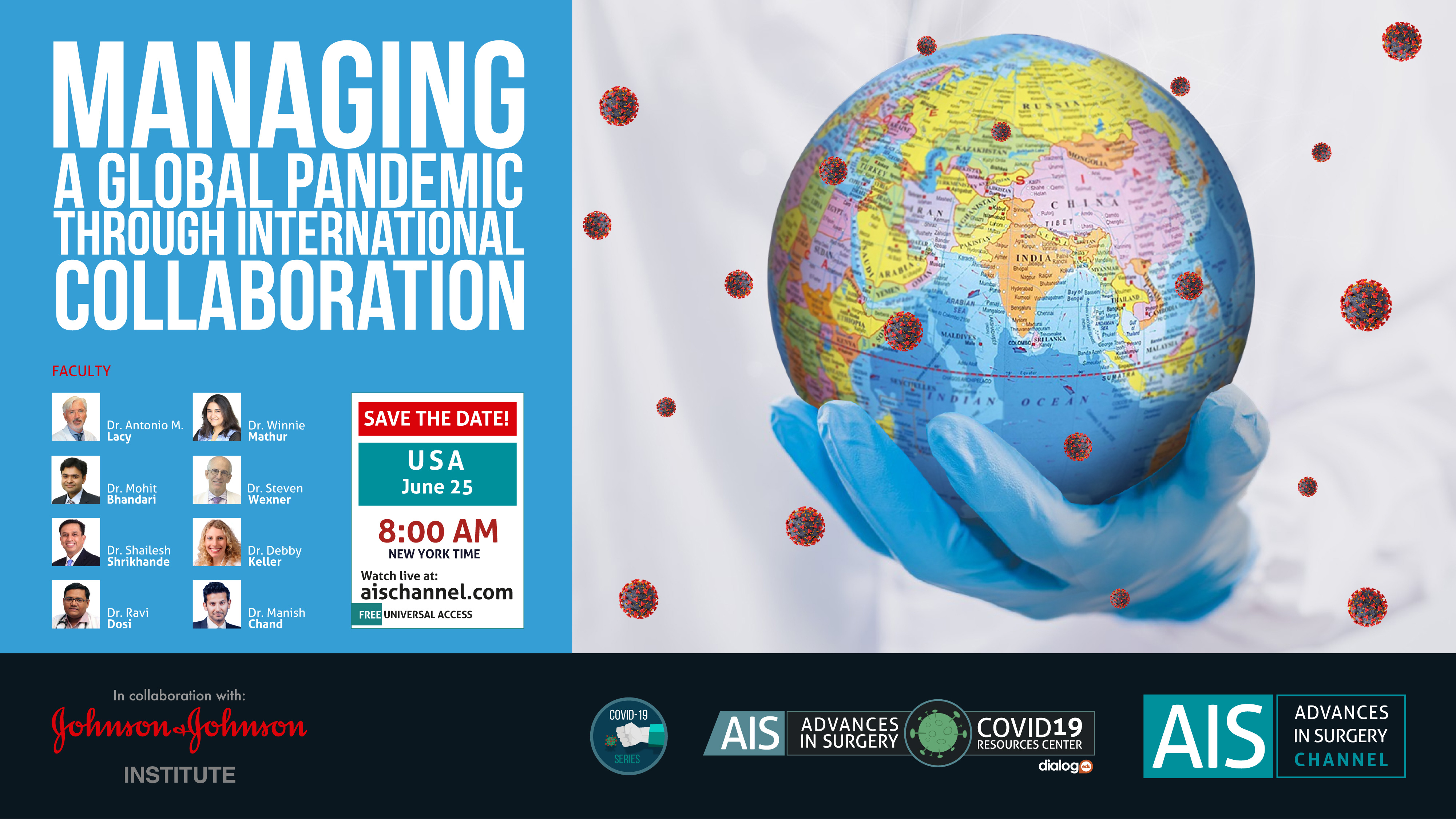
he Covid 19 in India program is designed to update the entire world as to how the country is managing the second wave of this pandemic. Resources were limited in India with lack of ICU beds and meager supply of oxygen.
With Johnson & Johnson MedTech
Published
Jun 2021
Help your network discover Dr. Debbie Keller's clinical expertise.