
Innovation & Emerging Technology, Clinical Outcomes & Patient Safety, Market Access & Commercialization
Through a collaborative and team-based work environment, Applied Medical develops innovative products that improve patient outcomes and enable the advancement of minimally invasive surgery.
As a new generation medical device company, we are equally committed to improving the affordability and accessibility of high-quality healthcare. We are proud to have a significant and sustainable impact on healthcare by delivering technologies that enhance clinical care and satisfy the pressing economic needs of our customers.
As a result of our dedication to understanding and satisfying our customers’ clinical and fiscal needs, we are a leading provider of breakthrough technologies for Minimally Invasive and General Surgery, as well as Cardiac, Vascular, Urologic, Colorectal, Bariatric, Obstetric, and Gynecologic specialties.
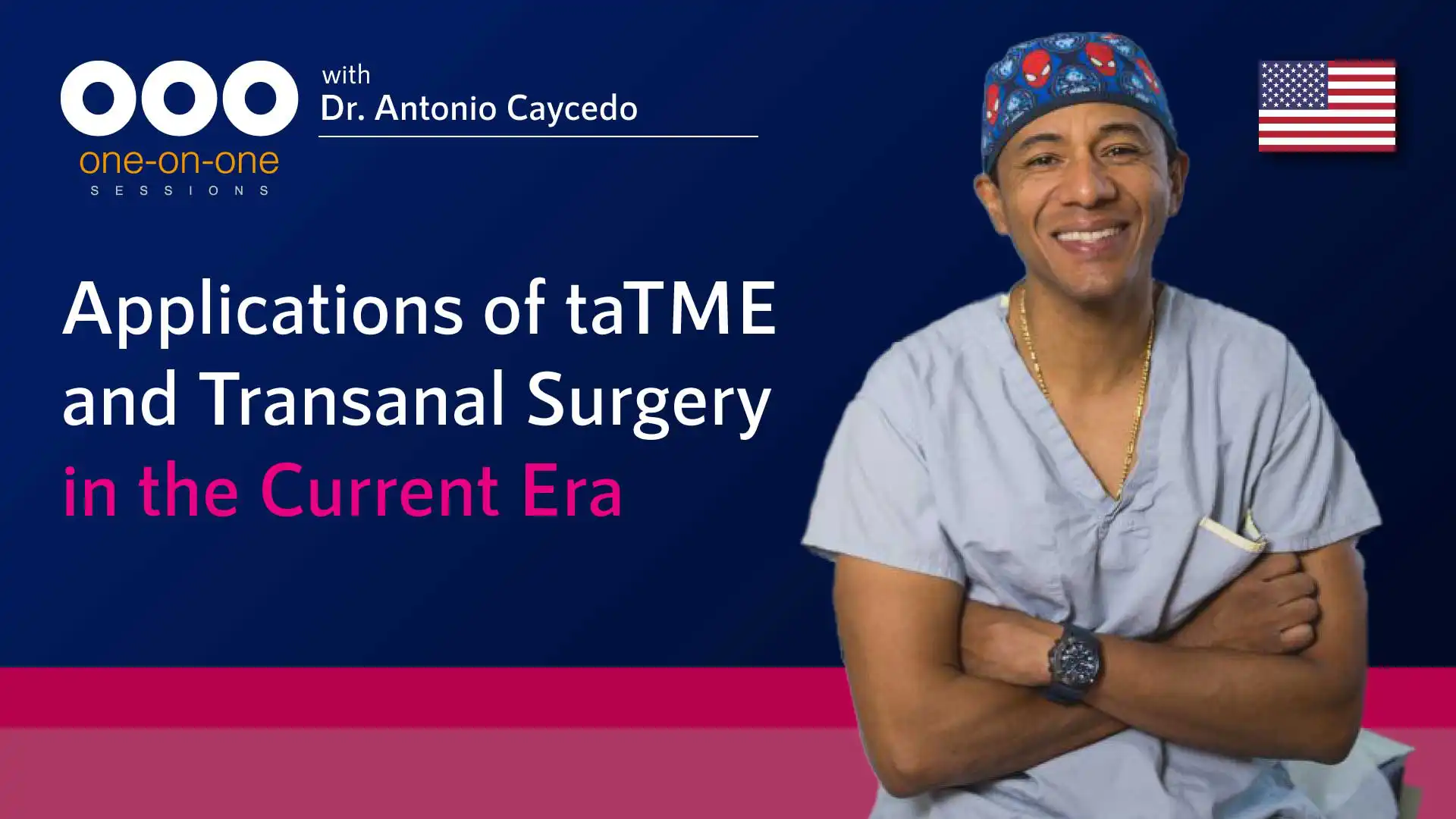
Dr. Antonio Caycedo-Marulanda is the Chief of Colorectal Surgery at Orlando Health in Orlando, Florida, where he also serves as the institution’s Medical Director for the National Accreditation Program for Rectal Cancer (NAPRC). In this role, he leads the development, implementation, and oversight of standardized rectal cancer care pathways across the health system. He is also an Associate Professor of Surgery at the University of Central Florida, with ongoing academic and research affiliations in Canada as an Adjunct Associate Professor of Surgery at Queen’s University and Associate Clinical Researcher at the Health Sciences North Research Institute (HSNRI). Originally from Colombia, Dr. Caycedo earned his medical degree from Universidad El Bosque and completed his general surgery residency at Javeriana University in Bogotá. He relocated to Canada in 2004, retrained in general surgery at the University of Ottawa, and subsequently completed a colorectal surgery fellowship at Western University in London, Ontario. He later earned a Master’s in Clinical Research from the University of Liverpool (UK) and is a graduate of the 2023–2024 Surgical Leadership Program at Harvard Medical School Postgraduate Medical Education. He began his Canadian career by founding the colorectal surgery program at Health Sciences North (HSN) in Northern Ontario. There, he became the first surgeon in Canada to introduce transanal minimally invasive surgery (TAMIS) and also pioneered transanal total mesorectal excision (taTME) in the country. He led the implementation of the institution’s first Enhanced Recovery After Surgery (ERAS) protocol. After nearly a decade at HSN, he joined Kingston Health Sciences Centre and Queen’s University, contributing to one of Canada’s highest-volume robotic colorectal surgery programs. Dr. Caycedo is a Fellow of the Royal College of Surgeons of Canada, the Canadian Society of Colon and Rectal Surgeons, the American College of Surgeons, and the American Society of Colon and Rectal Surgeons (ASCRS). He serves on the New Technologies Committees of both SAGES and ASCRS, and previously held the role of Regional Surgical Oncology Lead for Cancer Care Ontario. He is also an examiner for the Royal College of Surgeons of Canada. A strong advocate of clinical innovation and international collaboration, he contributed to the global consensus on the safe implementation of taTME, founded the Canadian taTME Expert Collaboration (CaTaCO), and has participated in the COLOR III trial and the international taTME registry. He also co-authored the Pan-Canadian Rectal Cancer Guidelines. Dr. Caycedo has authored over 75 peer-reviewed publications, contributed to five book chapters, and serves on the editorial board of several surgical journals. He lectures nationally and internationally, with clinical and academic interests in rectal cancer surgery, advanced minimally invasive and robotic techniques, and environmentally sustainable surgical practices.
Published
May 2025
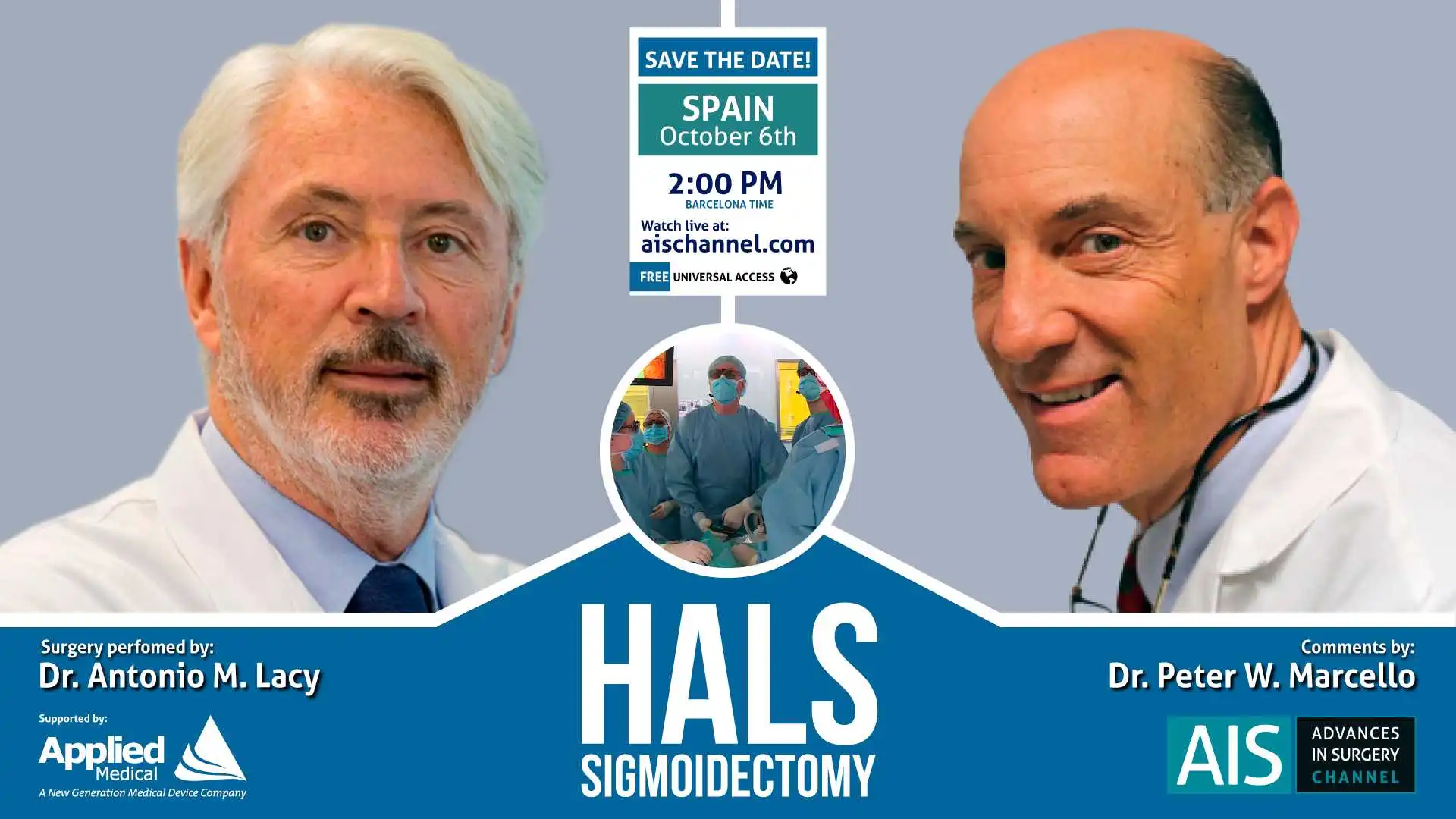
Technique Description: 1) Exploratory laparoscopy 2) Placement of hand-port 3) Identification of the tumor and resection of adherent bowel segment 4) Sigmoidectomy with termino-terminal mechanical stapled anastomosis Procedure Steps: 1) Pneumoperitoneum with Veress needle in left hypocondrium 2) Placement of paraumbilical optical trocar, plus 2 5mm working trocars 3) Exploratory laparoscopy, without carcinomatosis 4) Placement of HandPort in right hypocondrium 5) Identification of the tumor with Invasion of jejunal segment 6) Transection of invaded bowel segment with linear stapler 7) Approach of the IMA and IMV and high ligation 8) Liberation of the colon from peritoneal attachments and descent of splenic flexure 9) Transection of the colon at the level of the peritoneal reflection 10) Exteriorization of the specimen through the port, assessment of vascularity with ICG and transection 11) Revision of the bowel segment with resection and anastomosis 12) Placement of circular stapler anvil and reduction of the colon to the abdominal cavity 13) Termino-terminal circular stapled anastomosis 14) Closure of ports and incisions Learning Points: Port placement and HALS technique High ligation of IM vessels Descent of splenic flexure Vascular assessment Colorectal anastomosis technique Case Record: 60-year-old male patient Follow-up of prostate cancer Pre-occlusive T4 ADC of the sigmoid colon with Invasion of the small bowel and suspected peritoneal carcinomatosis. Clinical History: 60-year-old male patient in follow-up for prostate adenocarcinoma CT-scan with suspected tumor of the sigmoid colon with Invasion of the small bowel and possible peritoneal carcinomatosis Colonoscopy confirming circumferential tumor, 23cm from the anal verge. Biopsy compatible with colonic adenocarcinoma Discussed in PC Multidisciplinary Meeting, decided exploratory laparoscopy with resection, if possible. CRS + HIPEC if carcinomatosis confirmed Other History: Prostate adenocarcinoma Gleason 9 Hypertension Past Smoker
Published
Oct 2020

Dr. Antonio Caycedo performs a Laparoscopic Total Proctocolectomy + TaTME with J- pouch Reconstruction to a 22-year-old male. Technique Description: 1. Laparoscopic proctocolectomy (medial-to-lateral approach) 2. TaTME 3. J-pouch creation 3. Diverting loop ileostomy Procedure Steps: 1. Splenic flexure takedown 2. Right colon dissection 3. Transverse colon dissection 4. Left colon dissection 5. Pelvic dissection 6. Trans-anal "disconnection" 7. Division of terminal ileum 8. Trans-anal extraction 9. J-Pouch construction 10. Hand-sewn anastomosis Learning Points: Medial to lateral dissection Landmarks recognition TaTME purse-string troubleshooting Intra-corporeal J-pouch creation Clinical History: 22-year-old male, previously healthy 3 months’ history of frequent bloody BMS Found to have carpeting polyposis throughout his colon No family history of FAP or any genetic conditions Other History: Investigations: Full colonoscopy: biopsies confirmed adenomatous polyps
Published
May 2020

In a time of rapid growth and advances in modern technology, a need for the adoption of new surgical and anaesthetic approaches to the Laparoscopic Nissen Fundoplication has become apparent. This procedure has evolved to one that is simplistic in its approach, using an opiate-free anaesthetic aimed at reducing post-operative diaphragmatic stressors, with an easy OR set up and a more efficient OR change-over time. It can be performed with just one surgical assistant / camera operator and is cost-effective whilst providing reproducible results, without sacrificing the three crucial steps when performing a laparoscopic anti-reflux procedure, and, most importantly, achieving the goals of surgery. Program: In a time of rapid growth and advances in modern technology, a need for the adoption of new surgical and anaesthetic approaches to the Laparoscopic Nissen Fundoplication has become apparent. This procedure has evolved to one that is simplistic in its approach, using an opiate-free anaesthetic aimed at reducing post-operative diaphragmatic stressors, with an easy OR set up and a more efficient OR change-over time. It can be performed with just one surgical assistant / camera operator and is cost-effective whilst providing reproducible results, without sacrificing the three crucial steps when performing a laparoscopic anti-reflux procedure, and, most importantly, achieving the goals of surgery.
Published
Nov 2017
Share it with your network and help spread clinical knowledge.