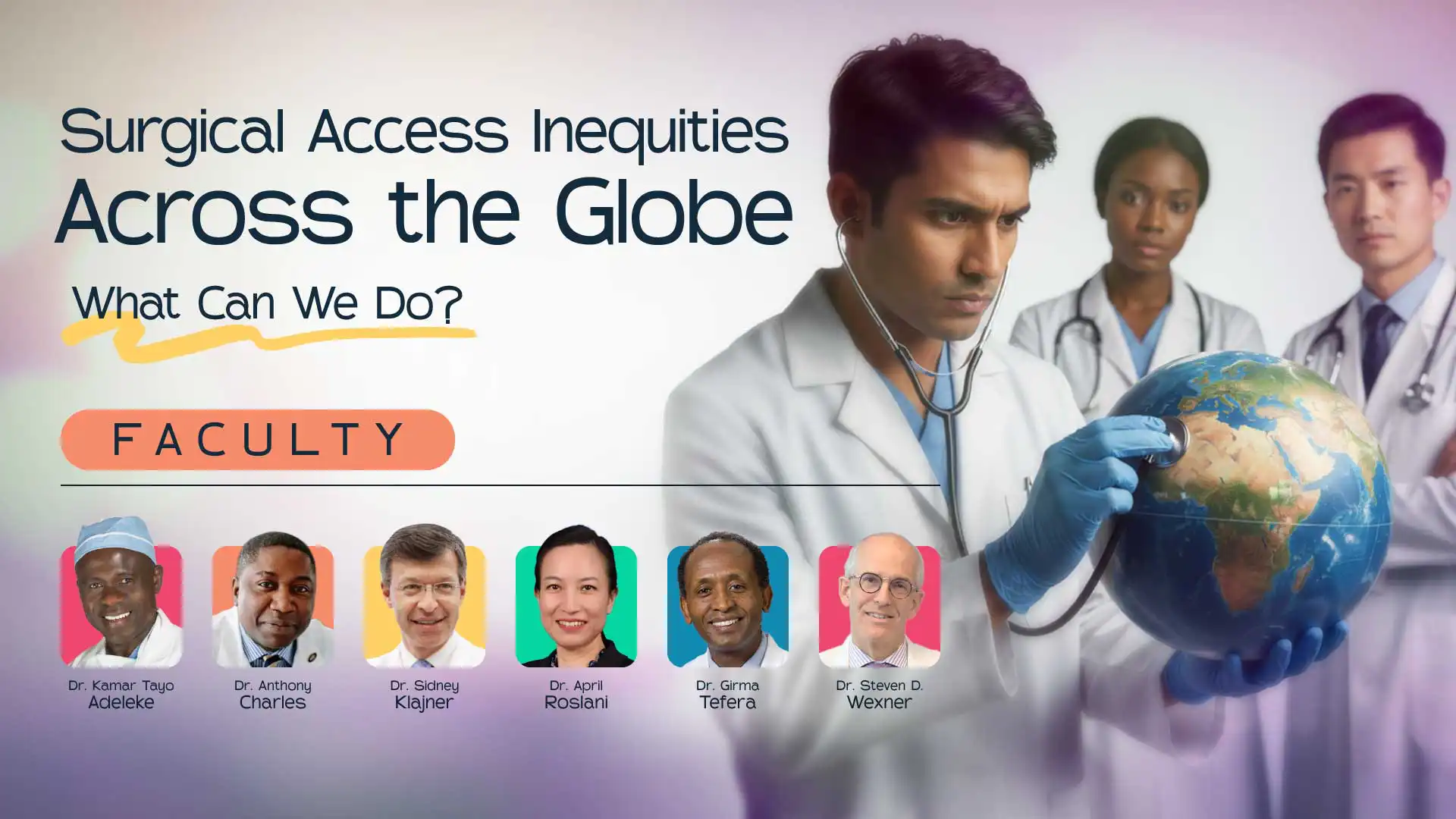
Inequities in access to timely and effective surgical care represent one of the most pressing and complex challenges in global health today. Millions of people worldwide, particularly those living in rural and remote regions of Africa, Southeast Asia, and South America, are excluded from essential procedures that can treat severe trauma, prevent disability, and save lives. These barriers are multifaceted, rooted in insufficient training infrastructure, lack of specialized technology, geographic challenges, and funding deficiencies. Addressing this massive global surgical gap is not just a clinical requirement but a moral and ethical imperative for achieving true universal health equity.
Clinical Background
Welcome & Introduction - Prof. Steven D. Wexner (USA) & Dr. Anthony Charles (USA)
Overcoming Barriers in Rural and Remote Surgery: Lessons from Africa - Dr. Kamar Adeleke (Nigeria)
Q&A Session - Dr. Anthony Charles (USA) and Dr. Kamar Adeleke (Nigeria)
Bridging Gaps Southeast Asia: Training, Resources, and Innovation - Dr. April Roslani (Malaysia)
Q&A Session - Dr. Anthony Charles (USA) and Dr. April Roslani (Malaysia)
The Role of Technology in Expanding Global Surgical Access: Perspectives from South America - Dr. Sidney Klajner (Brazil)
Q&A Session - Dr. Anthony Charles (USA) and Dr. Sidney Klajner (Brazil)
From Data to Action: Mapping Inequities and Mobilizing Resources Globally - Dr. Girma Tefera (USA)
Q&A Session - Dr. Anthony Charles (USA) and Dr. Girma Tefera (USA)
Closing Remarks - Dr. Steven D. Wexner (USA)
Share it with your network and help spread clinical knowledge.