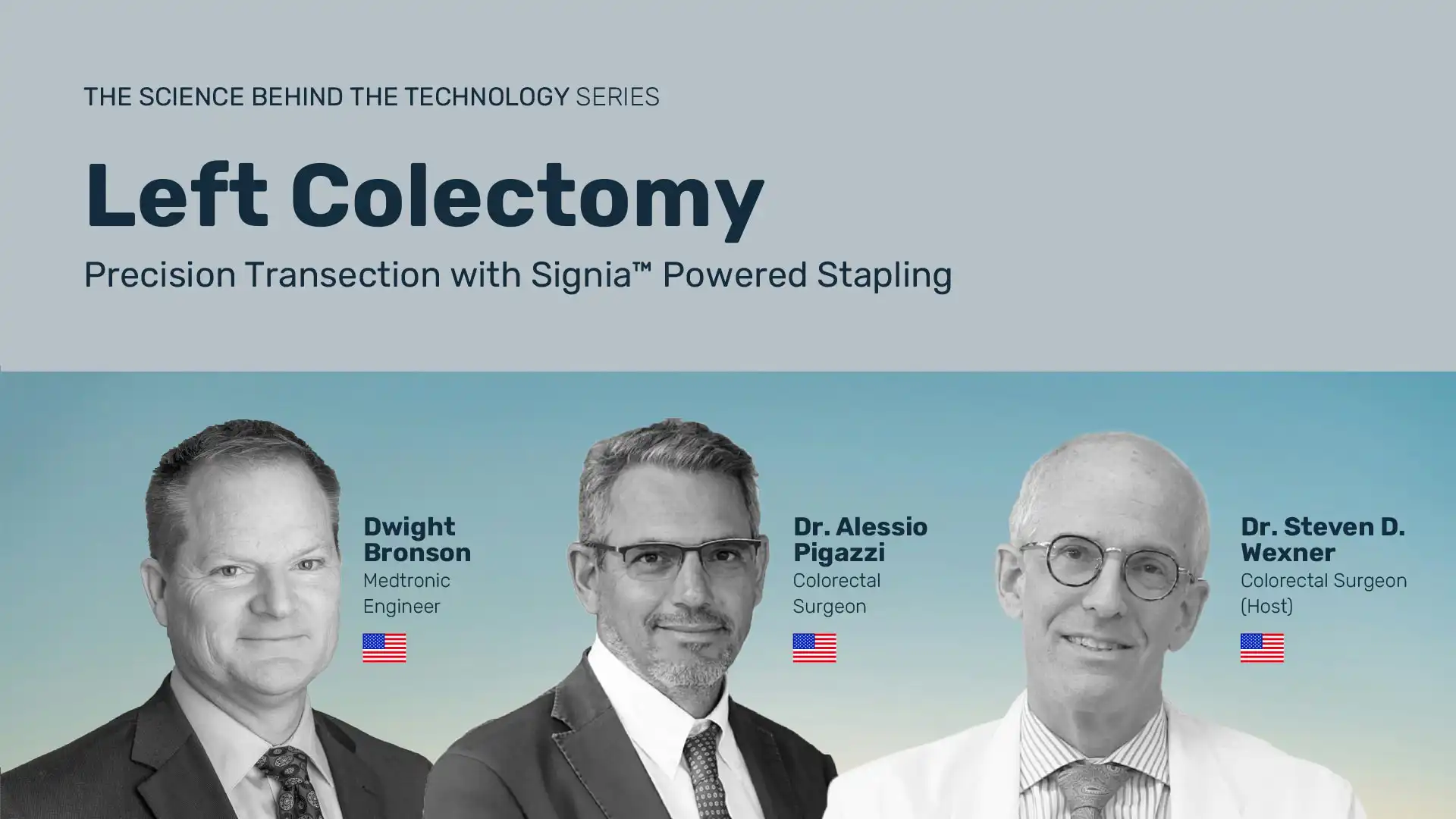
with Dr. Raquel Bravo, Dr. Alessio Pigazzi, Dr. Antonio M. Lacy
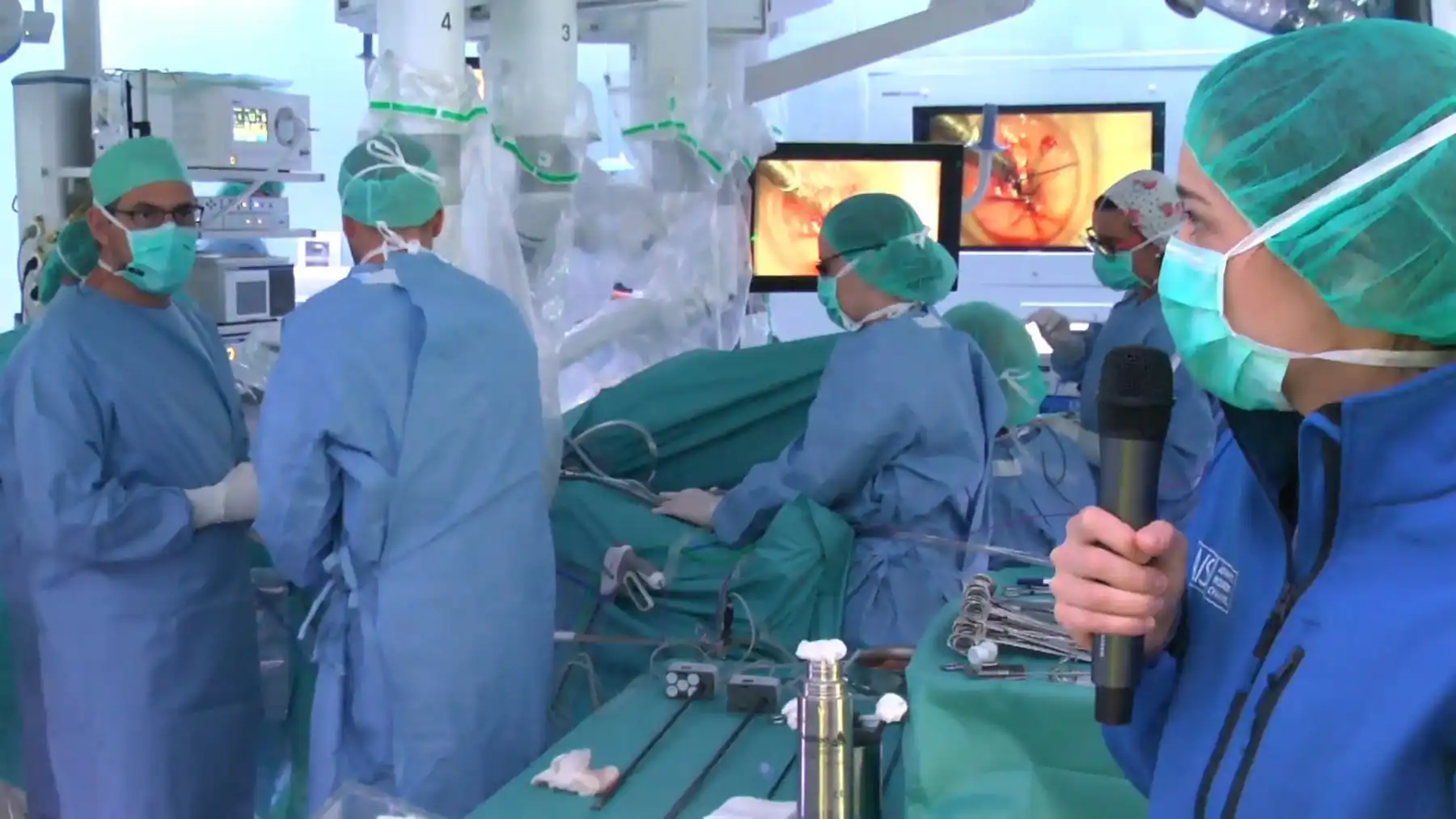
Surgical removal of rectal cancer has the strongest impact on oncologic outcomes. It is feasible to follow the principles of TME through a minimally invasive approach that has several advantages when compared to open surgery. These days surgeons still struggle with issues such as male and obese patients with a narrow pelvis and section of the distal margin. Simultaneous dissection through a transabdominal and transanal approach represents a solution for these problems and many more. Technological improvements such as: new transanal access platforms, 3D visualization system and robotic surgery turns this innovative approach into the least aggressive one for the treatment of rectal cancer. Dr. Alessio Pigazzi from the University of California with Dr. Antonio Lacy and Dr. Raquel Bravo performed a combined robotic and transanal approach to rectal cancer.
Surgical removal of rectal cancer has the strongest impact on oncologic outcomes. It is feasible to follow the principles of TME through a minimally invasive approach that has several advantages when compared to open surgery. These days surgeons still struggle with issues such as male and obese patients with a narrow pelvis and section of the distal margin. Simultaneous dissection through a transabdominal and transanal approach represents a solution for these problems and many more. Technological improvements such as: new transanal access platforms, 3D visualization system and robotic surgery turns this innovative approach into the least aggressive one for the treatment of rectal cancer. Dr. Alessio Pigazzi from the University of California with Dr. Antonio Lacy and Dr. Raquel Bravo performed a combined robotic and transanal approach to rectal cancer.
Share it with your network and help spread clinical knowledge.