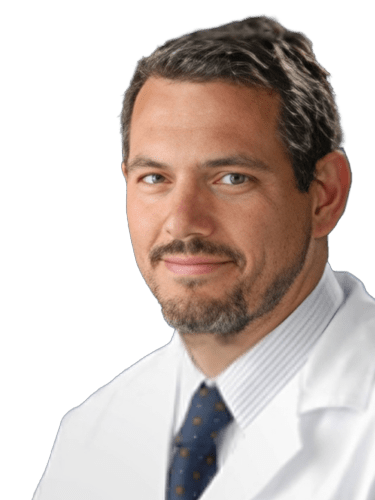
Dr. Alessio Pigazzi, was appointed chief of colorectal surgery at NewYork-Presbyterian/Weill Cornell Medical Center and Weill Cornell Medicine, effective September 2020. He also serves on Weill Cornell Medicine’s faculty. In this role, Dr. Pigazzi leads a world-class team of colorectal surgeons that uses state-of-the-art technologies and innovative surgical techniques to provide patients with the very best in comprehensive colorectal care.
Dr. Pigazzi was previously chief of the Divisions of Colorectal Surgery and Surgical Oncology at the University of California, Irvine (UCI), where he also served as professor in the Department of Surgery and vice chair for research. His new appointment marks a return to New York-Presbyterian and Weill Cornell Medicine, where he completed his residency nearly 20 years ago.
Dr. Pigazzi’s clinical expertise focuses on the treatment of complex colon, rectal and anal conditions and cancers, including laparoscopic, robot-assisted and open surgical techniques. He performed the world’s firstrobot-assisted tumor removal for rectal cancer in 2004, a procedure that has revolutionized the treatment of this condition. He is also leading clinical research programs combining surgery with immediate postoperative chemotherapy to improve cancer survival.
Dr. Pigazzi is among a small cadre of surgeons skilled in the use of an innovative procedure called cytoreductive surgery with hyperthermic intraperitoneal chemotherapy (HIPEC), which involves heated chemotherapy applied directly within the abdominal cavity following removal of cancerous tumors. He is also skilled in robot-assisted surgery for pelvic injuries caused by medical complications, specifically abnormal connections between body parts, or fistulas.
His research is focused on minimally invasive techniques to improve recovery after cancer surgery, postoperative chemotherapy, and the relationship between diet and colorectal cancer development.
Dr. Pigazzi is a fellow of the American College of Surgeons and the American Society of Colon and Rectal Surgeons; a member of the Society of Surgical Oncology; and a founding member of the Clinical Robotic Surgery Association.
He earned his joint medical degree and doctorate at Boston University School of Medicine, and completed his internship and residency in general surgery at NewYork-Presbyterian/Weill Cornell Medical Center. He completed a fellowship in minimally invasive surgery at Hackensack Medical Center in Hackensack, N.J., and a fellowship in colorectal surgery at UCI Medical Center.
Selected publications from PubMed
Long-term Results of the North American Phase II Transanal Total Mesorectal Excision Multicenter Trial for Rectal Cancer.
Donovan KF, Carmichael H, Chadi S, Ricardo A, Bonaccorso A, Tomada EP, Sands D, Marks J, Maykel J, Alavi K, Zaghiyan K, Whiteford M, McLemore EC, Shawki SF, Steele S, Pigazzi A, Albert M, DeBeche-Adams T, Avery L, Wexner S, Sylla P
Ann Surg. 2026 Aug 1;284(2):236-243 doi: 10.1097/SLA.0000000000007044.
Enhancing Surgeons' Cognitive Performance in Colorectal Surgery: A Narrative Review.
Patriti A, Greco PA, Pigazzi A
J Laparoendosc Adv Surg Tech A. 2026 Apr;36(4):306-316 doi: 10.1177/10926429261421999.
RoLaCaRT-1: pilot randomised phase II study of robotic vs laparoscopic hemicolectomy for right colon cancer.
Stevenson ARL, Khan JS, Wilson K, O'Connell RL, Pillinger S, Lynch C, Francis NK, Curtis NJ, Miskovic D, Clouston AD, Miller GC, Chow CFK, Warrier S, Heriot AG, Tonkin D, Bell S, Muhlmann MD, Austin KKS, Gillespie CJ, Larson DW, Temple L, Pigazzi A, Mercieca-Bebber R, Simes J
Surg Endosc. 2026 Mar;40(3):2062-2077 doi: 10.1007/s00464-025-12400-1.
Extraction site hernia and short-term outcomes following intracorporeal versus extracorporeal anastomosis for robotic and laparoscopic right colectomy: a multi-center prospective trial.
Cleary RK, Silviera M, Reidy TJ, McCormick J, Johnson CS, Sylla P, Cannon J, Lujan H, Kassir A, Landmann RG, Gaertner W, Lee E, Bastawrous AL, Bardakcioglu O, Pandey S, Attaluri V, Bernstein M, Obias V, Pigazzi A
Surg Endosc. 2026 Jan;40(1):502-511 doi: 10.1007/s00464-025-12327-7.
Impact of neoadjuvant treatment on functional outcomes after transanal total mesorectal excision (taTME)-a case series.
Donovan KF, Tomada EP, Carmichael H, Ricardo A, Berger N, Bonaccorso A, Alavi K, Zaghiyan K, Pigazzi A, Sands D, DeBeche-Adams T, Chadi SA, McLemore EC, Marks JH, Maykel JA, Shawki SF, Steele SR, Albert M, Whiteford MH, Wexner SD, Sylla P
Surg Endosc. 2025 Oct;39(10):6802-6812 doi: 10.1007/s00464-025-11959-z.
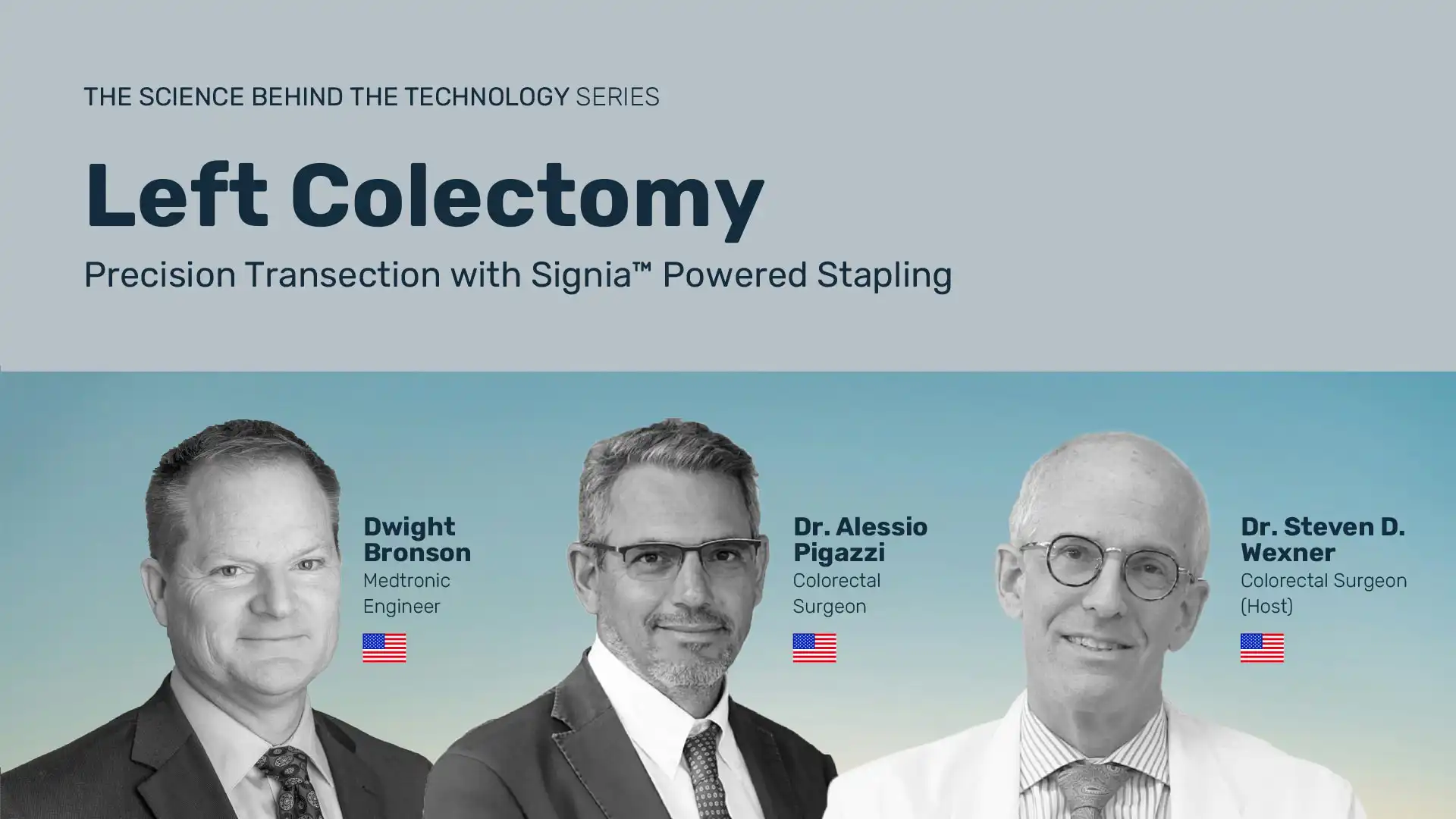
Dr. Alessio Pigazzi is the Chief of the Division of Colorectal Surgery and Professor of Surgery at Cedars-Sinai Medical Center, USA. Dwight Bronson is a Senior Principal Biomedical Engineer within the Surgical Operating Unit at Medtronic, USA, with over 30 years of experience in surgical stapling technologies. Together, they analyze the clinical standards of laparoscopic left colectomy for diverticulitis and the biomechanics of tissue response. Prof. Steven D. Wexner (MedStar Georgetown University Hospital) hosts this session, bridging clinical practice with biomedical engineering.
With Medtronic
Published
Jul 2026
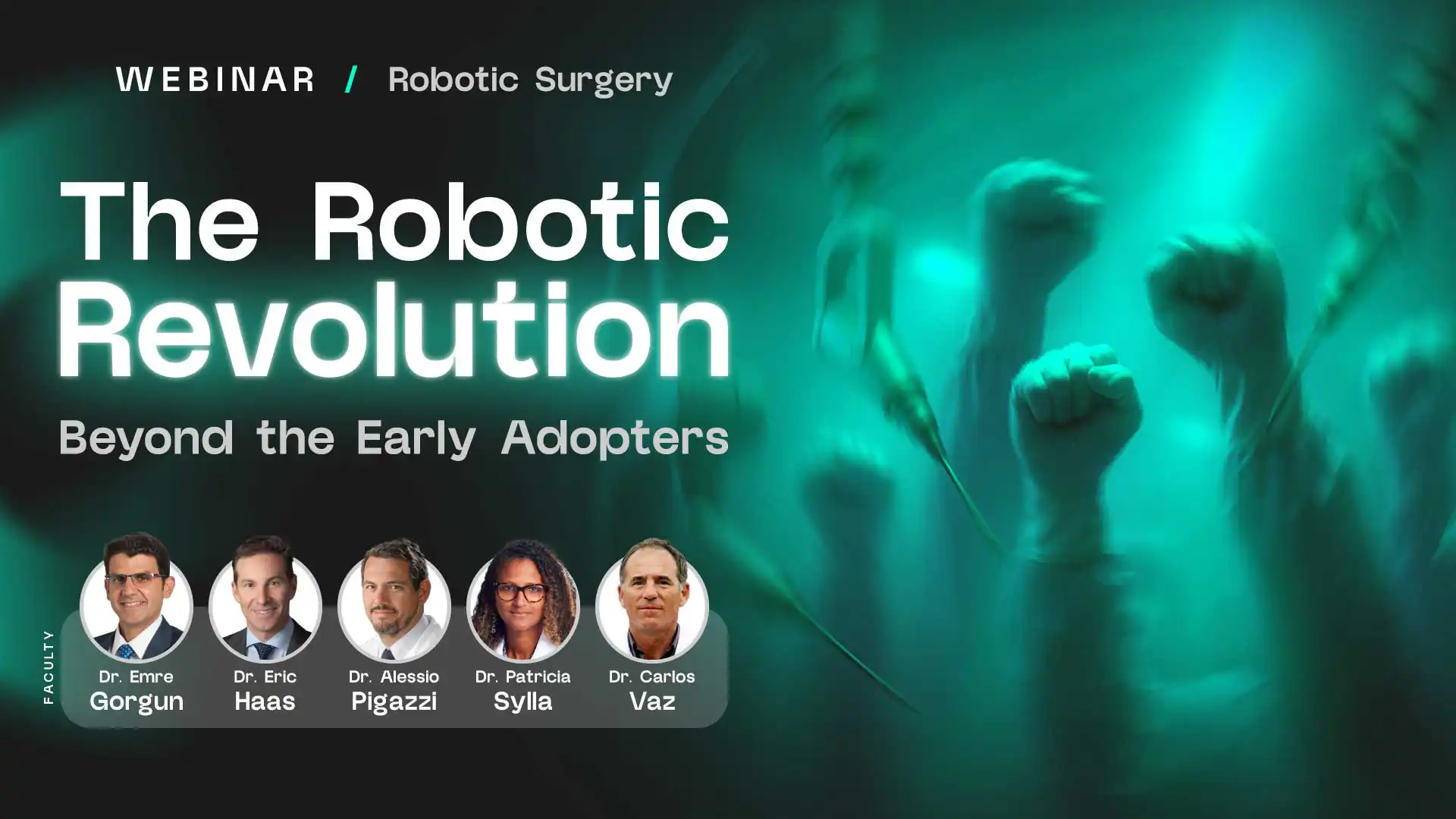
After two decades, the robotic revolution is at a tipping point. It's moving "Beyond the Early Adopters" to redefine surgical standards for all. But how do we bridge the gap from an "elite" technology to an "essential" tool for every hospital? This premiere episode explores the evolution of robotic surgery, from its pioneering days to the next-generation platforms built for widespread adoption, flexibility, and universal access.
With Rob Surgical
Published
Nov 2025

Clinical Case This is a case of a 30-year-old woman with a diagnosis of Ulcerative Colitis with poor medical control. Due to worsening bloody stools and the presence of recto-vaginal fistulae , we decided to perform a total proctocolectomy with end ileostomy. Treatment We performed a laparoscopic colectomy and a robotic proctectomy. We don´t show the first part of the surgery consisting on mobilization of right colon, transverse colon and splenic flexure. We performed a medial-to-lateral mobilization using the inferior mesenteric vein as the initial landmark. The peritoneum under the inferior mesenteric vein is incised, and the space between the mesocolon and Gerota´s fascia were developed bluntly toward the abdominal wall, superiorly toward the inferior edge of the pancreas, and inferiorly toward the inferior mesenteric artery. The inferior mesenteric vein was then divided to facilitate further mobilization. Distally, the inferior mesenteric artery was divided at its origin after identification of the ureter and gonadal vessels. The da Vinci system was now docked coming in over the patient’s left hip. The assistant surgeon remained on the right side of the patient and helped with additional retraction and suctioning with additional laparoscopic ports. The rectosigmoid mesentery was elevated superiorly and anteriorly with the left robotic arm so that the plane between the fascia propria of the rectum and the parietal fascial could be entered. This plane consists of fine areolar tissue that can be divided sharply with the monopolar scissors all the way to the level of the coccyx. Ureters remain lateral to the dissection, whereas the hypogastric nerves lie posterior, and care is taken to preserve them. The lateral stalks of the rectum can be divided with monopolar or bipolar cautery. We can see in the image, first the left and then the right side of the rectum. The peritoneal reflection was incised anteriorly, and the dissection continues circumferentially around the rectum until the pelvic floor was reached. We can see here at the right part of the low rectum the recto-vaginal fistulae tract . We divided it and mobilized the entire rectum. In this case we divided the ultralow rectum with monopolar scissors. We can see here the anus mucosa with inflammation and polyps . The look of the anus and the presence of the fistulae were both reasons to believe that was safer not perform primary anastomosis in this patient, to perform an end ileostomy and to make the ileoanal pouch in a posterior surgery. The specimen was extracted transanally, avoiding any abdominal incision and performing in this way a pure laparoscopic robotic procedure. The long arms of the da Vinci Si robot reach easily all the way across the pelvic floor and allowed us to perform the anal mucosectomy transabdominally. Laparoscopic surgery has become an accepted method for the treatment of colorectal diseases, resulting in superior short-term functional outcome and equivalent long-term oncologic outcomes in cancer cases. Despite these benefits, laparoscopic rectal surgery remains a challenging procedure with conversion rates as high as 30%. Robotic technology is especially suitable for dissection in confined spaces such as the pelvis, in which three-dimensional vision and increased dexterity help in the performance of delicate operations such as a total mesorectal excision or prostatectomy. Here we have a perfect view of the pelvic floor and the puborectalis muscle. In an attempt to facilitate the next surgery, we closed the anus with a continuous suture of monofilament. The development of robotic systems such as the da Vinci has made it possible to overcome many limitations of conventional laparoscopic surgery such as lack of three-dimensional vision, compromised dexterity with limited range of motion, poor ergonomics, and amplification of physiologic tremor. Outcome The postoperative stay was uneventful and the patient was discharged on postoperative day three. The pathological analysis showed a chronic proctocolitis involving the sigmoid and rectum with moderate-to-severe activity. No dysplasia or malignancy was identified.
Published
Jul 2017

In the colorectal field, Willem Bemelman used the TAMIS approach for treatment of pouch complications in a patient with a history of ulcerative colitis. From the Hospital Clínic at Barcelona, Antonio M. de Lacy and his team showed the most innovative surgical approach for radical resection of rectal cancer, the Cecil approach. Alessio Pigazzi also joined us to show the advantages of robotic assistance in this procedure. As regards the treatment of functional colorectal disorders, André D’Hoore commented on the indications and main steps for the most effective surgical treatment for rectal prolapse, the laparoscopic ventral rectopexy. The Altemeier procedure may be considered for fragile and elderly patients requiring a short operative time and low surgical aggression. Raúl Almenara performed this operation focusing on the technical aspects to obtain good results. There are currently modern techniques for treatment of fecal incontinence and hemorrhoids aimed at delivering the lowest aggression rate to selected patients. Sebastiano Biondo showed all the factors involved in a Gatekeeper for rectal prolapse and a transanal hemorrhoidal dearterialization (THD) as a minimal invasive procedure for treatment of hemorrhoids. In the bariatric field Antonio Lacy and Raquel Bravo commented on the results of a Sleeve Gastrectomy and took us through the basics to perform it. Dr Lacy also delivered a step by step for gastric bypass with Dulce Momblán. In this live surgery, the main anatomical landmarks, the length of the loops and the approaches to perform the anastomosis were reviewed. They also performed a complex case of revisional bariatric surgery, the conversion of a sleeve gastrectomy into a Scopinaro procedure in a patient with severe adhesions from previous surgeries. Together with Ricard Corcelles, Antonio Lacy also performed the conversion of a sleeve gastrectomy into a Roux-en-Y gastric bypass in a GERD patient. Guy-Bernard Cadière performed the conversion of a failed lap band into a Roux-en-Y Gastric bypass, proving that it is feasible and safe to perform removal and conversion in a single surgery. There are other surgical techniques with promising results for treatment of morbid obesity and its comorbidities. Andres Sanchez-Pernaute and Antonio Torres explained the main factors about the SADI procedure while performing it. We are aware of the increasing relevance of advanced endoscopic skills. Haruhiro Inoue and Gloria Fernández Esparrach proved this by showing a POEM procedure in an achalasia patient. We also had Michael Bourke performing a complex polypectomy, more specifically the removal of a polyp located at the ileocecal valve. We strongly believe that proctoring and training of residents and young surgeons must be a priority. In 2015 two live surgeries were dedicated to the training of surgical residents: more specifically, a lap sleeve gastrectomy and a lap sigmoidectomy This was an amazing year for AIS Channel. Thank you for viewing us, and get ready for 2016!
Published
Dec 2015
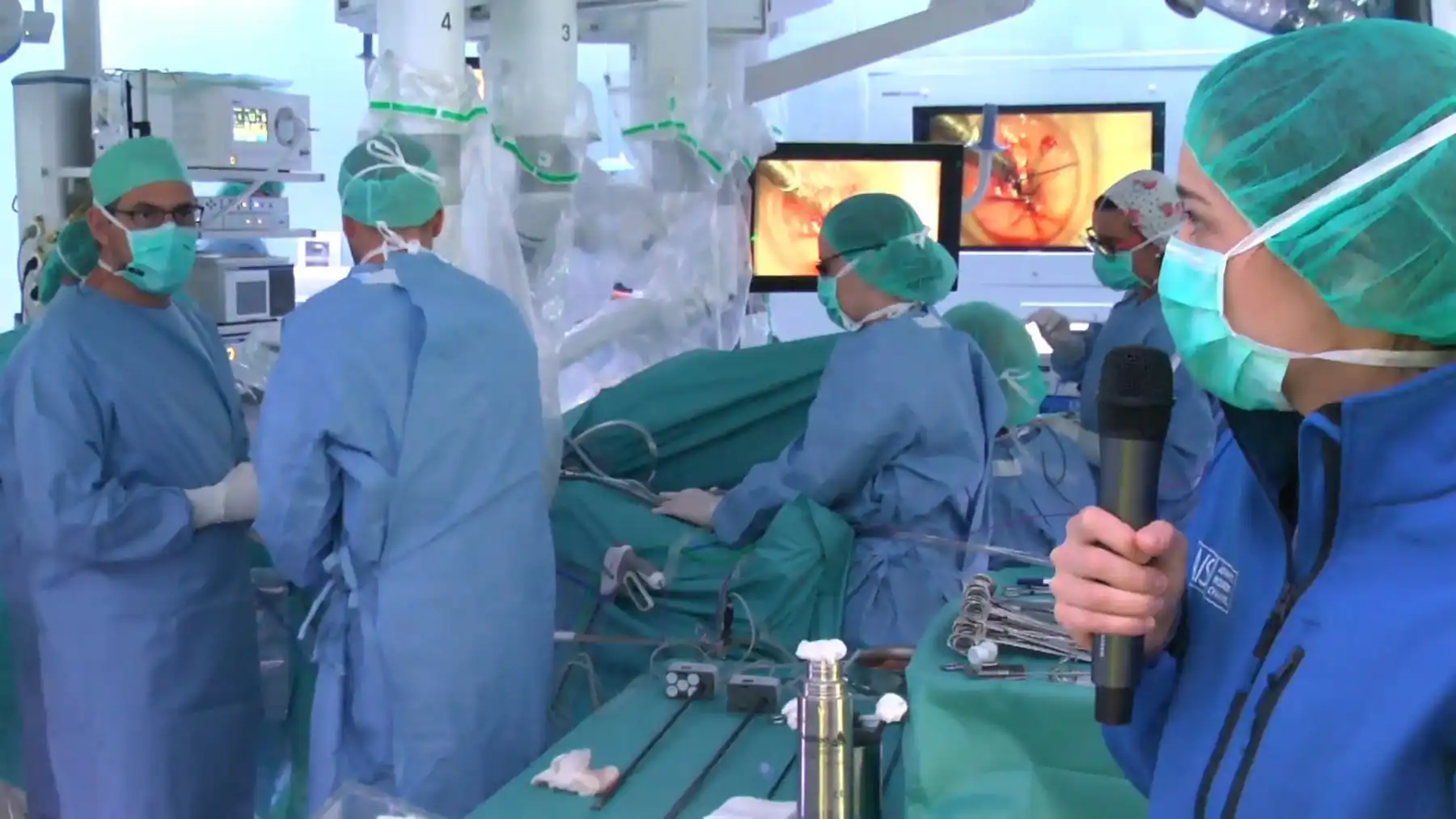
Surgical removal of rectal cancer has the strongest impact on oncologic outcomes. It is feasible to follow the principles of TME through a minimally invasive approach that has several advantages when compared to open surgery. These days surgeons still struggle with issues such as male and obese patients with a narrow pelvis and section of the distal margin. Simultaneous dissection through a transabdominal and transanal approach represents a solution for these problems and many more. Technological improvements such as: new transanal access platforms, 3D visualization system and robotic surgery turns this innovative approach into the least aggressive one for the treatment of rectal cancer. Dr. Alessio Pigazzi from the University of California with Dr. Antonio Lacy and Dr. Raquel Bravo performed a combined robotic and transanal approach to rectal cancer.
Published
Aug 2015
Help your network discover Dr. Alessio Pigazzi's clinical expertise.