The Latino Surgical Society (LSS) was established as a 501(c)(3) organization in 2017 to nurture and support the advancement of Latino surgeons throughout the United States, and to motivate, mentor, and inspire the under-represented in medicine, medical students and residents who wish to pursue careers in surgery.
The Latino Surgical Society was established to cultivate, nurture, and support the advancement of Latino surgeons. To achieve these objectives, the Society shall:
Establish programs to improve networking and professional development among Latino surgeons in both clinical community and academic settings.
Create programs to improve the professional development of Latinos, ranging from pipeline development to support during medical school, residency and fellowship training, as well as faculty development in academic surgery.
Identify and promote professional and intellectual exchange among surgeons and scientists involved in their related fields.
Promote advancement of underrepresented minorities to leadership positions within academic surgery.
Advance initiatives to promote the health and welfare of Latino populations at institutional, local, state, national, and international levels.
Encourage and assist the study of diseases of importance to the Latino community.
Improve the Latino surgical sections and collaborations in other professional medical societies, such as American College of Surgeons, National Hispanic Medical Association, American Medical Association.
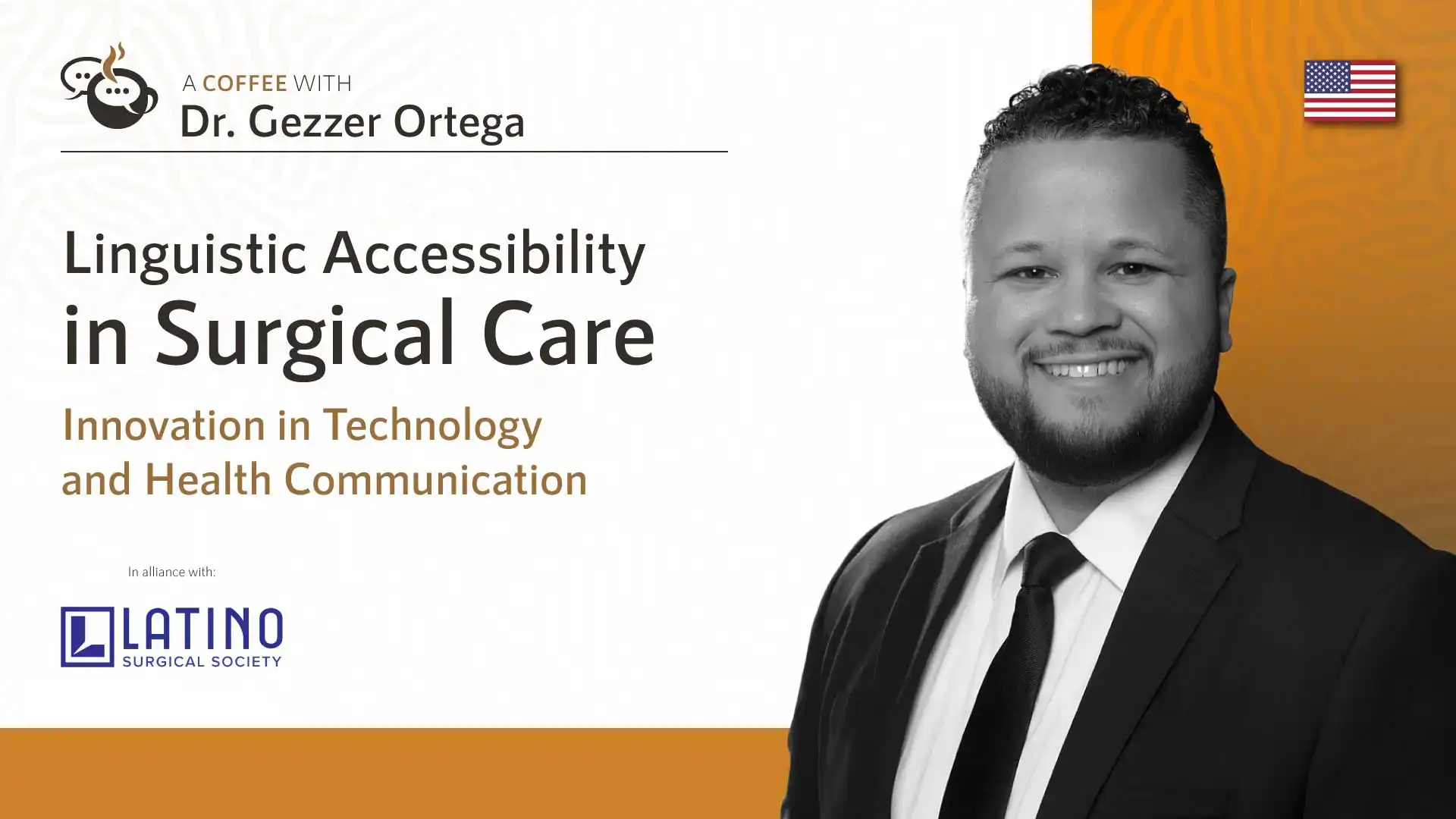
Gezzer Ortega, MD, MPH, is an Assistant Professor of Surgery and Lead Faculty for Research and Innovation for Equitable Surgical Care at the Center for Surgery and Public Health in the Department of Surgery at the Brigham and Women’s Hospital (BWH), Harvard Medical School, and adjunct faculty at the Patient Reported Outcomes, Value & Experience Center. Born in a low-income Brooklyn neighborhood to immigrant parents from the Dominican Republic, Dr. Ortega’s work centers on improving surgical care for low-income and historically underserved populations and promoting language-concordant care for patients with limited English proficiency (LEP). He serves as the Principal Investigator of a National Institute on Minority Health and Health Disparities (NIMHD) K23 and BWH Center for Diversity and Inclusion Minority Faculty Career Development Award focused on improving outcomes for surgical patients with LEP. Dr. Ortega was also the Project Director for the Provider Awareness and Cultural Dexterity Toolkit for Surgeons (PACTS) Trial, a NIMHD R01 project to develop and evaluate a curriculum for surgical residents to improve cross-cultural communication and engagement. Dr. Ortega endeavors to diversify the academic physician workforce and was recognized as Health Provider of the Year (2020) by the Building the Next Generation of Academic Physicians. He co-founded the Latino Surgical Society, which supports the advancement of Latino/a/x surgeons. The National Hispanic Medical Association honored Dr. Ortega as Young Physician of the Year (2020), and he participated in the Emerging Leaders Forum for the National Academy of Medicine. He also received the Syracuse University Chancellor’s Citation Award (2021) and the Harvard Medical School Scholarly Engagement Excellence in Student Mentoring Award (2022). Dr. Ortega earned a Doctor of Medicine from Howard University College of Medicine, a Master of Public Health from the Johns Hopkins Bloomberg School of Public Health, and a Bachelor of Science from Syracuse University.
Published
Oct 2025

In the second part of our series on healthcare disparities and health equity, we continue on the trajectory of the previous installment, now focusing on the imperative of addressing disparities in health and healthcare. Beyond considerations of social justice and equity, these disparities have far-reaching effects on global overall health and economic prosperity. People of color and other underserved groups endure higher rates of illness and mortality across various health conditions, impacting the collective wellbeing of our society. Throughout this series, we aim to explore targeted solutions that dismantle these inequalities and strive towards achieving health equity among surgical patients. Welcome & Introduction - Dr. Bonnie Simpson Mason (USA) and Dr. Steven D. Wexner (USA) Key Elements to overcome organ transplant disparities in Hispanic Americans - Dr. Juan C. Caicedo (USA) Health Equity and Acute Care Surgery Outcomes: the Good, the Bad and the Opportunities - Dr. Wendy Greene (USA) Health Disparities in Surgical Oncology and Possible Solutions - Dr. Marybeth S. Hughes (USA) The Impact of Structural Racism on Breast Cancer Outcomes - Dr. Kathie-Ann Joseph (USA) Panel Discussion - All faculty moderated by Dr. Bonnie Simpson Mason (USA) Closing Remarks - Dr. Bonnie Simpson Mason (USA) and Dr. Steven D. Wexner (USA)
With Johnson & Johnson MedTech
Published
Aug 2023
No upcoming events at the moment.
Share it with your network and help spread clinical knowledge.