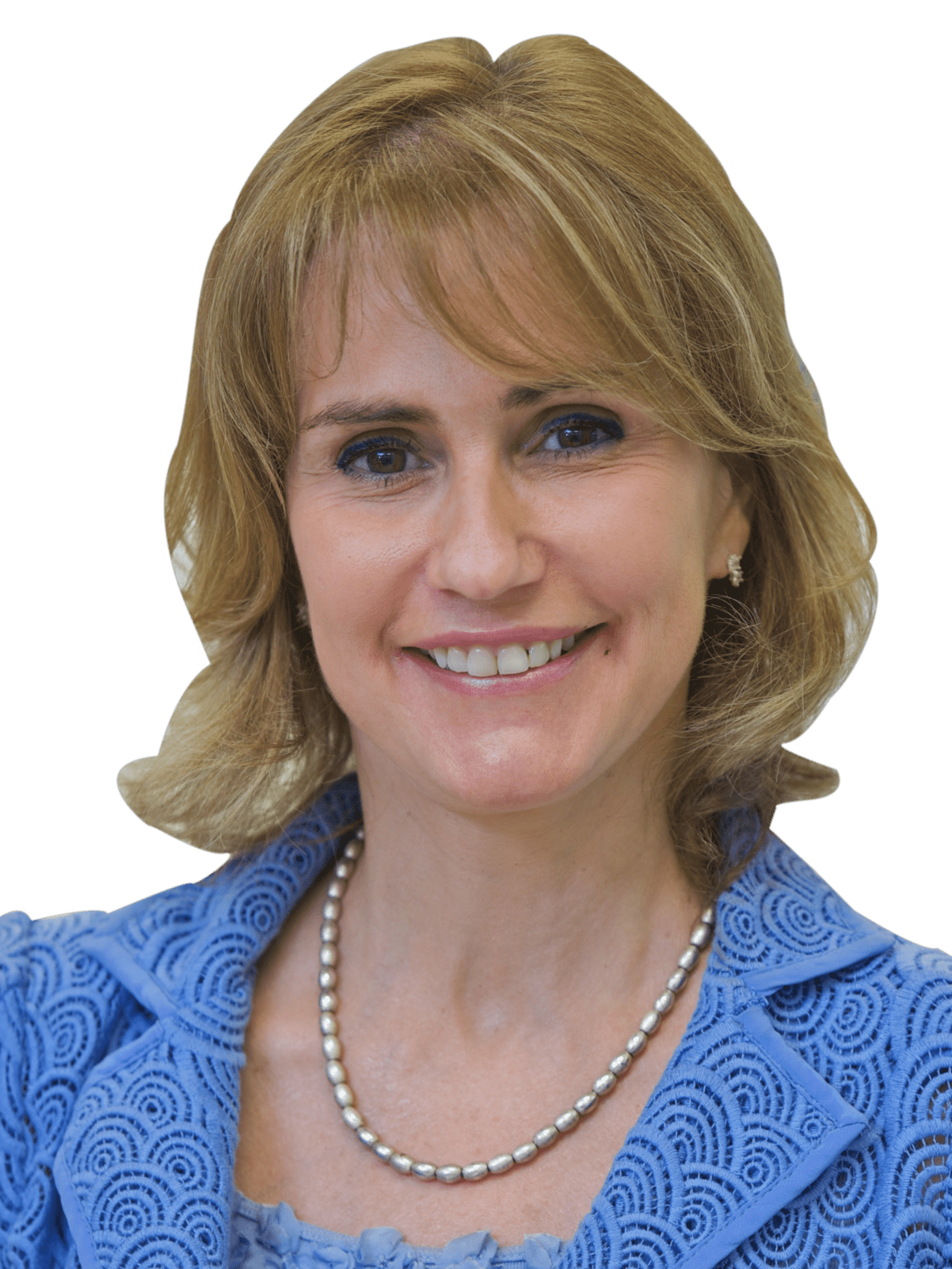
Mariana Berho, M.D., Chairman of the Department of Pathology and Laboratory Services, has been named Chief of Staff at Cleveland Clinic Weston. Dr. Berho, who has been with Cleveland Clinic Weston since 2000, is also Chief Wellness Officer for Cleveland Clinic’s Florida region. Board certified in Anatomic and Clinical Pathology, Dr. Berho completed fellowship training in Immunopathology at the University of Miami and Oncologic Surgical Pathology at Memorial Sloan Kettering in New York, NY. Dr. Berho obtained her medical degree from the University of Buenos Aires in Argentina and completed residencies in West Virginia University in Morgantown, WV, and Mount Sinai Medical Center in Miami Beach, where she was Chief Resident. She recently obtained a Masters’ Degree in Conflict Analysis and Resolution from Nova Southeastern University in Davie, Florida. During her career, Dr. Berho has had a number of academic appointments including, Associate Professor of Clinical Pathology at the University of Miami, Professor of Biomedical Science at Florida International University, Professor of Biomedical Science at Florida Atlantic University, Honorary Clinical Senior Lecturer at University College London.
Selected publications from PubMed
Multicenter phase II trial of transanal total mesorectal excision for rectal cancer: preliminary results.
Sylla P, Sands D, Ricardo A, Bonaccorso A, Polydorides A, Berho M, Marks J, Maykel J, Alavi K, Zaghiyan K, Whiteford M, Mclemore E, Chadi S, Shawki SF, Steele S, Pigazzi A, Albert M, DeBeche-Adams T, Moshier E, Wexner SD
Surg Endosc. 2023 Dec;37(12):9483-9508 doi: 10.1007/s00464-023-10266-9.
Discordance in Total Mesorectal Excision Specimen Grading in a Prospective Phase 2 Multicenter Rectal Cancer Trial: Are We Overestimating the Quality of Our Resections?
Sylla P, Berho M, Sands D, Ricardo A, Bonaccorso A, Moshier E, Hain E, Letchinger R, Marks J, Whiteford M, Mclemore E, Maykel J, Alavi K, Zaghiyan K, Chadi S, Shawki SF, Steele S, Pigazzi A, Albert M, DeBeche-Adams T, Polydorides A, Wexner S
Ann Surg. 2023 Sep 1;278(3):452-463 doi: 10.1097/SLA.0000000000005948.
Medullary carcinoma of the colon: A comprehensive analysis of the National Cancer Database.
Jabbal IS, Nagarajan A, Rivera C, Yaghi M, Liang H, Nahleh Z, Bejarano P, Berho M, Wexner S
Surg Oncol. 2022 Dec;45:101856 doi: 10.1016/j.suronc.2022.101856.
The multidisciplinary management of rectal cancer.
Keller DS, Berho M, Perez RO, Wexner SD, Chand M
Nat Rev Gastroenterol Hepatol. 2020 Jul;17(7):414-429 doi: 10.1038/s41575-020-0275-y.
Personalized management of elderly patients with rectal cancer: Expert recommendations of the European Society of Surgical Oncology, European Society of Coloproctology, International Society of Geriatric Oncology, and American College of Surgeons Commission on Cancer.
Montroni I, Ugolini G, Saur NM, Spinelli A, Rostoft S, Millan M, Wolthuis A, Daniels IR, Hompes R, Penna M, Fürst A, Papamichael D, Desai AM, Cascinu S, Gèrard JP, Myint AS, Lemmens VEPP, Berho M, Lawler M, De Liguori Carino N, Potenti F, Nanni O, Altini M, Beets G, Rutten H, Winchester D, Wexner SD, Audisio RA
Eur J Surg Oncol. 2018 Nov;44(11):1685-1702 doi: 10.1016/j.ejso.2018.08.003.

This program is the finale of the 2022 monthly series of diversity, equity, and inclusion sessions. This broadcast includes healthcare leaders from North and South America and Africa who will present their successful practical strategies for ensuring implementation and maintenance of organizational and institutional DEI integration. The experiences of these leaders from renowned health care organizations around the world will include a robust discussion of specifics which can be brought to every group. The wisdom of this esteemed faculty will be an information-packed episode with lively international interaction among the faculty and the worldwide audience.
With Cleveland Clinic
Published
Dec 2022
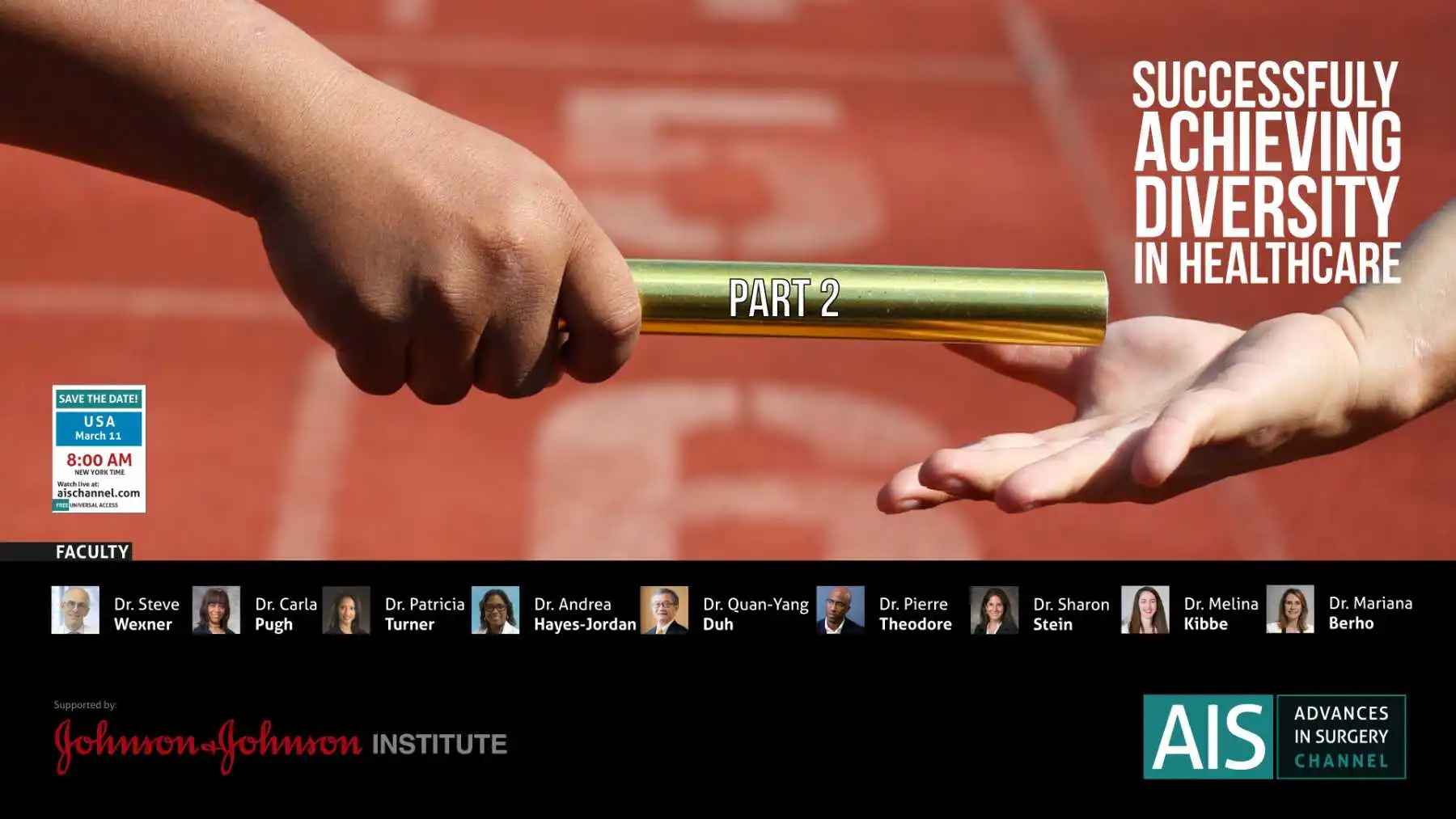
Program Association of women surgeons – Dr Sharon Stein (USA) Society of Black Academic Surgeons – Dr Andrea Hayes-Jordan (USA) Society of Asian Academic Surgeons – Dr Quan-Yang Duh (USA) Ensuring educational opportunities – Dr Carla Pugh (USA) The role of journals in achieving diversity – Dr Melina Kibbe (USA) Health Equity and the Role of the Private Sector – Dr Pierre Theodore (USA) Discussion – All faculty moderated by Dr Steven Wexner (USA), Dr Patricia Turner (USA) and Dr Mariana Berho (USA)
With Johnson & Johnson MedTech
Published
Mar 2021
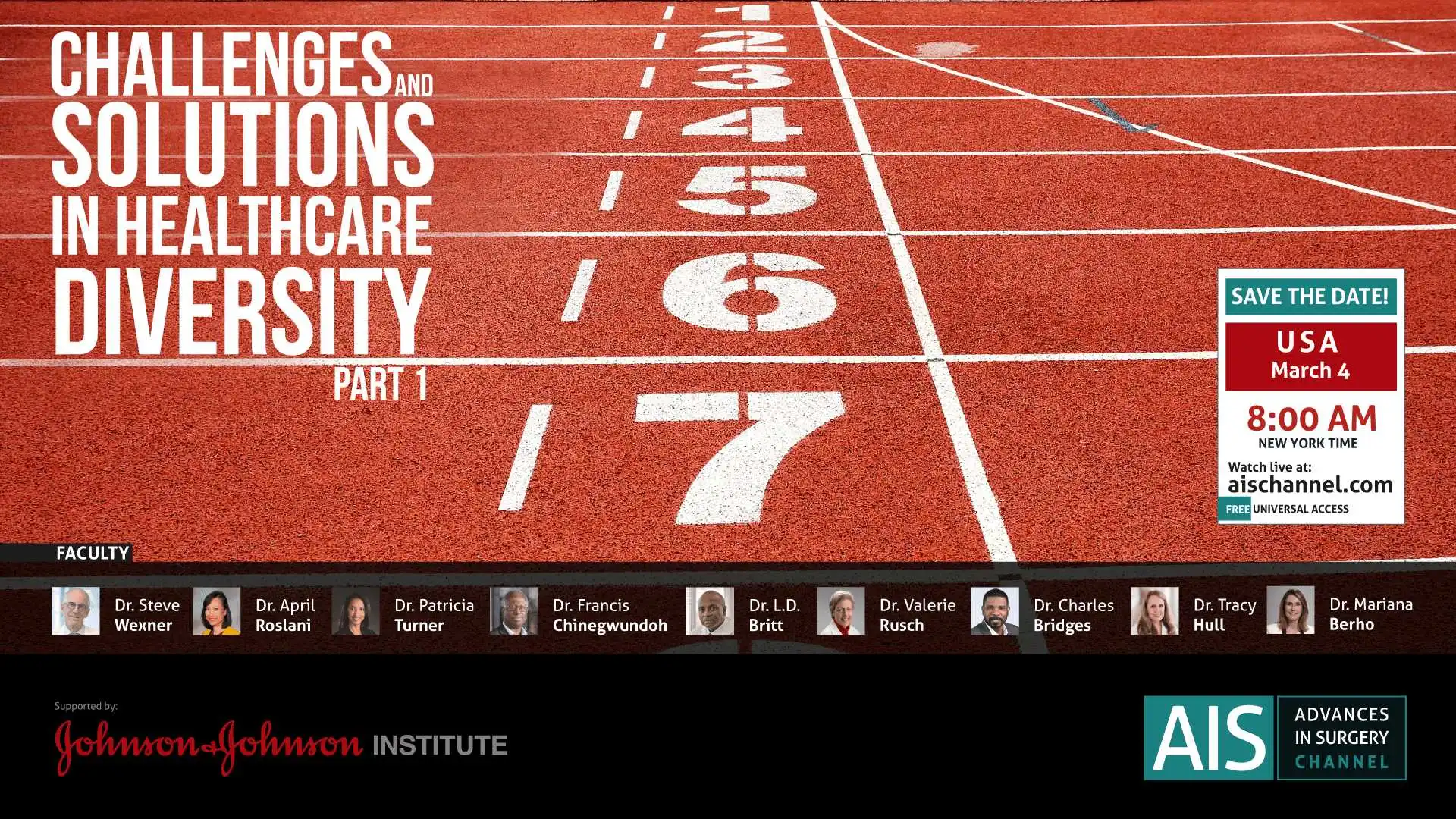
Challenges and Solutions to Diversity Part 1, divided into: Challenges to women surgeons in Asia – Dr April Roslani (Malaysia), Black surgeons as leaders – Dr. Francis Chinegwundoh (UK), The importance of mentoring – Dr L.D. Britt (USA), Women surgeons as mentors – Dr Tracy Hull (USA), Women surgeons as leaders – Dr Valerie Rusch (USA), Diversity in innovation at J&J – Dr Charles Bridges (USA), Discussion – All faculty moderated by Dr Steven Wexner (USA), Dr Patricia Turner (USA) and Dr Mariana Berho (USA)
With Johnson & Johnson MedTech
Published
Mar 2021
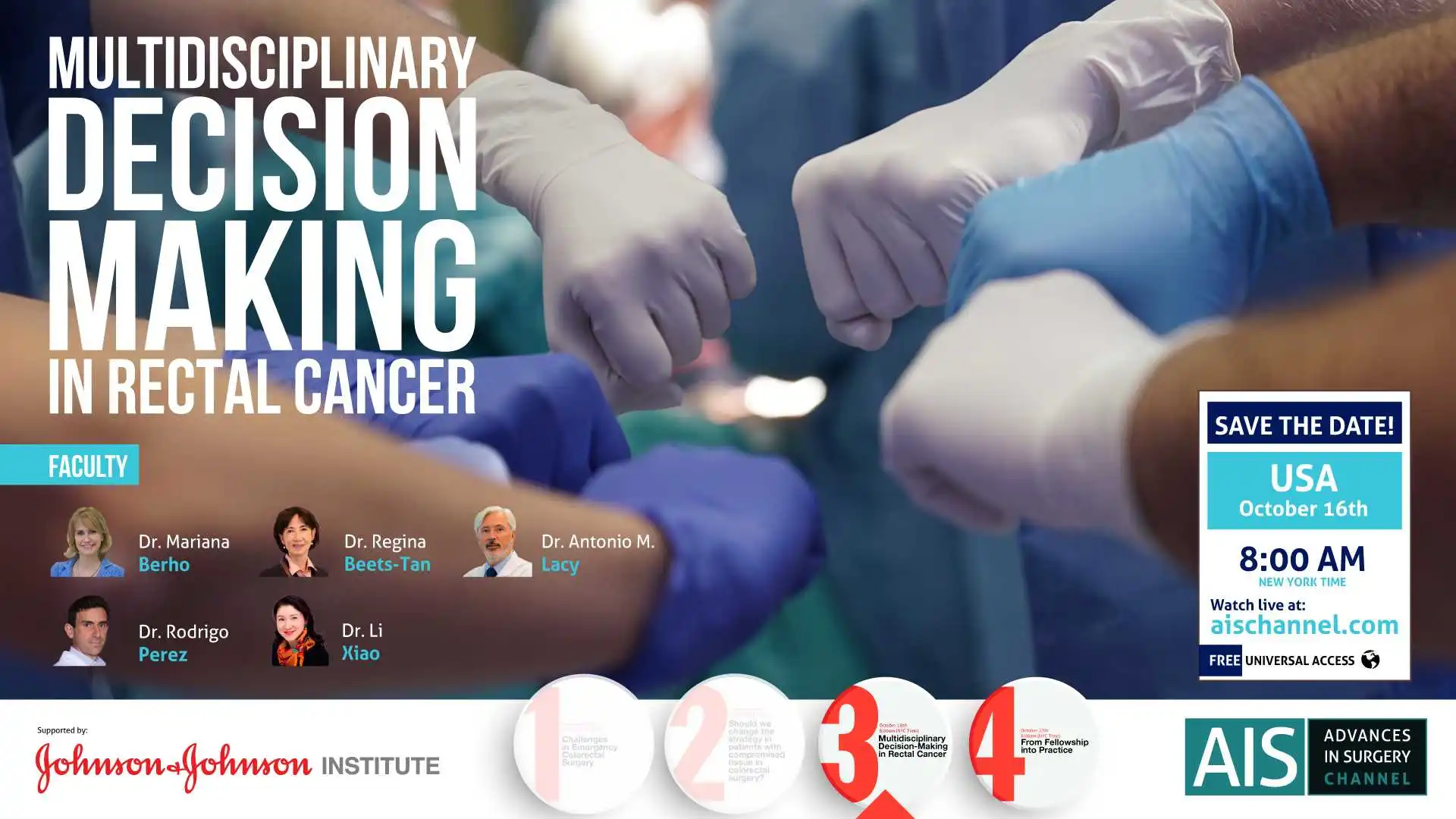
In this event we want to highlight the decision-making process behind the treatment strategy chosen for each of our patients. Pathologists, radiologists, oncologists., and surgeons from all over the world will be coming together to discuss the best available options, the ideal path to follow, and the need for supplemental treatment.
With Johnson & Johnson MedTech
Published
Oct 2020

Anastomotic leakage is the result of an abnormal healing process. The pathophysiology of wound healing should allow us to understand the anastomotic dehiscence. There are three phases in the healing process: inflammation, proliferation and remodeling. During normal blood flow, red cells, neutrophils, lymphocytes, platelets and macrophages circulate in the center of the vessels. An injury disturbs this flow and these cells come to the surface. They come into contact with endothelial cells and their adhesion molecules which allow them to escape to the extravascular compartment when the permeability increases. It is a difficult process for neutrophils, which requires special skills, such as locomotion, priming and degranulation. All of this requires oxygen, and therefore a good blood flow. Lymphocytes will regulate the process and start the proliferative phase, when collagen is produced. Days later the remodeling phase starts, requiring a perfect balance between the production and degradation of matrix products. Wound healing in the colon is different than in the skin. The cells that destroy the matrix are found in a larger amount in the microflora. But the pathophysiology underlying the anastomotic healing process is the same that we find in wound healing. So factors such as age, medications, sex hormones or diseases like diabetes or immune alterations, as well as hypoxia and the kind of microflora in the colon, have a direct effect on the healing process. In 1955 Dr. Cohn from New Orleans published a paper in Annals of Surgery suggesting that colon bacteria had something to do with the results of the anastomoses performed in elective surgery, proposing preoperative colon preparation to improve them. Gut microbiota is composed of one hundred trillion bacteria. Most of them are harmless but 1% of them, including Enterococcus, Pseudomonas and Escherichia, are potentially very harmful in the presence of a wound or an anastomosis. Bacteria come into contact with the enterocyte when an injury occurs. They are able to produce matrix proteases, enzymes that destroy the extracellular matrix and therefore the anastomosis. There is likely a link between bacteria and the blood flow, causing an anastomotic leak when found together. In conclusion, the fate of an anastomosis depends on good technique as well as on good microflora and a good blood flow. But, Dr. Berho wonders, what would the best way to evaluate the blood flow in an anastomosis be?
Published
Apr 2018

First, the past, present and future of the total mesorectal excision were discussed by its creator, Richard Heald. Then a series of lectures given by Mariana Berho, Paris Tekkis and Steven Wexner focused on hot topics: Do the results of TME vary by technique?, Do the clinical outcomes vary with technique? and Attempts to reduce anastomotic leaks. A block of videos was broadcast where the surgical approaches to TME were evaluated. Brendan Moran talked about the open approach and its place in current practice. Yves Panis talked about the laparoscopic TME and its advantages. Jim Khan was in charge of demonstrating the robotic TME, showing how an accurate dissection was performed. And Antonio Lacy explained all the essentials, tips and tricks to perform a taTME, which is the most innovative and least invasive approach. The most interesting part of the event was having great surgeons perform simultaneous and live open, laparoscopic, robotic and transanal TME procedures. This dynamics made it possible to compare the benefits, limitations and pitfalls of the current approaches in front of a huge audience of surgeons from all over the world. It was an amazing experience. Once the specimens had been resected the quality of the dissection was assessed by Mariana Berho and Nicholas West. Finally the panel of experts held a discussion, giving their views and recommendations. Regarding the statistics of the event, the AIS Channel Winter Event 2016 was again hugely successful. It was seen live by more than 25,000 viewers from 102 countries. Interaction with the global audience was once again very powerful. Moreover, these amazing figures will increase once the event is published on AIS for permanent viewing in the next few days.
Published
Nov 2016
Help your network discover Dr. Mariana Berho's clinical expertise.