
Bariatric Surgery
Professor of Surgery, Chief of General, Digestive and Thoracic Surgery of Hospital Clinico “San Carlos”, Madrid, Spain
Dr. Antonio J. Torres was born in Coin (Málaga), Spain (17 December 1955). He received his M.D. degree from Málaga University School of Medicine in 1978 (License Number: 28551. He completed his training as a surgical intern and resident at the Carlos Haya University Hospital in Malaga (Spain) where he completed his residency in General and Digestive Surgery in 1981. Afterwards he completed his residency in Thoracic Surgery at the Complutense University School of Medicine (Clínico San Carlos Hospital) in Madrid in 1986. Dr. Torres is certified by the Spanish Board of General and Digestive Surgery (1981) and Spanish Board of Thoracic Surgery (1986). In 1983, he got his Ph Degree at the Complutense University School of Medicine in Madrid After completing his residencies, Dr. Torres became staff of the General, Digestive and Thoracic Service at the Clínico San Carlos Hospìtal, in Madrid (Spain). In 1986, Dr. Torres became Associate Professor of Surgery at the Complutense University of Madrid (Spain). In 2000, he became Professor of Surgery at the same University. At present time, he is Professor of Surgery at the Complutense University of Madrid, and Chief of the General and Digestive Surgery Service at the Clínico San Carlos Hospital. His main areas of interest have been: Bariatric Surgery, Metabolic Surgery, Obesity, Gastrointestinal Hormones, Intra-abdominal Infections, Surgical Oncology and Video-Endoscopic Surgery (Anti-reflux procedures, HepatoBilioPancreatic surgery, and Obesity Surgery procedures) He is a member of 28 national and international professional associations Dr. Torres has authored or co-authored over two hundred peer-reviewed journal articles and serves as principal investigator on numerous studies including several grants funded by official institutions. Dr. Torres was the President of SECO (2007-2011), and the European Representative at International Federation for Obesity Surgery (IFSO) General Council (2008-2011). IFSO´s President (2011-12). Vice-Chairman of the IFSO´s Board of Trustees (2014-15) Chairman of the IFSO´s Board of Trustees (2015-19).
Selected publications from PubMed
The BARIAlink Global Collaborative Platform: Just Another Educative Tool or a Pioneering Evolution in the Treatment of Metabolic and Obesity-Related Disease?
Wafa A, Himpens J, Torres A, Parmar C, Dillemans B
Obes Facts. 2026 Jul 24;:1 doi: 10.1159/ofa/adzag001.
A randomized open-label multicentre clinical trial comparing single-anastomosis duodenal switch (SADI-S) versus Roux-en-Y gastric bypass for the treatment of severe obesity: BYPSADIS study protocol.
Osorio J, Lazzara C, Guimaraes M, Torres A, Turrado-Rodríguez V, Ibarzabal A, Sobrino L, Nora M, Vilarrassa N, de Hollanda A, Rubio-Herrera MA, Vidal J, Moizé V, Yarnoz C, Fernandez-Falop I, Portillo M, Sánchez-Pernaute A
Scand J Surg. 2026 Mar;115(1):119-128 doi: 10.1177/14574969251385873.
Long-Term Outcome of Isolated Duodenal Transit Bipartition as Initial Metabolic Surgery: A 19-Year Follow-Up Case Report.
de Melo PRRE, Dib VRM, Madalosso CAS, d'Almeida LAV, de Godoy EP, Chaim EA, de Aquino CGG, Ribeiro RJS, Madalosso CA, Okano Júnior H, Baretta GAP, Kruel NT, Waltrick Junior JJ, Kfouri DS, Dos Santos FAI, Kawahara NT, Abaid RA, de Barros F, Frota Dillenburg C, Sampaio Neto JGM, da Costa RAMB, Goyano GSR, Melo FRE, Braga TC, Caiña DO, Noel P, Yunus TE, Parmar C, Zorron R, Teixeira A, Galvao Neto M, Ramos AC, Torres A
Am J Case Rep. 2026 Jan 12;27:e950650 doi: 10.12659/AJCR.950650.
Gastric Bipartition with Functional Duodenum Exclusion (GBp-FDE) as a Possible Surgical Conversion of Sleeve Gastrectomy in Patients with De Novo GERD and Obesity Recidivism: Preliminary Results of a Case Series.
Dib VRM, Madalosso CAS, De Melo PRRE, Ramos AC, D'Almeida LAV, Antozzi L, Balibrea Del Castillo JM, Noel P, Galvão Neto MP, Chiappetta S, de Barros F, Teixeira A, Chaim EA, Zorron R, de Godoy EP, de Aquino CGG, Baretta GAP, Kfouri DS, Okano Júnior H, Kawahara NT, Tinoco ACA, Kruel NT, Waltrick Junior JJ, Frota Dillenburg C, Dos Santos FAI, Abaid RA, Da Costa CEA, Scortegagna GT, Silva GF, Taskin HE, Nassar RM, Layani LA, Caiña DO, Avalos MA, Bravo Lópes J, Sotelo JSV, Vilallonga Puy R, Stier CK, Domene CE, Volpe P, García Ruiz de Gordejuela A, Poggi L, Torres A, Carbajo MÁ, Braghetto I, Ribeiro R, Parmar C
Am J Case Rep. 2025 Nov 27;26:e950798 doi: 10.12659/AJCR.950798.
Impact of high-protein bariatric diet on the prevention of postoperative nausea and vomiting.
Anderson B, Iyer A, Rama M, O'Connell AM, Torres AP, Koeneman SH, Tholey R, Beekley A, Palazzo F, Tatarian T
Surg Obes Relat Dis. 2025 Aug;21(8):929-934 doi: 10.1016/j.soard.2025.02.002.
Single Anastomosis DuodenoIleal bypass with Sleeve (SADIS procedure)
With Olympus
Published
Dec 2019

Dr. Antonio Torres , the former president of IFSO and clinical professor at the Hospital Clínico San Carlos of the Complutensian University (Madrid) gave this speech during the IV IFSO online symposium, in the virtual learning academy. He talked about the treatment o ptions for weight regain after laparoscopic sleeve gastrectomy (LSG) . In his experience LSG accounts for the 49% of all obesity surgical procedures , and its performance has been increasing in number worldwide. According to the quality standards of weight loss, the percentage of excess body mass index (BMI) or weight loss (EWL) should be over 50% one year after surgery. In patients who do not meet this goal, either due to a lack of weight loss or due to weight regain, revisional surgery is proposed. Many options are available, such as re-sleeve, laparoscopic Roux-en-Y gastric bypass (LRYGB), one anastomosis gastric bypass (OAGB) or single anastomosis duodeno-ileal bypass (SADI). Dr. Torres focuses on the results of SADI after LSG . This surgery adds malabsorption and a greater metabolic effect, with good long-term results regarding EWL, which according to some series is above 70% . Dr. Torres presents the results of his team, recorded from 2007 to 2017, and including 33 patients who underwent SADI after LSG. The total revision rate due to insufficient weight loss in their experience is 9.8% of cases. The mean time to the second step is 33 months and the resulting EWL is 72% . Regarding the metabolic evolution of these patients, 92% of previously diabetic patients are off therapy after SADI. Nevertheless, greater need for supplementation is found compared to LSG, as well as more abnormalities in the laboratory findings. In conclusion , SADI is a safe, simple, versatile and reproducible procedure, with a low complication rate. Better results are found when performing SADI after LSG than after LRYGB. Moreover, it seems to be more physiological than the gastric bypass and has fewer side effects than the standard duodenal switch. As Dr. Torres wonders, could it become the gold standard after a failed LSG ? After the conference Dr. Torres answered some questions and a debate took place among experienced surgeons in obesity surgery (M. Gagner, J.M. Chevallier, R. Rosenthal, M. Lakdawala, A. Ramos) to discuss technical and conceptual aspects regarding the alternatives after a failure in weight loss or a weight regain after obesity surgery. [Image]
Published
Feb 2018

Single anastomosis duodeno-ileal bypass with sleeve gastrectomy (SADI-S) is a new operation for morbid obesity based on the biliopancreatic diversion in which a sleeve gastrectomy is followed by an end-to-side duodeno-ileal diversion. After a sleeve gastrectomy, many surgical options are available for patients with insufficient weight loss. The duodenal switch is typically considered the operation that results in the greatest weight loss, although it is, perhaps unjustly, regarded as technically difficult and may be accompanied by severe side effects. A single anastomosis duodeno-ileal bypass with a sleeve gastrectomy is a simplification of the duodenal switch that may behave as a standard biliopancreatic diversion but is easier and quicker to perform. The preservation of the pylorus makes the reconstruction possible in one loop, which reduces operating time and requires no mesentery opening. Given its effectiveness as a primary surgery, it is hypothesized that it would be successful as a second-step operation. Antonio Torres MD, Professor of surgery at the Hospital Clinico San Carlos presents an interesting talk about the SADI-S procedure, confirming that it is a safe operation that offers a satisfactory weight loss for patients subjected to a previous sleeve gastrectomy with minimal side effects and complications.
Published
Nov 2016

In the colorectal field, Willem Bemelman used the TAMIS approach for treatment of pouch complications in a patient with a history of ulcerative colitis. From the Hospital Clínic at Barcelona, Antonio M. de Lacy and his team showed the most innovative surgical approach for radical resection of rectal cancer, the Cecil approach. Alessio Pigazzi also joined us to show the advantages of robotic assistance in this procedure. As regards the treatment of functional colorectal disorders, André D’Hoore commented on the indications and main steps for the most effective surgical treatment for rectal prolapse, the laparoscopic ventral rectopexy. The Altemeier procedure may be considered for fragile and elderly patients requiring a short operative time and low surgical aggression. Raúl Almenara performed this operation focusing on the technical aspects to obtain good results. There are currently modern techniques for treatment of fecal incontinence and hemorrhoids aimed at delivering the lowest aggression rate to selected patients. Sebastiano Biondo showed all the factors involved in a Gatekeeper for rectal prolapse and a transanal hemorrhoidal dearterialization (THD) as a minimal invasive procedure for treatment of hemorrhoids. In the bariatric field Antonio Lacy and Raquel Bravo commented on the results of a Sleeve Gastrectomy and took us through the basics to perform it. Dr Lacy also delivered a step by step for gastric bypass with Dulce Momblán. In this live surgery, the main anatomical landmarks, the length of the loops and the approaches to perform the anastomosis were reviewed. They also performed a complex case of revisional bariatric surgery, the conversion of a sleeve gastrectomy into a Scopinaro procedure in a patient with severe adhesions from previous surgeries. Together with Ricard Corcelles, Antonio Lacy also performed the conversion of a sleeve gastrectomy into a Roux-en-Y gastric bypass in a GERD patient. Guy-Bernard Cadière performed the conversion of a failed lap band into a Roux-en-Y Gastric bypass, proving that it is feasible and safe to perform removal and conversion in a single surgery. There are other surgical techniques with promising results for treatment of morbid obesity and its comorbidities. Andres Sanchez-Pernaute and Antonio Torres explained the main factors about the SADI procedure while performing it. We are aware of the increasing relevance of advanced endoscopic skills. Haruhiro Inoue and Gloria Fernández Esparrach proved this by showing a POEM procedure in an achalasia patient. We also had Michael Bourke performing a complex polypectomy, more specifically the removal of a polyp located at the ileocecal valve. We strongly believe that proctoring and training of residents and young surgeons must be a priority. In 2015 two live surgeries were dedicated to the training of surgical residents: more specifically, a lap sleeve gastrectomy and a lap sigmoidectomy This was an amazing year for AIS Channel. Thank you for viewing us, and get ready for 2016!
Published
Dec 2015
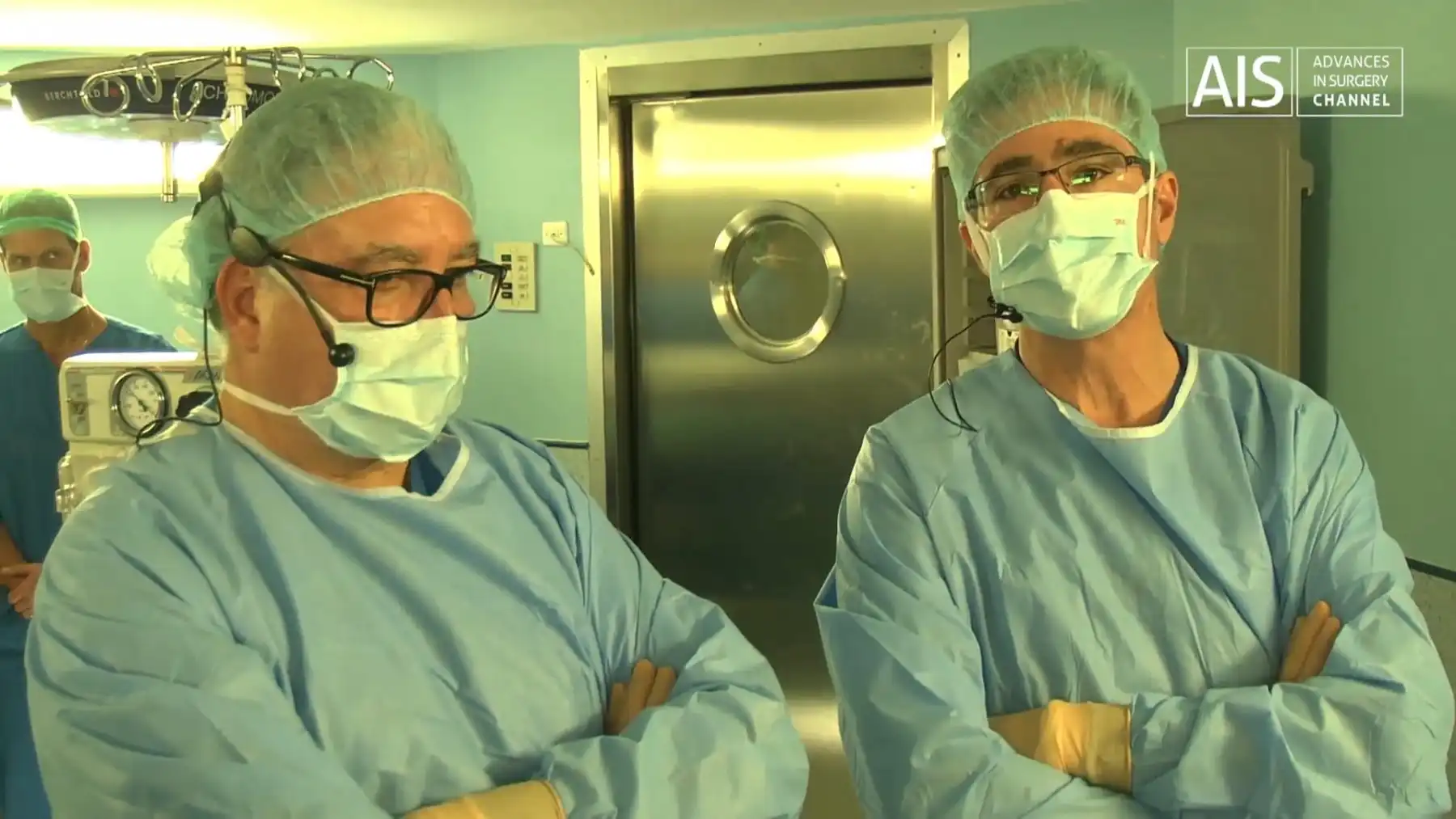
The Single Anastomosis Duodeno-Ileal bypass (SADI procedure) is a bariatric operation aimed at decreasing postoperative complications and achieving sustainable long-term results: The SADI procedure (Single Anastomosis Duodeno Ileal bypass) is a bariatric procedure that is the evolution of a BPD-DS after a sleeve gastrectomy aimed at decreasing technical difficulty and postoperative complications. Follow-up after 5 years is available and reveals good control of T2DM (74 - 80% of patients with HbA1c below 6%). Other benefits are: a low complication rate and “easy revision” if required. Dr. Andrés Sanchez-Pernaute and Dr. Antonio Torres performed a Live SADI procedure at Hospital Clínico San Carlos of Madrid.
With Johnson & Johnson MedTech
Published
Oct 2015
Help your network discover Dr. Antonio Torres's clinical expertise.