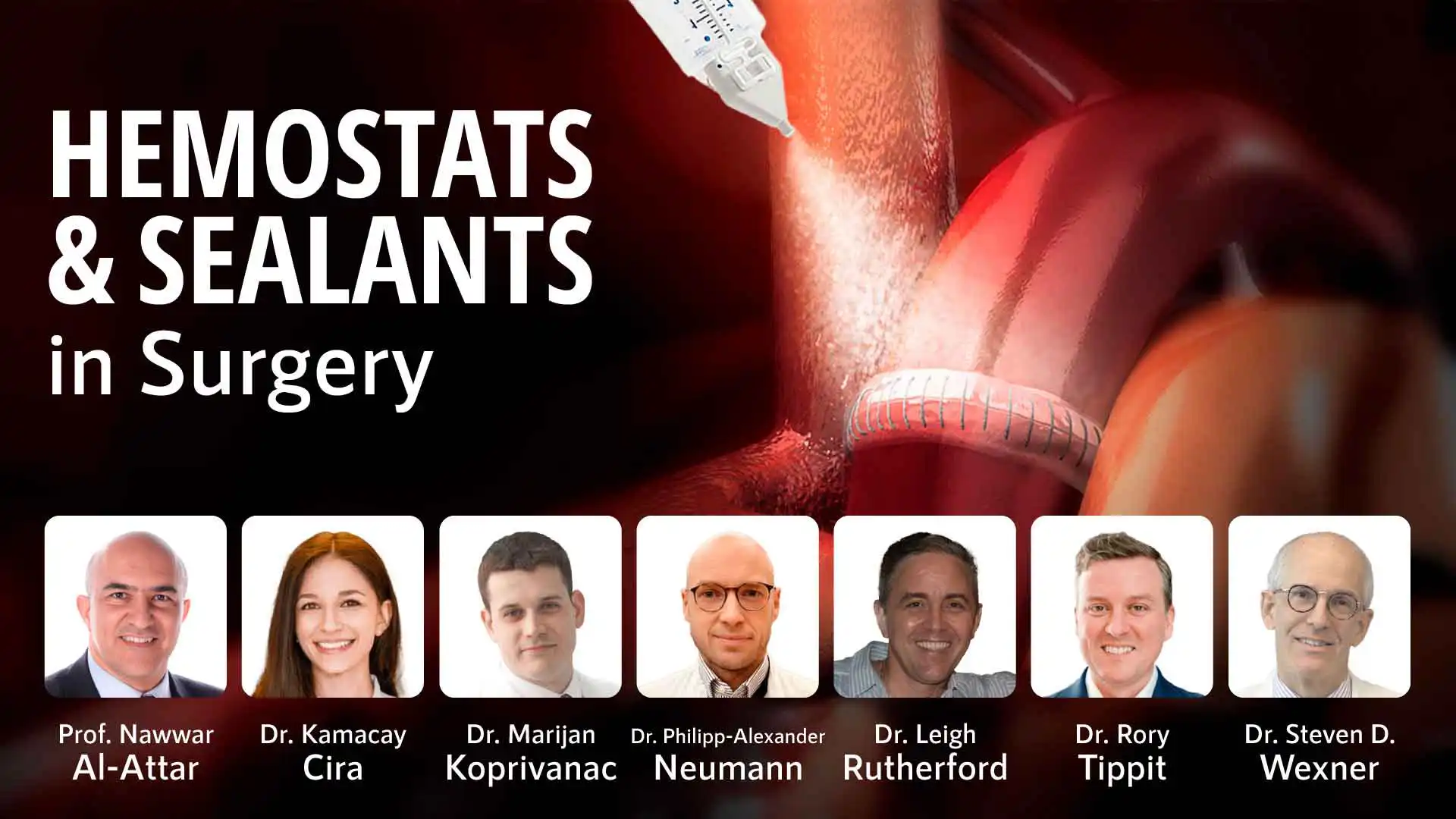
Meticulous hemostasis is essential in all surgical procedures. Along with techniques like ligation and the use of energy sources, there are numerous other methods available to ensure effective hemostasis and tissue sealing. Understanding the differences between active and passive hemostatic agents is key, as they play different roles depending on the surgical setting. Despite the specific demands of gastrointestinal, cardiothoracic, and endocrine surgeries, many principles of hemostasis remain consistent across these disciplines. One such principle is the use of the VIBe scale, a universally accepted method for assessing hemostasis.
PROGRAM
Clinical Background
Welcome & Introduction - Dr. Steven D. Wexner (USA)
Advancing Surgical Success: The Role of Hemostats and Sealants in the OR - Dr. Rory Tippit (USA)
Surgical Sealants for Gastrointestinal Anastomoses - Dr. Kamacay Cira (Germany) and Dr. Philipp-Alexander Neumann (Germany)
Surgical Sealants in Cardiothoracic Surgery - Dr. Marijan Koprinavac (USA)
Surgical Sealants in Endocrine Surgery - Dr. Leigh Rutherford (Australia)
VIBe Scale: For a Better Outcome for Your Patience, a Better Outcome Amongst Your Peers and a Constructive Service Development Plan - Prof. Nawwar Al-Attar (UK)
Panel Discussion - All faculty moderated by Dr. Steven D. Wexner (USA)
Share it with your network and help spread clinical knowledge.









_0.webp)