with Dr. José M. Fort Lopez-Baraja, Dr. José M. Balibrea
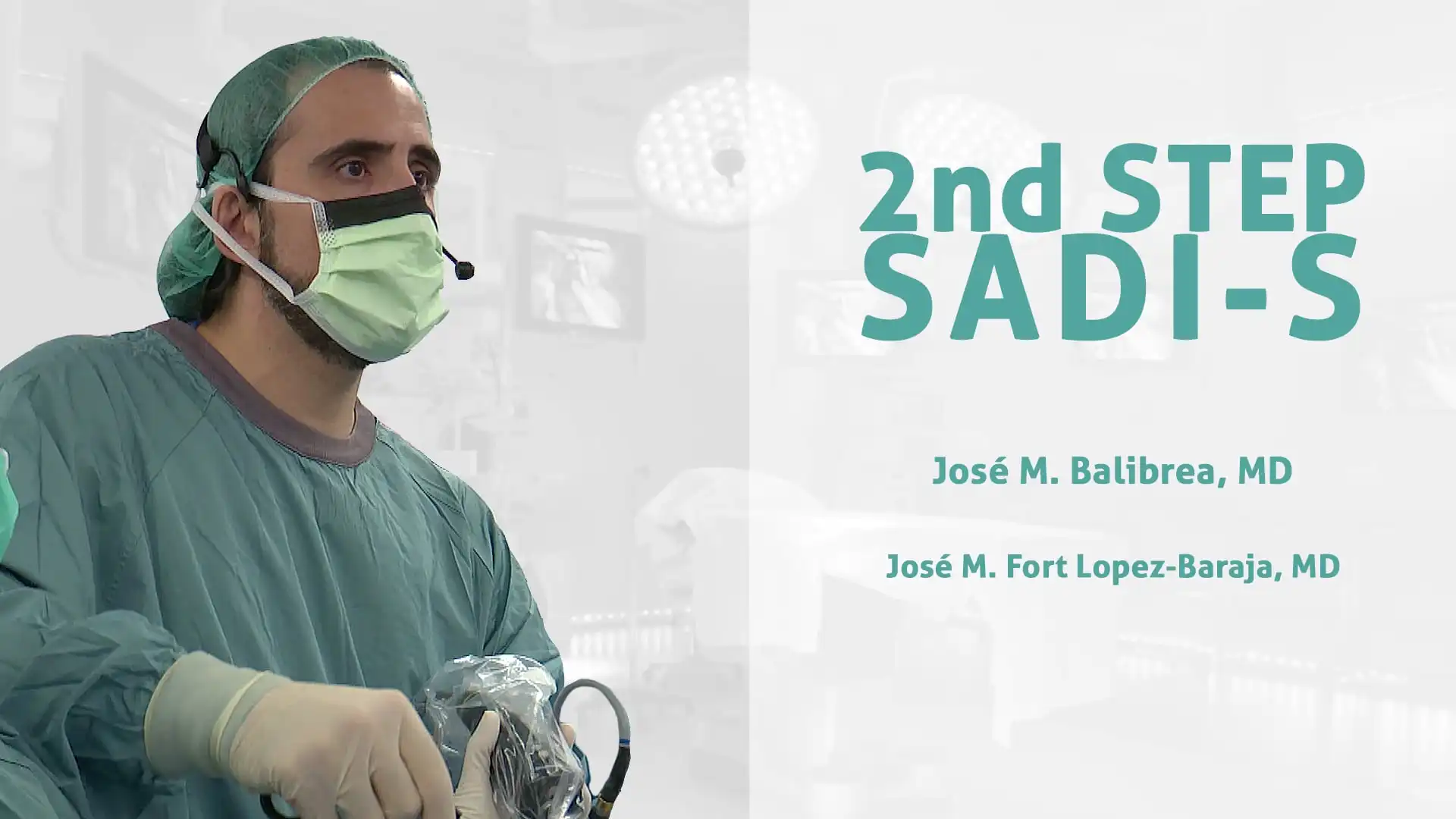
Single-anastomosis duodenal-ileal bypass (SADI) can be considered a valid option for patients with insufficient weight loss after sleeve gastrectomy (SG) or in super obese individuals as a 2nd stage procedure. It can be described as a simplified duodenal switch that offers both biliopancreatic diversion metabolic effects and easier performance. Moreover, pylorus preservation has been given as a possible benefit. When SADI and SG are performed together as a primary operation, results are excellent in terms of weight loss and comorbidity resolution. Hence, it has been hypothesized that SADI could be successful a second-step operation. Recently published short and mid-term results indicate that it is a safe, feasible and effective second-stage procedure. The procedure was performed by Dr. José M. Balibrea and Dr. José M. Fort from the Hospital Vall d'Hebron in Barcelona.
Single-anastomosis duodenal-ileal bypass (SADI) can be considered a valid option for patients with insufficient weight loss after sleeve gastrectomy (SG) or in super obese individuals as a 2nd stage procedure. It can be described as a simplified duodenal switch that offers both biliopancreatic diversion metabolic effects and easier performance. Moreover, pylorus preservation has been given as a possible benefit. When SADI and SG are performed together as a primary operation, results are excellent in terms of weight loss and comorbidity resolution. Hence, it has been hypothesized that SADI could be successful a second-step operation. Recently published short and mid-term results indicate that it is a safe, feasible and effective second-stage procedure. The procedure was performed by Dr. José M. Balibrea and Dr. José M. Fort from the Hospital Vall d'Hebron in Barcelona.
Share it with your network and help spread clinical knowledge.