
Gastroenterology
Clinical professor at Aarhus University, Aarhus, Denmark
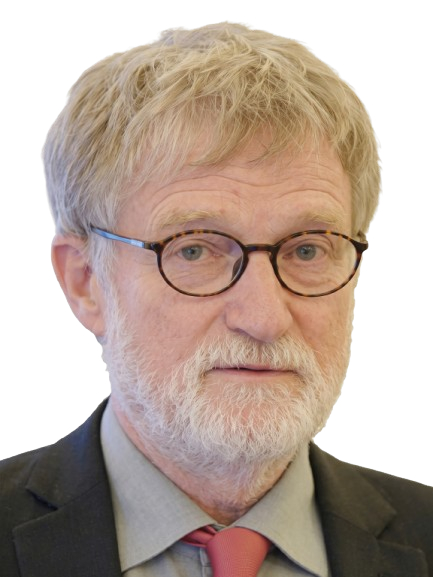
Søren Laurberg is a clinical professor at Aarhus University dedicated to late adverse effects beyond cancer.
During his training as a surgeon, he developed a special interest in functional problems of the bowel. With a grant from Aarhus University, he worked as a research fellow at the famous and pioneering institution for bowel dysfunction (Sir Allan Park´s Ano-rectal Physiology Unit at St Mark´s Hospital, London). Following this visit, he founded and was Head of the Ano-rectal Physiology Unit in Aarhus while he finished his training to become a consultant in Aarhus. Ever since, his main research interest has been in functional problems to colorectal disease and in the last 10 years with a special focus on functional problems following treatment of bowel cancer. He was the initiator of a multidisciplinary pelvic floor unit at Aarhus University Hospital and creation of a multidisciplinary clinic for the treatment of pelvic organ sequelae.
Selected publications from PubMed
Risk of adverse pregnancy and birth outcomes after open versus laparoscopic surgery for inflammatory bowel disease: a nationwide cohort study.
Mark-Christensen A, Ebert AC, Poulsen GJ, Laurberg S, Fuglsang J, Jess T, Julsgaard M
J Crohns Colitis. 2026 Feb 5;20(2) pii: jjaf234. doi: 10.1093/ecco-jcc/jjaf234.
Sacral neuromodulation with ultra-low stimulation intensity is effective in faecal incontinence - results from a randomised study with a one-stage implant procedure.
Duelund-Jakobsen J, Buntzen S, Lundby L, Laurberg S, Sørensen M, Rydningen M
Tech Coloproctol. 2025 Dec 24;30(1):18 doi: 10.1007/s10151-025-03254-9.
Birth rates after laparoscopic and open ileal pouch-anal anastomosis for ulcerative colitis: a nationwide population-based cohort study.
Mark-Christensen A, Ebert AC, Kirkegaard K, Laurberg S, Poulsen G, Jess T, Julsgaard M
Br J Surg. 2025 Jul 3;112(7) pii: znaf136. doi: 10.1093/bjs/znaf136.
Treatment of Low Anterior Resection Syndrome in Specialized Multidisciplinary Late Sequelae Clinics: A Prospective Cohort Study.
Mekhael M, Kristensen HØ, Borre M, Drewes AM, Emmertsen KJ, Fassov J, Krogh K, Lauritzen MB, Laurberg S, Poulsen JL, Thorlacius-Ussing O, Christensen P, Juul T
Ann Surg. 2026 Oct 1;284(4):839-848 doi: 10.1097/SLA.0000000000006714.
Chronic pain after colorectal cancer treatment: A population-based cross-sectional study.
Elfeki H, Alharbi RA, Juul T, Drewes AM, Christensen P, Laurberg S, Emmertsen KJ
Colorectal Dis. 2025 Feb;27(2):e17296 doi: 10.1111/codi.17296.

Søren Laurberg, Professor of Surgery in Aarhus University Hospital (Denmark) gives a lecture on the cost to society of rectal cancer treatment, both the monetary cost and the suffering associated to the sequelae of rectal resection. Dr. Laurberg explains that in the last years, with the improvement on rectal cancer treatment, survival has increased and thus the necessity for follow-up. Even though there is no clearly demonstrated evidence on the best follow-up, there seems to be some evidence on the superiority of combining CT-scan with CEA. He reviews the FURCA trial, still ongoing, who compares patient led vs regular follow-up in adult patients with rectal cancer. Dr. Laurberg also reviews the impact of laparoscopic surgery on the long term sequelae and how to detect them using questionnaires as the LARS score, that has been translated into more than 30 languages. He remarks the importance of PROMS (patient related outcomes mesures) in terms of bowel, pain, male and female sexuality and bladder function, and the effect of radiotherapy and surgery and of diverting ileostomies on them. He declares that all patients should have the PROMS and that all patients who have major symptoms and want to have treatment should be treated. He concludes that we should rethink have we are doing rectal cancer follow-up and that we should use the PROMS to detect and treat the sequelae of rectal cancer treatment.
Published
Nov 2017

Clinical Case The pathogenesis of rectal prolapse is ill-understood . So far the curative treatment of rectal prolapse is exclusively surgical , but there is no consensus on the best surgical procedure . Surgery may be abdominal or perineal , with most abdominal procedures being rectopexies from the rectum to the sacrum with or without a colon resection. The most widely used perineal operations are Delorme’s procedure and Altemeier’s procedure. Despite the interest of the surgical community in adopting a standard approach to rectal prolapse, trials such as the PROSPER Trial have failed to demonstrate differences between the three operations. Soren Laurberg, Professor of Surgery at Aarhus University Hospital in Denmark, explains the current evidence on rectal prolapse treatment and the functional outcomes associated with each procedure. He highlights the lack of differences in the trials performed to date between the abdominal and perineal approaches and even between different types of rectopexy in the abdominal approach (ventral mesh rectopexy vs. posterior sutured rectopexy).
Published
Jul 2017

The revolution of total mesorectal excision (TME) is associated with an enormous improvement in the rates of locoregional recurrence and thus of overall survival in rectal cancer patients. The advent of minimally invasive techniques has increased the technical difficulty of the procedure. Several papers have demonstrated the link between the number of patients and good postoperative results. Soren Laurberg, Professor of Surgery in Aarhus University Hospital in Denmark, explains the Danish experience with rectal surgery centralization and reviews the evolution of surgical outcomes. As rectal cancer treatment has improved over the decades, so has survival. One of the priorities for rectal cancer survivors is quality of life, which is mostly affected by functional outcomes (anorectal, urologic and sexual). Dr. Laurberg reviews in the last half of his lecture the functional outcomes of TME and quality of life after pelvic surgery.
Published
Jun 2017
Help your network discover Dr. Soren Laurberg's clinical expertise.