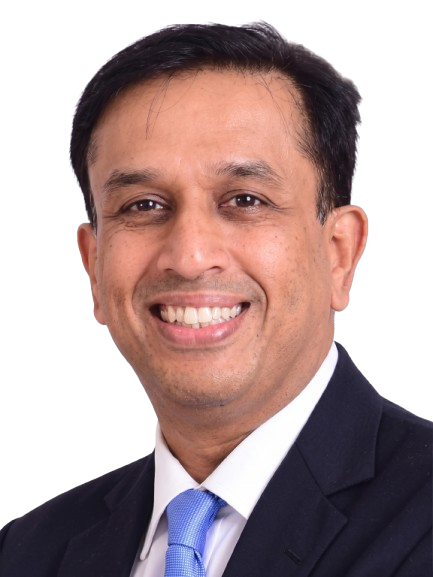
Shailesh V. Shrikhande is a Professor of Surgical Oncology and Head of GI, HPB Surgical Service & Division of Cancer Surgery at the Tata Memorial Center in Mumbai, India. He is also the Deputy Director of Tata Memorial Hospital. He was ranked first in the Master of Surgery examinations of Mumbai University in 1997 and later received specialist training in Pancreatic Research and Pancreatic Surgery at the University of Bern, Switzerland, and the University of Heidelberg, Germany. He was the first Asian to receive the Kenneth Warren Fellowship of the International Hepato-Pancreato-Biliary Association (IHPBA) in 2005. He earned his Doctor of Medicine (magna cum laude) from the University of Heidelberg for his original clinical and basic research on chronic pancreatitis and pancreatic cancer in 2006. He has delivered over 600 lectures and orations all over the world. Apart from having published over 300 clinical and basic science research papers in leading peer-reviewed journals (including a series of 1200 Whipple Resections), Professor Shrikhande has also given 62 live operative masterclass demonstrations on pancreatic, gastric, gall bladder and colorectal cancer across India and abroad. In addition, he has contributed over 75 book chapters and is the Chief Editor of the books “Surgery of Pancreatic Tumors” (2007) and “Pancreatic Cancer: Current Understanding” (2011), ‘Modern Gastrointestinal Oncology (2015) and Pancreas (2023). His h-index stands at 61.
He is the chairman of the Indian Council Medical Research (ICMR) committee that develops guidelines for the management of pancreatic and gastric cancer in India. He is the associate editor of Langenbecks Archives of Surgery and serves on the editorial boards of leading international journals of GI and HPB surgery. He is the Past President of the Indian Chapter of IHPBA. He is the current President of the APHPBA and the Secretary-General Elect of the IHPBA. In recognition of his work on pancreatic cancer and digestive cancer surgery in India, he was awarded an Honorary Fellowship from the Royal College of Surgeons of England in 2014 (FRCS – Ad Eundem). In 2021, he became only the second Indian in the 144-year history of the American Surgical Association (ASA) to be conferred the Honorary Fellowship of ASA for “unusually noteworthy contributions to surgery of long-lasting value and worthy of the highest International Recognition”. He is the only Indian invited to serve as a board member of the International Study Group of Pancreatic Surgery (ISGPS) since 2023. He will also be awarded Honorary FACS in San Francisco at the Annual Congress in October 2024 later this year.
Selected publications from PubMed
Redefining postpancreatectomy hemorrhage: Bleeding sources, cryptogenic events, and predictors of severity-analysis of 1,722 consecutive pancreaticoduodenectomies.
Nandy K, Parray AM, Karun H, Bairannavar VS, Chaudhari V, Shrikhande SV, Bhandare MS
Surgery. 2026 Oct;198:110460 doi: 10.1016/j.surg.2026.110460.
Clinical and Financial Validation of the International Study Group for Pancreatic Surgery (ISGPS) Definition of Post-pancreatectomy Acute Pancreatitis (PPAP): International Multicenter Prospective Study.
Bannone E, Cattelani A, Corvino G, Marchetti A, Andreasi V, Fermi F, Partelli S, Pecorelli N, Tamburrino D, Esposito A, Malleo G, Bhandare M, Gundavda K, Jiang K, Lu Z, Yin J, Lavu H, Klotz R, Merz D, Michalski C, Klaiber U, Montorsi M, Nappo G, Ikenaga N, Scornamiglio P, Andersson B, Jeffery F, Halloran D, Padbury R, Siriwardena AK, Barreto SG, Gianotti L, Oláh A, Halloran CM, Connor S, Andersson R, Izbicki JR, Nakamura M, Zerbi A, Abu Hilal M, Loos M, Yeo CJ, Miao Y, Falconi M, Dervenis C, Neoptolemos JP, Büchler MW, Besselink MG, Ferrone C, Hackert T, Salvia R, Shrikhande SV, Strobel O, Werner J, Wolfgang CL, Marchegiani G, International Study Group for Pancreatic Surgery (ISGPS)
Ann Surg. 2026 Jul 1;284(1):e12-e21 doi: 10.1097/SLA.0000000000006569.
Financial toxicity among gastric and pancreatic cancer survivors in India and its impact on quality of life.
Anand A, Dilip TR, Bhandare M, Chopde A, Patil S, Shrikhande SV
J Cancer Policy. 2026 Jun;48:100730 doi: 10.1016/j.jcpo.2026.100730.
Interplay of Postpancreatectomy Acute Pancreatitis, Postoperative Pancreatic Fistula, and Mortality after Pancreatoduodenectomy: Insight from a Comprehensive Cohort Study of 1,594 Patients and Development of Predictive Nomograms.
Bhandare MS, Nandy K, Parray AM, Pawar A, Padhy A, Menon V, Chopde A, Chaudhari V, Shrikhande SV
J Am Coll Surg. 2026 Jun 1;242(6):1538-1552 doi: 10.1097/XCS.0000000000001783.
ASO Visual Abstract: The Role of HIPEC in Isolated Cytology-Positive Gastric Cancer: Nodal Metastasis Dominates Prognosis, HIPEC Remains Unproven.
Nandy K, Parray A, Dhaiya A, Chopde A, Menon V, Ostwal V, Ramaswamy A, Bhargav P, Bhandare MS, Shrikhande SV, Chaudhari VA
Ann Surg Oncol. 2026 Apr;33(4):3025-3026 doi: 10.1245/s10434-025-18918-x.

Gastric cancer is one of the most common cancers worldwide and remains a leading cause of mortality. The standard of care for localized gastric cancer remains radical surgery. Localized but locally advanced resectable gastric cancer (Stage II and III) is the most common presentation and this requires a judicious mix of modern chemotherapy and radical surgery. This lecture highlights the importance of D2 lymph node dissection and explains the extent of D0, D1, D3 and D4 lymph node dissections. Critical steps and extent of gastric resections (based on tumor location) are discussed in detail. Measures to minimize perioperative morbidity and mortality are highlighted with special emphasis on standardization of procedure and later negotiating learning and proficiency curves. While radical surgery is the cornerstone for the cure of gastric cancer, this lecture also highlights the role of modern perioperative chemotherapy with global evidence. The extensive experience of the Tata Memorial Centre in Mumbai, India spanning 2 decades is presented. Furthermore, evidence is presented about the evolving role of minimal access surgery in locally advanced gastric cancer. In summary, perioperative chemotherapy (viz. FLOT regimen) coupled with radical D2 lymphadenectomy provides the best chance of long-term survival. Unless directly involved by tumor, distal pancreatosplenectomy can be safely avoided without compromising oncologic outcomes. High-volume centers with dedicated gastric cancer specialists improve short and long-term outcomes of gastric cancer. The role of radiation in the multidisciplinary management of gastric cancer is not clearly defined in the modern era. Minimally invasive radical gastrectomy can be safely undertaken and outcomes are comparable to conventional open procedures; however, superiority has not been demonstrated as yet. Cytoreductive surgery (CRS) coupled with HIPEC is gradually evolving as an option in metastatic gastric cancer but consistently high-level evidence is yet to be made available.
Published
Aug 2024

The relative lack of awareness of pancreatic cancer and other pancreatic diseases amongst the Indian population, coupled with a dearth of specialists has prompted the speaker to specialize in pancreatic surgery and research. The speaker shares his initial interest and experience in pancreatic surgery and describes how his training in a dedicated pancreas team in Europe at the turn of this century has left an indelible impact on his professional career. The speaker then provides a broad overview of his journey of developing Complex Surgery for Pancreatic Tumors at The Tata Memorial Centre in Mumbai, INDIA. A number of aspects of pancreatic surgery ranging from techniques (pancreas anastomosis / SMA First / Uncinate First approaches) to concepts of increasing volume and complexity of work, along with documentation of data are described in this lecture. The speaker also discusses the impact of modern technology such as robotics in pancreatic cancer surgery. Overall, the development of pancreatic surgery in India has witnessed a positive trend and has led to superior short and long-term patient outcomes. Lastly, the speaker highlights the leading role of his Department at the Tata Memorial Centre in developing specialized pancreatic cancer training across the nation.
Published
Feb 2023

Pancreatoduodenectomy (PD) is widely regarded as one of the most challenging surgeries across specialties. Considerably high morbidity (25-30%) and even mortality (2-3%) is predominantly related to post operative pancreatic fistula (POPF) that may be biochemical in nature (POPF Grade A) or clinically relevant (CR-POPF grades B and C). Hence pancreatic surgeons strive for the perfect pancreatic anastomosis (PA) since PA remains the Achilles heel of PD. However, the outcome of a PA is dependent on a number of patient factors (tumor location, underlying pathology, texture of the gland, presence of associated inflammation, nutrition, fat deposition in the gland, main pancreatic duct diameter etc.) and surgeon factors (type of technique employed, surgeon experience, high volume center etc.). Since majority of patient factors cannot be modified, pancreatic surgeons continue to refine techniques and approaches in a effort to decrease the risk of POPF. This talk tries to address specific areas of a PA that should be of interest to pancreatic surgeons practicing in an era of evidence based medicine.
Published
Sep 2021
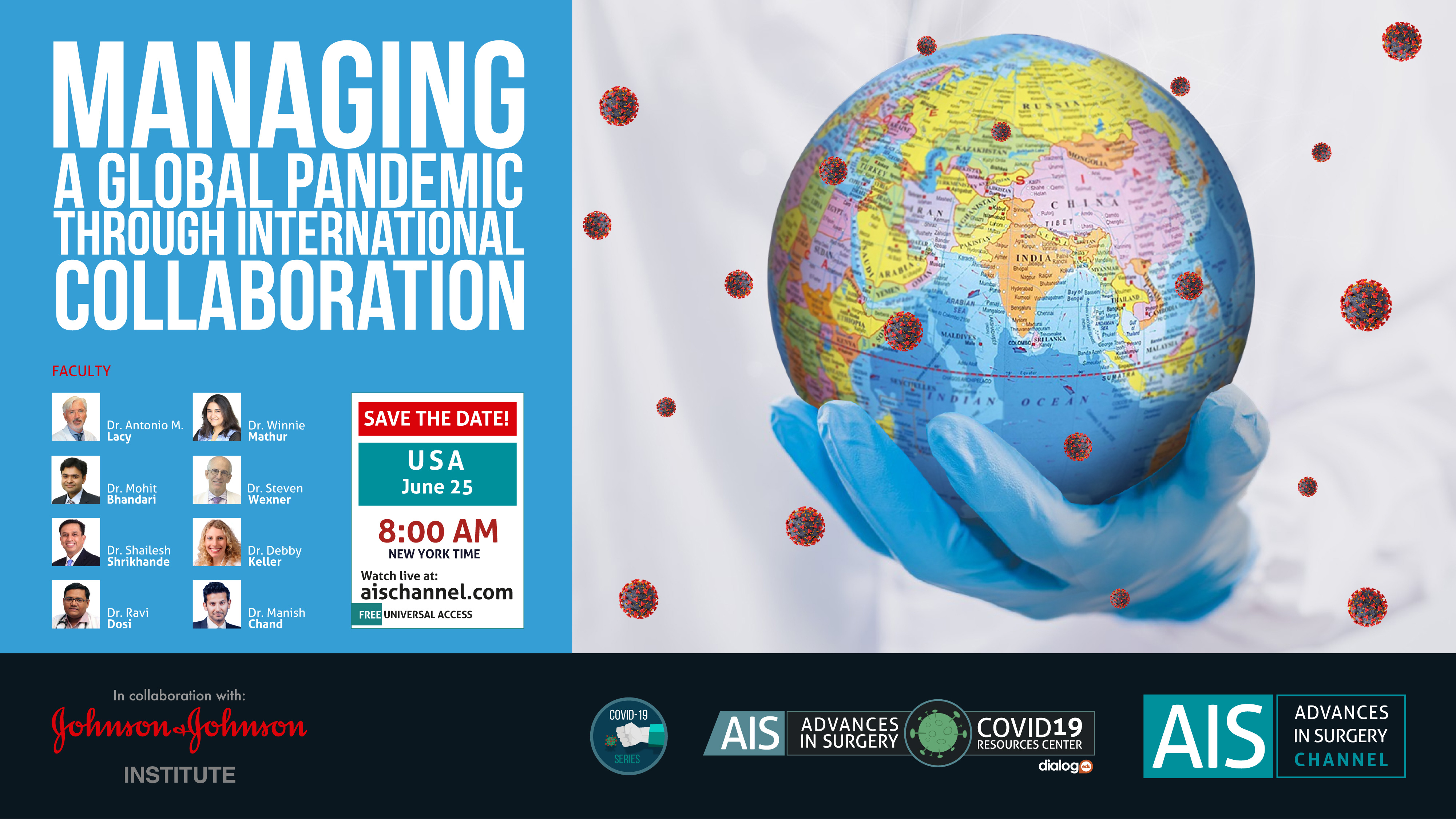
he Covid 19 in India program is designed to update the entire world as to how the country is managing the second wave of this pandemic. Resources were limited in India with lack of ICU beds and meager supply of oxygen.
With Johnson & Johnson MedTech
Published
Jun 2021
Help your network discover Prof. Shailesh V. Shrikhande's clinical expertise.