
With over 30 years of experience, 15 of which as a member of the Clinical Staff at Hospital Alemão Oswaldo Cruz, he was named by the American Society of Metabolic and Bariatric Surgery (ASMBS) as one of the 30 most prominent doctors in the field.
He is the current president of IFSO and was president of the Brazilian Society of Bariatric and Metabolic Surgery (SBCBM) from 2011 to 2012 and president of the Latin American Chapter of the World Federation of Bariatric Surgery (IFSO) from 2018 to 2019. He was president of the Advisory and Fiscal Council, SBCBM, from 2014 to 2015.
He has performed more than 10,000 surgeries and is a leader in pioneering research with effective results, such as the one that demonstrated the effectiveness of metabolic surgery to treat type 2 diabetes in patients who do not suffer from severe obesity.
He holds a PhD in Surgery from the Faculty of Medicine at the University of São Paulo.
He is editor of the journal “Obesity Surgery”, the official publication of the International Federation for the Surgery of Obesity (IFSO).
President of the IFSO World Congress of Metabolic and Bariatric Surgery, held in Rio de Janeiro in September 2016.
Selected publications from PubMed
New Obesity Definition and Clinical Obesity Prevalence for Global Metabolic Bariatric Surgery.
Cremona S, Cohen RV, Pattou F, Casajoana A, Sampaio Souza G, Raverdy V, Verkindt H, Blasio BTL, Roser P, Caiazzo R, Benaiges D, Zanata Petry TB, Rubino F
JAMA Netw Open. 2026 Aug 3;9(8):e2628395 doi: 10.1001/jamanetworkopen.2026.28395.
Trends and evolution of metabolic bariatric surgery over a decade: analysis of IFSO global registry reports' data collection, clinical trends, and a FAIR-informed appraisal of report-level transparency.
Hany M, Torensma B, Zidan MH, Altabbaa H, Amgad A, Cohen RV
EClinicalMedicine. 2026 Jul;97:104068 doi: 10.1016/j.eclinm.2026.104068.
International expert Delphi consensus on thromboprophylaxis in metabolic and bariatric surgery.
Kermansaravi M, Cohen RV, Shikora SA, Parmar C, De Luca M, Shabbir A, Prager G, Poggi L, Chiappetta S, Nimeri A
Sci Rep. 2026 Jul 2 doi: 10.1038/s41598-026-60926-8.
Global Variability in Children and Adolescent Metabolic Bariatric Surgery Guidelines: A Worldwide IFSO Survey.
Pujol-Rafols J, Felsenreich DM, Carmona-Maurici J, Prager G, Cohen RV, Zundel N, Parmar C, Alqahtani A, Copaescu C, Omelanczuk P, Himpens J, Olbers T, Pouwels S, Shikora SA, Di Lorenzo N, de Luca M, Weiner S, Mazzarella M, D'Arco S, Angrisani L, Uyanik O, Pardina E, Balibrea JM
Obes Surg. 2026 Jul;36(7):3456-3467 doi: 10.1007/s11695-026-08743-w.
Intrathoracic Pouch Migration after Gastric Bypass: A Systematic Review.
Kermansaravi M, Esparham A, De Luca M, Cohen RV
Obes Surg. 2026 Jul;36(7):3977-3986 doi: 10.1007/s11695-026-08792-1.
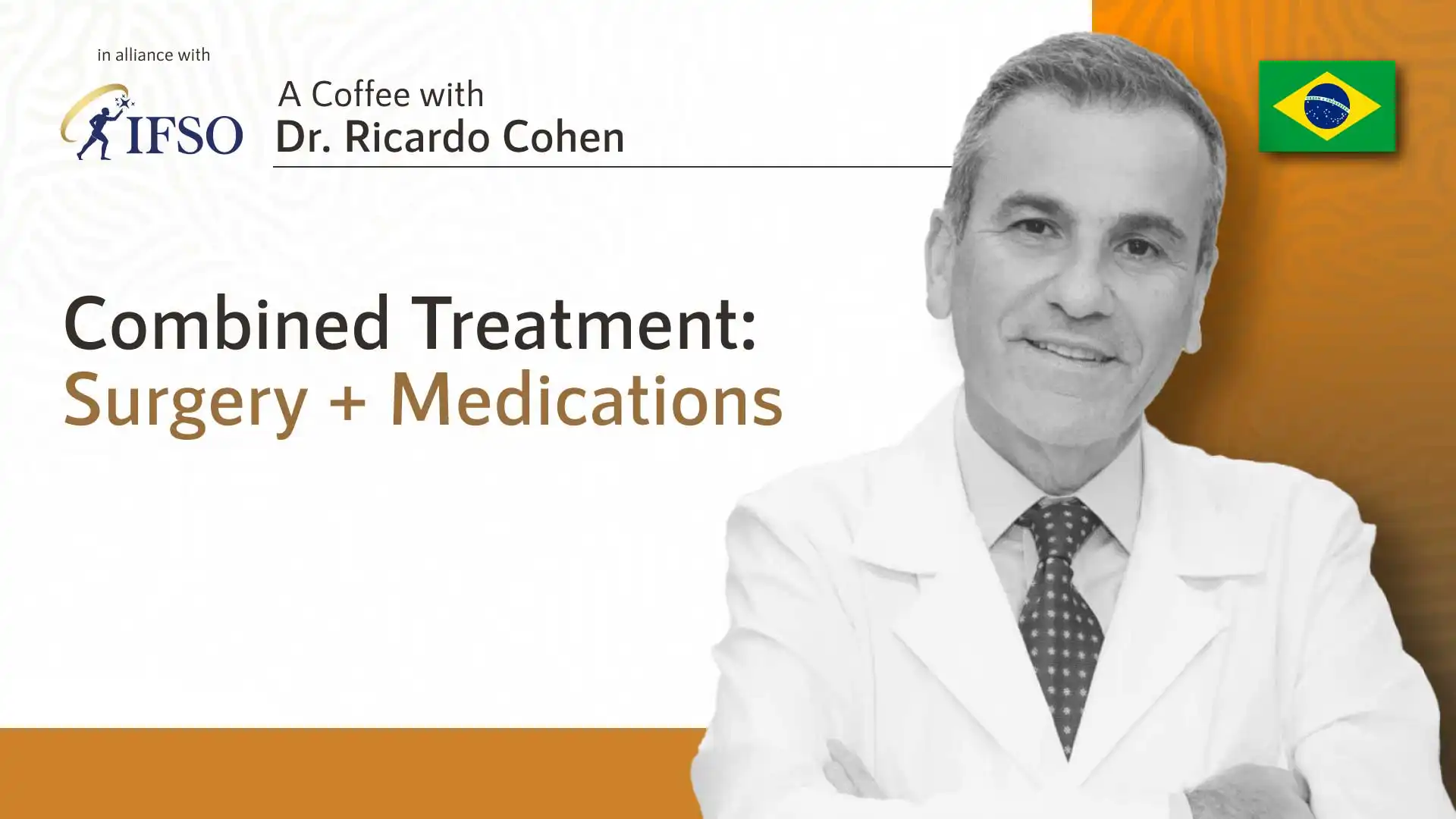
With over 30 years of experience, 15 of which as a member of the Clinical Staff at Hospital Alemão Oswaldo Cruz, he was named by the American Society of Metabolic and Bariatric Surgery (ASMBS) as one of the 30 most prominent doctors in the field. He was president of the Brazilian Society of Bariatric and Metabolic Surgery (SBCBM) from 2011 to 2012 and president of the Latin American Chapter of the World Federation of Bariatric Surgery (IFSO) from 2018 to 2019. He was president of the Advisory and Fiscal Council, SBCBM, from 2014 to 2015. He has performed more than 10,000 surgeries and is a leader in pioneering research with effective results, such as the one that demonstrated the effectiveness of metabolic surgery to treat type 2 diabetes in patients who do not suffer from severe obesity. He holds a PhD in Surgery from the Faculty of Medicine at the University of São Paulo. He is editor of the journal “Obesity Surgery”, the official publication of the International Federation for the Surgery of Obesity (IFSO). President of the IFSO World Congress of Metabolic and Bariatric Surgery, held in Rio de Janeiro in September 2016.
With International Federation for the Surgery and Other Therapies for Obesity
Published
Mar 2025

To achieve the best outcomes after a laparoscopic Roux-en-Y gastric bypass, the surgeon must standardize all intraoperative steps. In this video, we describe how we perform the operation. After port placement, the greater omentum is divided up to the transverse colon to prevent potential tension, as the Roux limb will go antecolic. Limb lengths are determined and the jejuno-jejunostomy is performed. There is much controversy about the ideal limb lengths, however more robust data are needed to determine whether longer limbs deliver better outcomes without long-term nutritional complications. The enterotomies are closed with a running non-absorbable suture. The mesenteric defect is closed with non-absorbable suture. Then, we create the gastric pouch with blue stapler loads and the gastrojejunostomy with the linear stapler. The gastrotomy and enterotomy are closed with a running non-absorbable suture. Afterwards, we routinely perform an air-leak test to check the anastomosis integrity. Finally, Petersen’s defect is closed with non-absorbable suture.
Published
Jun 2021

There is evidence that bariatric procedures impact not only obesity, but also glycemic control, non-alcoholic fatty liver disease (NAFLD), hypertension, chronic kidney disease (CKD), and even cancer. This Masterclass provides an overview of the benefits of bariatric/metabolic surgery beyond glycemic control. NAFLD Obesity plays a significant role in chronic inflammation, which can manifest in various ways. NAFLD results not only in liver disease (fatty liver, NASH, cirrhosis), but also in cardiovascular disease. Patients with NAFLD are prone to peripheral vascular disease, coronary artery disease and increased cardiac mortality. Evidence from case reports and case series as well as gathered in meta-analysis shows that, through its effect on reduction of inflammation, metabolic surgery improves NAFLD and can even slow and stop the evolution of cirrhosis. Hypertension The role of metabolic surgery in hypertension has been studied in a few RCTs, together with obesity. Level 1 evidence suggests metabolic surgery can have an impact on blood pressure control and can lead to anti-hypertensive drug reduction and suspension. CKD Chronic Kidney Disease is mostly caused by diabetes and high blood pressure. Reports suggest that 40% of diabetic patients will develop CKD, with 30% reaching end-stage disease and dialysis. Metabolic surgery improves CKD by promoting early glycemic control, weight loss, blood pressure control, a decrease in LDL-cholesterol, and a raise in HDL-cholesterol. The MOMS trial, an RCT that compared RYGB to optimal medical treatment and evaluated CKD, blood pressure and HbA1c and cholesterol (total, LDL) levels, favored surgery after a 2-year follow-up. Cancer Obesity is a known oncogenic factor, associated with some of the most common types of cancer: breast and uterine in women, colorectal and kidney in men. Evidence suggests that the greater the weight loss after metabolic surgery, the higher the rate of cancer-free survivorship. There is some controversy regarding the real relation between metabolic surgery (mostly RYGB) and colorectal cancer, with some reports documenting a protective effect, while others consider it a risk factor. Without a question, metabolic surgery has beneficial effects on glycemic control, hypertension, NAFLD, CKD and cancer, but there are still some questions to be answered and level 1 evidence to be obtained. Endorsed by: [Image]
With Johnson & Johnson MedTech
Published
Mar 2021

Moderated by Almino Ramos and Camilo Boza, Ricardo Cohen and Rami Lufti discuss the advantages and disadvantages of both sleeve gastrectomy and gastric bypass. For decades, RYGB remained the gold standard procedure in bariatric surgery, but in recent years, sleeve gastrectomy has become the bariatric procedure most performed worldwide. The latest figures on procedure incidence and its relevance are reviewed and discussed. The efficacy of sleeve gastrectomy vs. gastric bypass in terms of weight loss and metabolic control, as well as postoperative complications, are also discussed. Gastroesophageal reflux after sleeve gastrectomy,, late complications and weight regain after both techniques are also reviewed.
Published
Jan 2019

Clinical Case The global spread of obesity is driving a parallel pandemic of type-2 diabetes, a disease afflicting >171 million people worldwide, causing 3 million deaths per year. The therapeutic cornerstones for both obesity and type-2 diabetes are diet, exercise, and medication. The long-term success rates of lifestyle modifications can however be disappointing, and despite an ever-increasing pharmacotherapeutics arsenal, adequate glycemic control often remains elusive. Moreover, most diabetes medications promote weight gain, and using them to achieve tight glycemic control increases risks of hypoglycemia. Patients with a BMI between 30 and 35 kg/m2 (class I obesity) constitute the largest class of obese persons. Millions of these individuals suffer from poorly controlled diabetes despite attempted lifestyle changes and pharmacotherapy; yet this group does not meet the current criteria for bariatric surgery. In this lecture, Ricardo Cohen discusses whether this type of patients could benefit from metabolic surgery and the results currently available.
Published
Nov 2017

This case involves a 62-year-old female patient who was subjected to a gastric bypass two years ago. She came to the emergency department hospital complaining that she had had abdominal pain and jaundice for two days. Her laboratory results showed elevated liver enzymes and a high conjugated bilirubin count. An MRI revealed a CBD dilation of up to 14 mm. It also showed multiple filling defects in the gallbladder and a stone in the CBD measuring 14 mm. As you can see in the video a trans-gastric ERCP + biliary lithiasis treatment + simultaneous cholecystectomy was carried with good outcomes. Would you follow a different strategy?
Published
Mar 2016
Help your network discover Dr. Ricardo V. Cohen's clinical expertise.