Ricard Corcelles, MD, is an internationally recognized expert in weight-loss surgery, minimally invasive surgery and new technologies and approaches for surgery. He performs a variety of weight-loss procedures including gastric sleeve, gastric bypass, duodenal switch, single anastomosis duodeno–ileal bypass with sleeve gastrectomy (SADI-S), and revisional weight-loss surgeries.
Dr. Corcelles has expertise in minimally invasive surgical techniques, providing patients with a faster recovery time and less scarring than open surgical methods. He is skilled in the use of surgical robotics including the da Vinci system, which enables surgeons to perform complex and delicate procedures through small incisions.
Before joining the Department of Surgery at Cleveland Clinic Main Campus in 2021, Dr. Corcelles was a consultant physician in Metabolic and Bariatric Surgery at Cleveland Clinic Abu Dhabi, UAE. He was also the Director of the Surgical Simulation Center at Cleveland Clinic Abu Dhabi. Now he is Professor of Surgery at Cleveland Clinic Lerner College of Medicine at Case Western Reserve University.
Dr. Corcelles completed his fellowship at Cleveland Clinic, Ohio, in Advanced Laparoscopic and Bariatric Surgery and his residency at the University of Barcelona, Spain.
He has received national and international recognition for his expertise. In Spain, Dr. Corcelles holds the title of “Expert Surgeon in Bariatric Surgery” issued by the Spanish Society for Metabolic & Bariatric Surgery (SECO). This is the most prestigious award that has only been awarded to a few bariatric surgeons in the country. He is also an honorary member of the Argentinian and Mexican Societies for Metabolic and Bariatric Surgery, based on his body of work and contributions to these organizations. As a result of his reputation, both clinically and academically, he has been invited to give over 100 invited lectures at local, national and international meetings.
Dr. Corcelles is reviewer for international scientific journals such as the British Journal of Surgery, Obesity Surgery, Surgical Endoscopy, Surgery for Obesity and Related Diseases, Bariatric Surgical Practice and Patient Care, and Cirugia Española. He has more than 60 publications in peer reviewed journals and is author of several book chapters. Dr. Corcelles is member of ASMBS, SAGES, ACS and IFSO, and serves as board and committee member for SECO, SAGES, and IFSO.
Selected publications from PubMed
Applications of artificial intelligence along the perioperative pathway in metabolic and bariatric surgery.
Brar K, Chattha I, Gobraeil S, Mocanu V, Corcelles R, Kroh M, Shin T, Dang JT, Lee Y
Surg Obes Relat Dis. 2026 Sep;22(9):1025-1034 doi: 10.1016/j.soard.2026.05.002.
Prevalence and short-term outcomes of primary metabolic and bariatric surgery in non-binary patients: an analysis of the MBSAQIP database.
Kachornvitaya P, Wills M, Barajas-Gamboa J, Zhu X, Lee Y, Navarrete S, Corcelles R, Strong A, Udomsawaengsup S, Kroh M, Dang J, Mocanu V
Surg Endosc. 2026 Aug 4 doi: 10.1007/s00464-026-13145-1.
Declining Bariatric Surgery Volumes and Shifting Practice Patterns: A Five-Year Analysis of Over One Million Procedures.
Wills MV, Zhu X, Elamin D, Corcelles R, Kroh M, Dang J, Strong A, Navarrete S, Mocanu V
Obes Surg. 2026 Aug;36(8):4065-4074 doi: 10.1007/s11695-026-08795-y.
30-Day Outcomes of Simultaneous Sleeve Gastrectomy and Kidney Transplantation: An Analysis from the Metabolic and Bariatric Surgery Accreditation and Quality Improvement Program (MBSAQIP) Database.
Elamin D, Mocanu V, Wills MV, Strong A, Navarrete S, Corcelles R, Kroh M, Dang J
Obes Surg. 2026 Aug;36(8):4035-4041 doi: 10.1007/s11695-026-08815-x.
International expert consensus on definitions and management of weight recurrence and suboptimal response after metabolic and bariatric surgery: a Delphi study.
Wills MV, Lee S, Mocanu V, Lee Y, Kachornvitaya P, Zhu X, Alfaris N, Andromalos L, Apovian C, Behrens E, Birk D, Busetto L, Courcoulas A, Cummings D, Faria SL, Ghanem O, Han SM, Karmali S, Kaplan L, Kow L, le Roux CW, Mahawar K, Gawdat K, Munoz R, Musella M, Nimeri A, O'Kane M, Palermo M, Ponce de Leon Ballesteros G, Salminen P, Sullivan S, Udomsawaengsup S, Tewksbury C, Vidal J, Wilding J, Dang J, Strong A, Navarrete S, Zundel N, Kermansaravi M, Butsch S, Kroh M, Corcelles R
Surg Obes Relat Dis. 2026 Jul;22(7):753-761 doi: 10.1016/j.soard.2026.03.006.
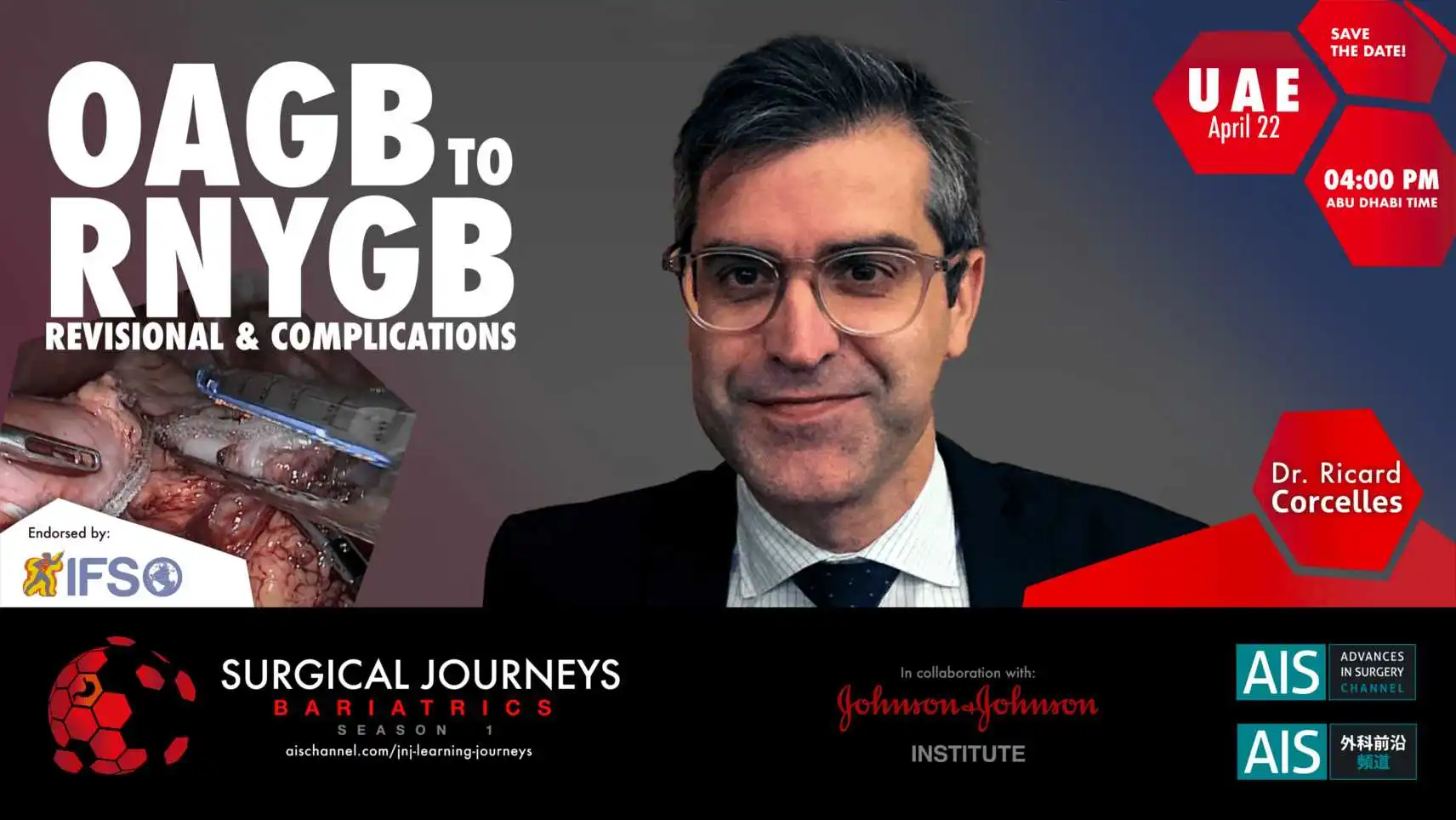
On April 22 at 4pm (Abu Dhabi Time), AIS Channel will be broadcasting this procedure performed by Dr. Ricard Corcelles (UAE) and his team at Cleveland Clinic Abu Dhabi, Abu Dhabi, United Arab Emirates.
With Johnson & Johnson MedTech
Published
Apr 2021

Clinical Case Esophageal anastomotic leak (EAL) is a severe complication associated with significant increase in postoperative mortality. Some authors have even described a negative association between the occurrence of a leak and recurrence and long-term survival for esophago-gastric cancers. 0 to 35% are reported after esophagectomy and 2.7% to 12.3% after gastrectomy. Most clinical signs are septic, related to mediastinitis or peritonitis, but any atypical symptom in the postoperative setting may be the sign of leak. Even though digestive swallowing test may be useful, its sensitivity is only o40.4% and thus a computed tomography (CT) scan with oral contrast is the favored examination. Endoscopy may be useful as a diagnostic tool as it helps assess the gastric pull-up or jejunal loop viability and may guide potential therapeutic endoscopic procedures . The key points of EAL treatment are the need for early and aggressive management. Transfer to an intensive care unit is often necessary and nutritional support is mandatory , preferably enterally (feeding jejunostomy or nasojejunal feeding tube). Any collection at the level of the anastomosis should be drained via radiology, endoscopy or surgery. Gastric conduit or jejunal loop necrosis requires immediate re-intervention. Endoscopic treatment of EAL is poorly reported in the literature and various types of stents have been used (metallic, plastic, double, covered, etc.). The usual recommendation is to use long stents (12 and 15 cm) with enlarged ends and to place the proximal ⅔ of the stent in the esophagus and the distal third as a bridge at the anastomosis level. The success rate ranges from 69% to 90% . The main complication of stent insertion is stent migration . Migration rates range from 17% to 59% depending on stent diameter, covering, location of insertion and material. Stent migration is significantly greater when fully covered stents are used relative to uncovered and partially covered one. Stent covering is used to create a barrier to prevent fluid leakage through the stent walls as well as prevent integration of the stent into the walls of the GI tract. Treatment of stent migration is usually endoscopic retrieval of the stent. In those cases in which the stent cannot be reached by endoscopy waiting until expulsion with the feces is an option. Some groups have described small bowel perforation by stent decubitus that should prompt surgical intervention . In the case of intestinal obstruction caused by the stent ( see video ) an enterotomy was the classic treatment . In this case, a laparoscopic approach with mobilization of the stent towards the anastomosis and endoscopic retrieval could be an option if performed by an expert endoscopist, which may prevent anastomotic disruption . Other stent complications include tissue ingrowth, mucosal erosion and endoscopic complications associated with placement and removal such as perforation. Various promising techniques have been recently reported, but only through small series or case reports: hemostatic clips associated with fibrin biological glue, Over-the-Scope Clips or endoscopic application of negative pressure therapy. All these technical innovations for endoscopic treatment of EAL may help physicians offer a tailored treatment to patients with EAL . The development of new stents with anti-migration devices might in the future reduce stent-associated morbidity. Communication and multidisciplinary team work are key points for treatment success. In the case of stent placement, intensive surveillance should follow to detect complications as soon as possible.
Published
Jun 2017
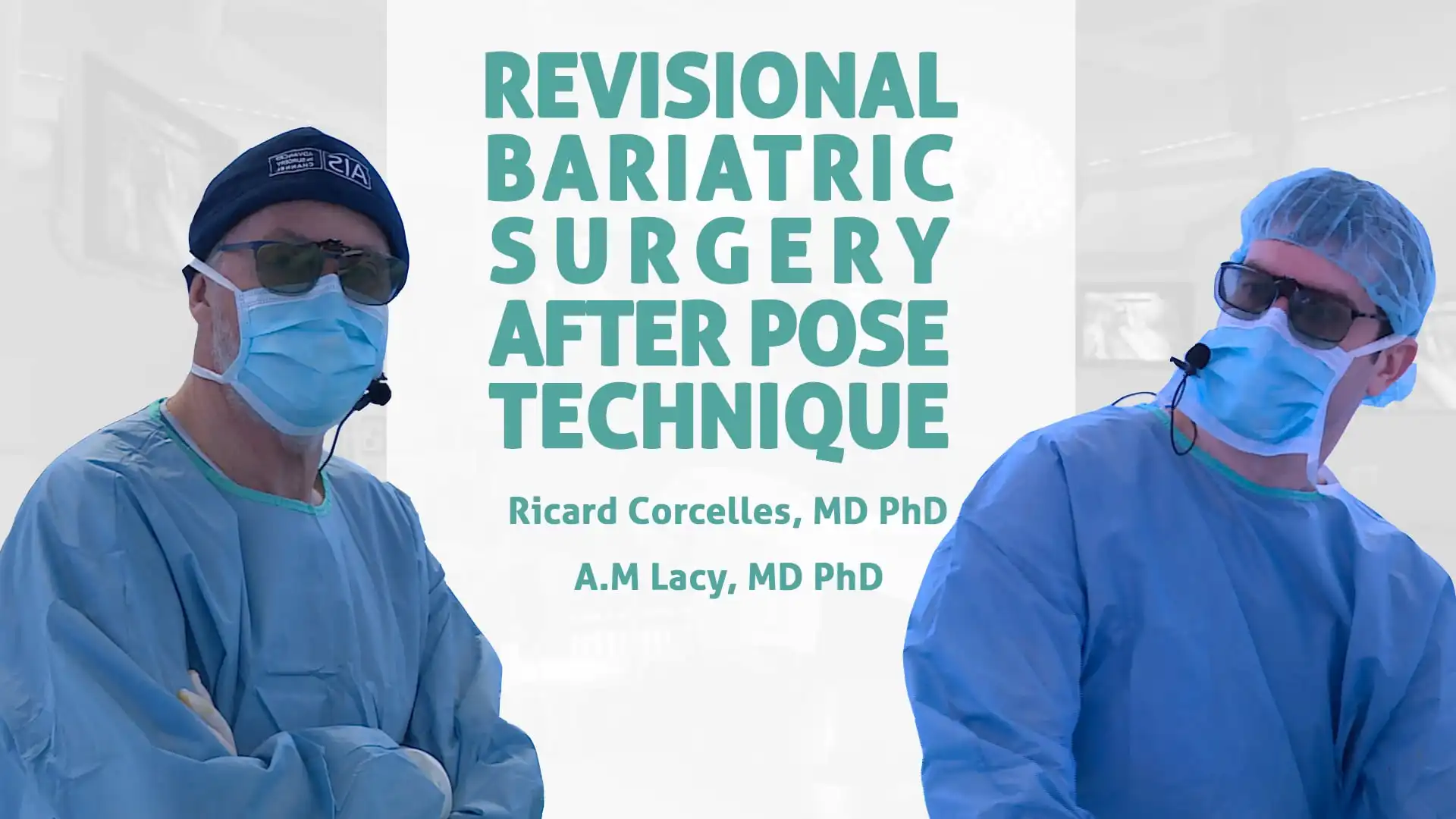
Several endoscopic procedures are proposed as an alternative to formal surgical treatment for morbid obesity. Some advantages are that it less aggressive and can be performed under sedation. Some data shows good outcomes in the short term. However, in daily practice there is an increasing number of patients who require conversion into surgical treatment. Antonio M. Lacy and Ricard Corcelles performed from the Hospital Clinic in Barcelona, a revisional bariatric surgery with 3D technology on a morbid obese patient with a failure after a POSE procedure.
With Olympus
Published
Feb 2017
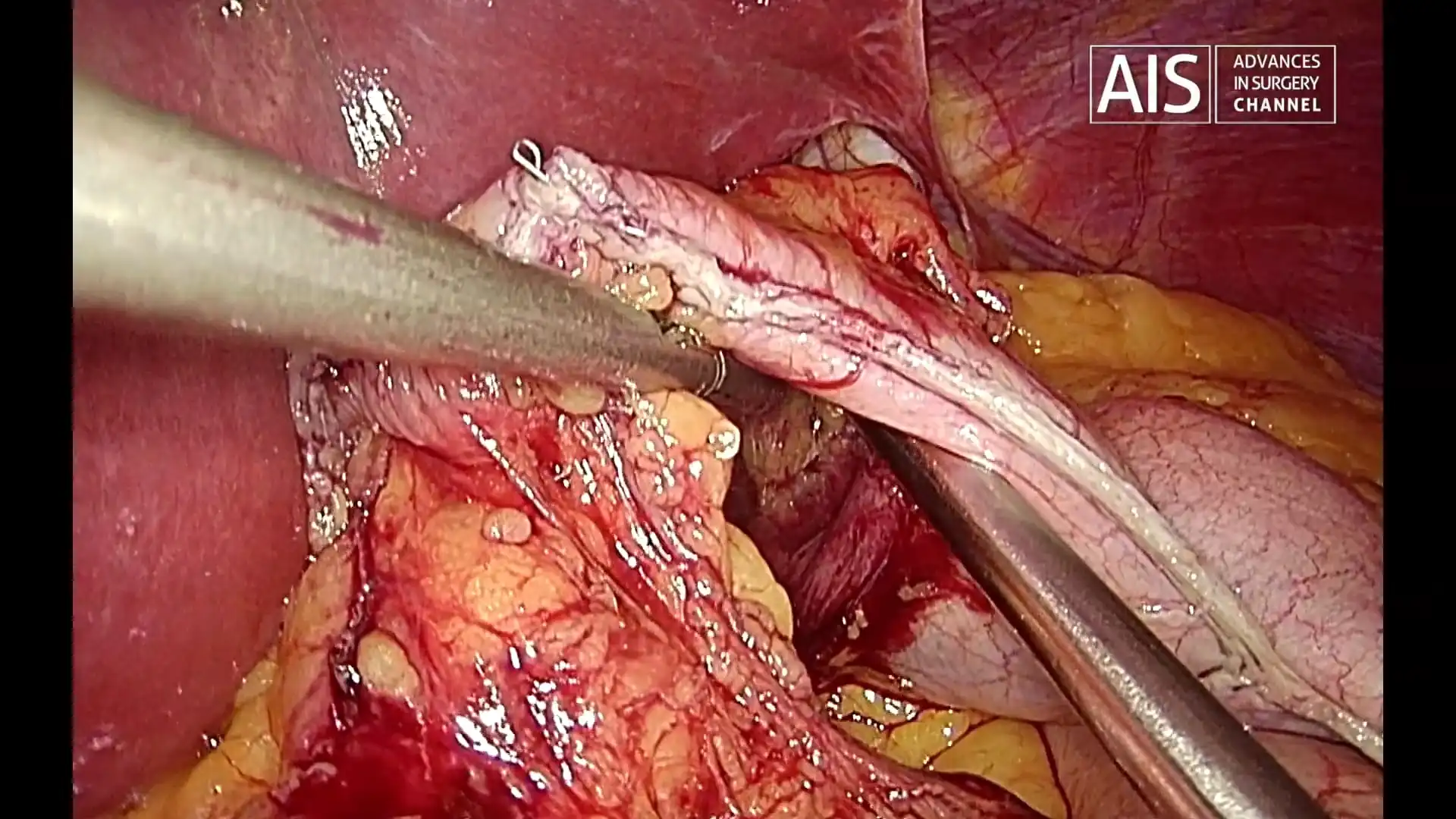
AIS Channel maintains its commitment to surgical education: so far we have broadcast several colorectal and bariatric procedures focusing on the training of surgical residents and young surgeons. It's time for a new live surgery in this area! On September 14th at 12:30pm (UTC+02), Antonio M. Lacy and Ricard Corcelles from the Hospital Clinic of Barcelona guided Ana Otero in the performance of a Laparoscopic Roux-en-Y Gastric Bypass.
With Olympus
Published
Sep 2016

These findings should be verified in randomized controlled trials to obtain further evidence for decision-making on the most appropriate bariatric procedure for metabolically sick patients. Here is a case in which it was decided to perform a sleeve gastrectomy on a patient with a unknown cirrhotic liver found intraoperatively. Case A 57 year old female patient with a previous history of T2DM and dyslipidemia suffered from morbid obesity with a BMI of 42 Kg/m2 and weighed 94 Kg. An upper endoscopy, an esophagogastricoduodenal transit and an abdominal ultrasound were performed as a preoperative study highlighting only hepatic steatosis with an acalculous gold bladder. The rest of tests were conducted with normal limits. Treatment The patient is placed in the supine position with open legs. A total of 5 trocars were used. The classic configuration is a 12mm port in the supra umbilical position for a 30º scope, two additional 12-mm ports at each flank to serve as the working channel for the leading surgeon, two 5mm ports located at the epigastrium for retraction of the liver, and a final more lateral port at the left flank to perform traction of the omentum and the stomach. At the beginning of the surgery we objectified a liver with major macroscopic signs of advanced cirrhosis. For this reason it was decided to perform a sleeve gastrectomy and a liver biopsy in the same surgical procedure. The rest of the trocars were placed and a retractor clamp was carefully placed to separate the liver. We performed a gastric sleeve according to our standard technique. The first manouver is to create an inferior landmark for the section of the major omentum. The stomach should be individualized from the retroperitoneal organs to achieve correct exposure during the gastrectomy. The section should begin 5cm from the pylorus. Then we continue with the dissection of the major curvature. The LigaSure is used for secure section close to the gastric wall. The assistant should perform traction from the omentum. Gradually release of the greater curvature is completed ensuring good hemostasis using the Ligasure, which is very important in this case for a cirrhotic patient, thus avoiding potential complications. We then reach the superior landmark. This maneuver must be carefully performed to avoid bleeding. We must be careful with the spleen and the short vessels. We want to expose the cardia and the left crus. By means of meticulous dissection, we finally completed the release in the cardia to perform gastrectomy later. To calibrate the gastrectomy we use a 35 French bougie to control the diameter of the remaining stomach. Subsequent stenosis must be avoided, and correct weight loss must be ensured. During the different maneuvers and changes of position care must be taken not to injure the liver. The next step is the Gastric transaction. The first mechanical suture used is purple in this case. The assistant surgeon is crucial for this step, as correct traction exposes the stomach and enables the leading surgeon to prevent an angled or rotated gastrectomy. Placing the mechanical suture too close to the bougie should be avoided to prevent bleeding, stenosis and leakage. Finally we continue with the section of the final part of the stomach. It must be performed 1cm from the angle of His as vascularization at this height is poor. With this strategy anastomotic leaks are prevented. We were finally able to see the complete tube, which had a good size and no rotations. To end the surgery we made separate knots between the stapler line junction and the sectioned omentum. We did this to prevent complications such as bleeding and rotation. Given the suspicion of unknown cirrhosis, we proceeded to perform a liver biopsy to confirm the diagnosis. It is important to ensure good hemostasis after puncture to avoid bleeding. Outcome The surgery took 90 minutes. The patient started oral intake 24 hours after the surgery and left hospital on the 2nd postoperative day. The liver pathology results show chronic liver disease with advanced-stage cirrhosis, as well as signs of moderate steatosis and steatohepatitis. The patient is being currently monitored by the hepatology department. The patient has had a successful outcome 1 month after surgery.
Published
Jun 2016
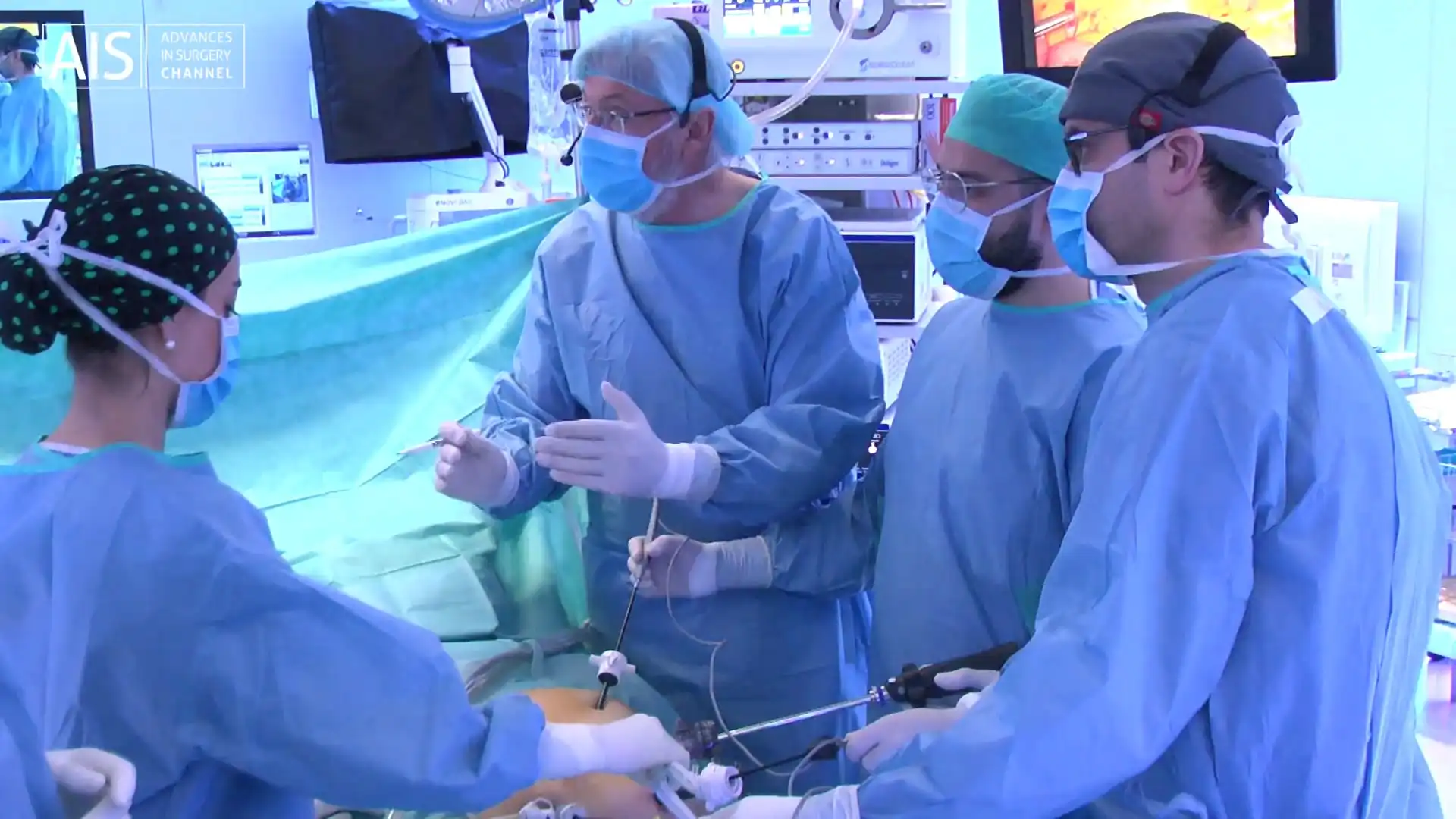
Training young surgeons in MIS: Teaching young surgeons to perform minimally invasive approaches is a significant task in any surgical program. This training should be delivered by experienced hands that can teach the tips and tricks than will complete a surgeon's specialized preparation.
With Olympus
Published
Jun 2016
Help your network discover Dr. Ricard Corcelles's clinical expertise.