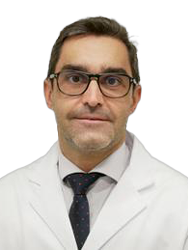
Dr. Ramon Vilallonga holds a Doctorate in Medicine from the Autonomous University of Barcelona, where he graduated with highest honors in 2006. He trained as a General and Digestive Surgeon at Vall Hebron University Hospital, completing his residency in 2008 via the MIR system. Dr. Vilallonga specializes in endocrine, metabolic, and bariatric surgery. In addition to his clinical duties, he serves as a resident tutor and Chief of On-Call Services at his campus. He is accredited as a Professor by both the AQU and the Autonomous University of Barcelona (UAB).
Dr. Vilallonga expanded his training at the University of Strasbourg in France and later at the Cleveland Clinic in Florida, USA. He furthered his career in Belgium, where he incorporated new approaches and techniques for managing surgical failures.
With over 1,200 morbid obesity surgeries as the lead surgeon, Dr. Vilallonga is recognized as an expert by the Spanish Society of Obesity Surgery (SECO). He is also a member of the American Society for Metabolic and Bariatric Surgery (ASMBS).
Dr. Vilallonga is an Associate Professor of Surgery at the Autonomous University of Barcelona, where he has authored over 160 international scientific articles and currently supervises three doctoral theses. He has written two books and contributed 16 book chapters. Additionally, he is a collaborator on FIS projects and a member of thematic research networks at the Carlos III Institute. He participates in various clinical trials and related research projects.
Dr. Vilallonga is a member of six scientific societies, including the International Federation for the Surgery of Obesity and Related Diseases (IFSO). He is also a Fellow of the American Society for Metabolic and Bariatric Surgery (ASMBS), where he serves on the International Committee.
He is a reviewer for several prestigious international journals, including Surgical Endoscopy, SOARD, Annals of Surgery, and Obesity Surgery. Dr. Vilallonga is also an expert evaluator for the National Agency for Evaluation and Prospective (ANEP).
Dr. Vilallonga's extensive experience and contributions to the field of surgery, both clinically and academically, have established him as a prominent figure in endocrine, metabolic, and bariatric surgery.
Selected publications from PubMed
Best practice approach for redo-surgeries after sleeve gastrectomy, an expert's modified Delphi consensus.
Kermansaravi M, Parmar C, Chiappetta S, Shikora S, Aminian A, Abbas SI, Angrisani L, Bashir A, Behrens E, Bhandari M, Clapp B, Cohen R, Dargent J, Dilemans B, De Luca M, Haddad A, Gawdat K, Elfawal MH, Himpens J, Huang CK, Husain F, Kasama K, Kassir R, Khan A, Kow L, Kroh M, Lakdawala M, Corvala JAL, Miller K, Musella M, Nimeri A, Noel P, Palermo M, Poggi L, Poghosyan T, Prager G, Prasad A, Alqahtani A, Rheinwalt K, Ribeiro R, Shabbir A, Torres A, Villalonga R, Wang C, Mahawar K, Zundel N
Surg Endosc. 2023 Mar;37(3):1617-1628 doi: 10.1007/s00464-023-09879-x.
Training Courses in Laparoscopic Bariatric Surgery on Cadaver Thiel: Results of a Satisfaction Survey on Students and Professors.
Ruiz-Tovar J, Prieto-Nieto I, García-Olmo D, Clascá F, Enriquez P, Villalonga R, Zubiaga L
Obes Surg. 2019 Nov;29(11):3465-3470 doi: 10.1007/s11695-019-04003-2.
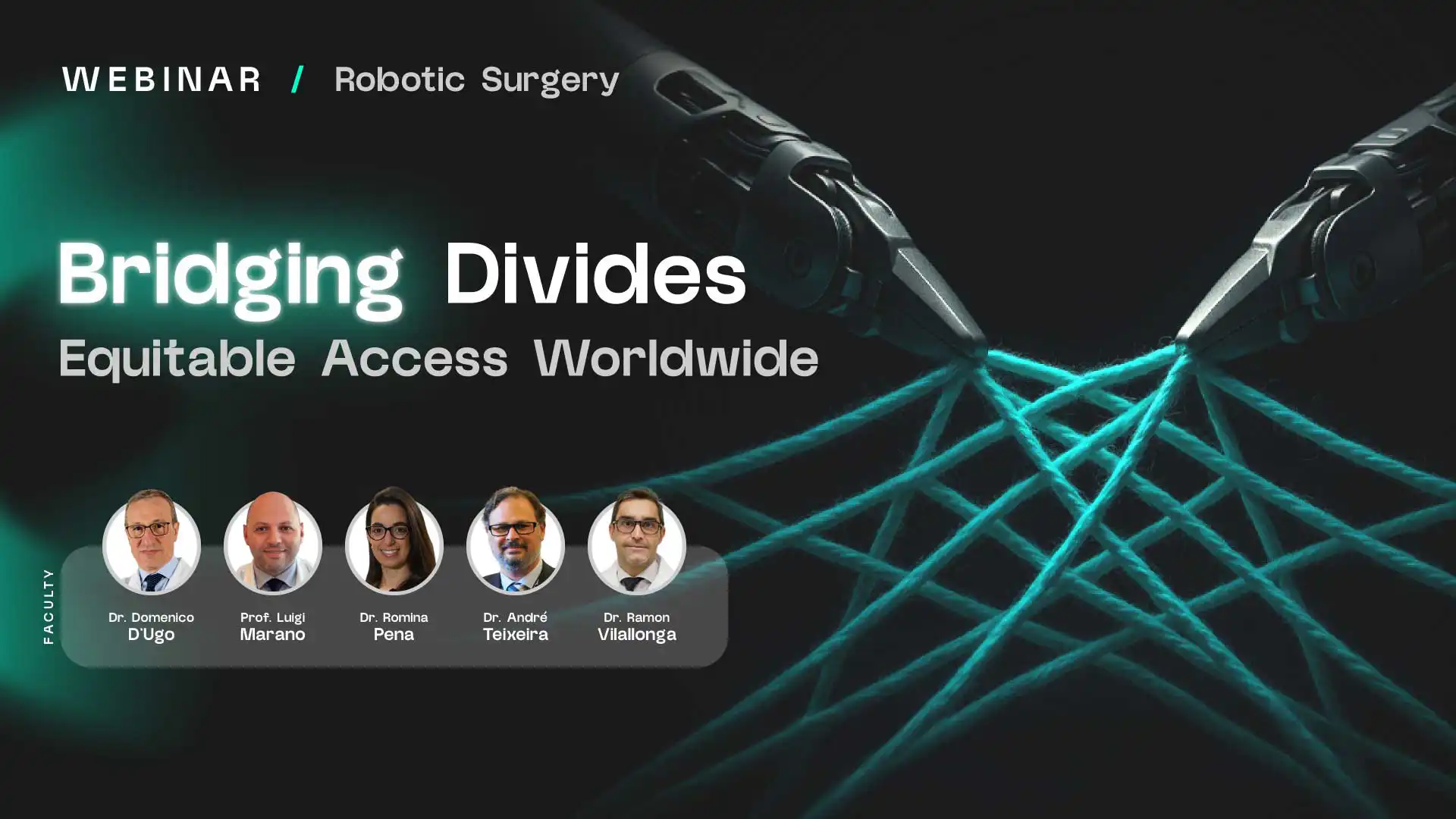
Welcome & Introduction: A Global Vision for Surgical Equity – Dr. Romina Pena (Spain) The Global Footprint: Mapping the Robotic Revolution and Regional Leadership - Dr. Ramon Vilallonga Puy (Spain) Addressing the Divide: Strategies for Expanding Robotic Access in Emerging Economies - Dr. Andre Teixeira (USA) The Cutting Edge: How Emerging Technologies Are Redefining Robotic Surgical Capabilities - Dr. Domenico D’Ugo (Italy) What Surgeons Need: Perspectives from the Front Lines - Dr. Luigi Marano (Poland) Panel Discussion and Closing Remarks - All faculty moderated by Dr. Romina Pena (Spain)
With Rob Surgical
Published
Nov 2025

The Robotic Gastric Bypass is a common robotic procedure among bariatric surgeons who use surgical robots. New technologies and approaches such as laparoscopy first and now robotics have been employed to benefit patients from a safety point of view, as well as to achieve greater postoperative comfort and fewer complications. Robotic technology, which is more recent than laparoscopy, yields satisfactory applicability and safety outcomes. However, there is little solid evidence regarding its systematic use in complex procedures such as primary surgical and revisional techniques for the treatment of obesity. We will explain the evolution and main features of this technology applied to obesity surgery, gastric bypass and its pros and cons, as well as options for the future.
With Intuitive
Published
Jul 2017
Help your network discover Dr. Ramon Villalonga's clinical expertise.