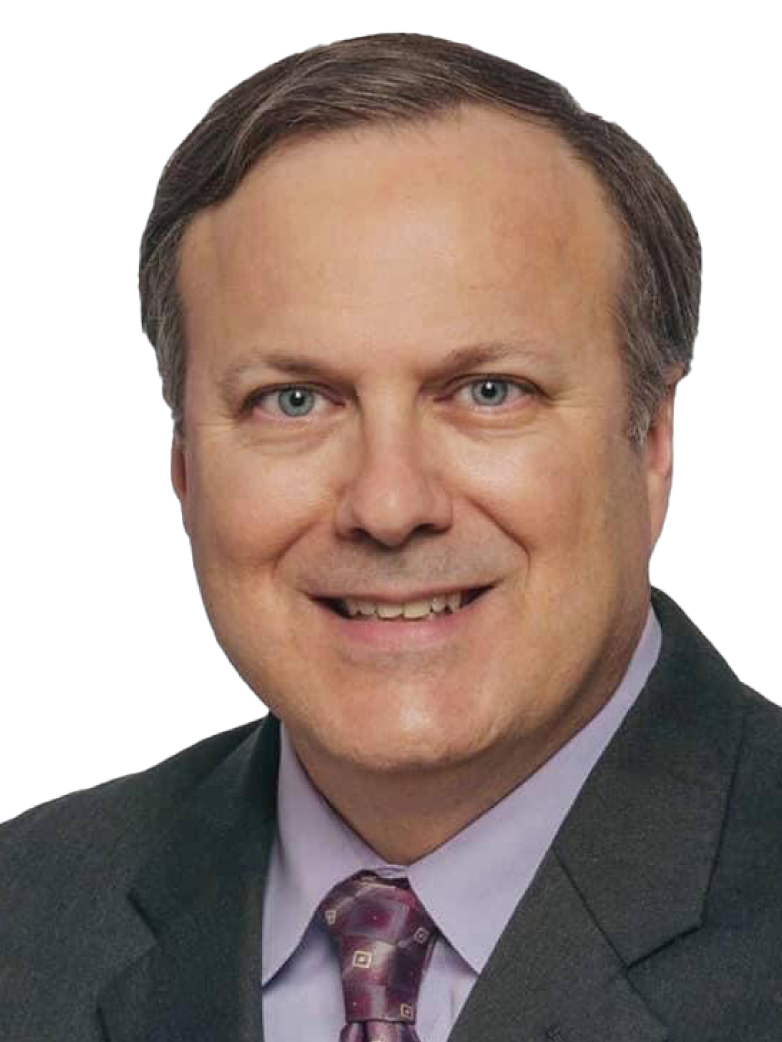
Philip R. Schauer, MD, is a board-certified general surgeon in Baton Rouge, Louisiana. He serves as a professor of metabolic surgery and the Director of the Bariatric and Metabolic Initiative at Pennington Biomedical Research Institute of Louisiana State University.
Before coming to Louisiana, Dr. Schauer was a professor of surgery at the Cleveland Clinic Lerner College of Medicine, and he is a past president of the American Society for Metabolic & Bariatric Surgery (ASMBS). He is also a former Chair and founder of Obesity Week (2012-present) and Co-Chair of the Diabetes Surgery Summit (2007, 2015, 2019).
Dr. Schauer's clinical interests include obesity, diabetes, and metabolic syndrome, and he has performed more than 8,000 operations for these conditions. His research interests include the pathophysiology of obesity and type 2 diabetes and outcomes of metabolic surgery.
Dr. Schauer has authored more than 350 scientific papers, 60 textbook chapters and three textbooks related to obesity, bariatric/metabolic surgery, and gastrointestinal surgery, with more than 20,000 citations. He is also the principal investigator of the STAMPEDE trial, which compares medical and surgical treatments of diabetes. This trial was published in the New England Journal of Medicine (2012, 2014, 2017), with more than 3,500 citations and numerous awards from the American Heart Association, American College of Cardiology, NIH, and The Wall Street Journal.
He has been the principal investigator on three NIH-funded studies evaluating surgical treatment of diabetes and obesity. He is a past Chairman of the Bariatric Surgery Section of The Obesity Society (TOS). He has also been a member of the editorial boards of the International Journal of Obesity, Surgery for Obesity and Related Diseases, and Obesity Surgery, as well as three other scientific journals. Dr. Schauer has been an invited speaker for more than 200 international lectures on the subject of metabolic surgery, and he is the founder of the Minimally Invasive Surgery Symposium (MISS), now in its twentieth year.
Dr. Schauer has trained more than 200 postgraduate surgeons and 100 fellows in advanced laparoscopic and bariatric surgery, including three presidents of the ASMBS, and he holds four patents for medical devices. Dr. Schauer is the recipient of the Cleveland Clinic 2015 Sones Award—the highest honor for scientific innovation at the Cleveland Clinic—and the SAGES Pioneer in Surgical Endoscopy Award 2018.
4th International Bariatric Club Symposium at the Argentinian Society of Bariatric Surgery (SACO) Annual Congress
Published
Jul 2021

Clinical Case The STAMPEDE (Surgical Therapy and Medications Potentially Eradicate Diabetes Efficiently) trial was the largest randomized trial comparing diabetes control between intensive medical therapy alone and surgery with medical therapy. Diabetes control was defined as HbA1c < 6.0%. Published in 2012, its results favoring surgical treatment over intensive medical therapy were the start of a change in the treatment of metabolic syndrome. In this lecture, Dr. Schauer discusses the long-term results of the STAMPEDE trial. The 5-year results confirm that diabetes control is better achieved with surgery and that the addition of antidiabetic medication increases the percentage of patients who achieve DM control. These results also show a significant increase in HDL in the surgery group compared to the intensive medical therapy group. Despite a significant reduction in HbA1c levels for all the groups in the first 6 months, the medical therapy group’s Hb1Ac level steadily increased until it reaches the baseline at 5 months compared with the surgical therapy group in which the HbA1c decrease is maintained over time. This result also applies to weight loss, in which there is a significant BMI decrease maintained over time in the surgical therapy group compared to the medical therapy group. The fact that there are no differences between BMI < 35 and BMI ≥ 35 suggests that the lower BMI group has similar benefits to the higher BMI group. Also, patients with medical therapy are more dependent on insulin than patients with a sleeve gastrectomy and these are more dependent on insulin than those with a gastric bypass, and these results are similar in reduction in cardiovascular medication. Concerning quality of life (QoL), there are statistically significant differences favoring surgical treatment, mainly in physical functioning, role limitations, bodily pain and general health. Dr. Schauer also discusses the clinical impact of the STAMPEDE trail, with changes in the guidelines of International Diabetes Organization which recommended metabolic surgery for: Patients with BMI ≥ 40 regardless of glycemic control. Patients with BMI ≥ 35 with inadequately controlled hyperglycemia. For the first time, surgery may be considered for patients with a BMI ranging between 30 and 34.9 with inadequately controlled hyperglycemia and Asians with a BMI as low as 27.5 with inadequately controlled hyperglycemia.
Published
Nov 2017

The 8th Live Congress of AIS Channel was focused in the surgical treatment for T2DM On 20th November, AIS Channel broadcast its 8th Live Congress, focusing on the Roux-en-Y gastric bypass and its metabolic benefits. In the introduction, Antonio Lacy highlighted the scientific relevance of the event, which included the point of view of surgeons endocrinologists. Philip Schauer, who is a world leader in bariatric and metabolic surgery through his research, said that the Roux-en-y gastric bypass is the procedure of choice to treat type two diabetes mellitus. Ricard Corcelles from Hospital Clínic in Barcelona, remarked on the high level of scientific evidence to support that statement.The endocrinologist Alexander Mira, from Imperial College London, analysed the mechanisms involved in the resolution of type two diabetes mellitus after roux-en-y gastric bypass . A live surgery was performed during this meeting. Ainitze Ibarzabal and Gabriel Díaz provided a step-by-step description of the procedure and an explanation of the surgical case. While the surgery was being performed by Antonio Lacy and its team the experts commented on several matters, like technical considerations, main steps and some controversies regarding the operation. At the same time they received queries from online viewers and discussed them simultaneously from the main set and the operating theatre. Finally Josep Vidal moderated an interesting debate that lasted one hour. The main topic was “Diabetes surgery” which is a hot point that concerns both surgeons and endocrinologists. Many topics were discussed such as: The interaction between the professionals involved in the treatment of this pathology. Surgery for overweight patients with type two diabetes mellitus? What is the ideal surgical procedure? What is the balance between diabetes resolution and metabolic deficiencies? And Adequate patient selection.
Published
Oct 2015
Help your network discover Dr. Philip R. Schauer's clinical expertise.