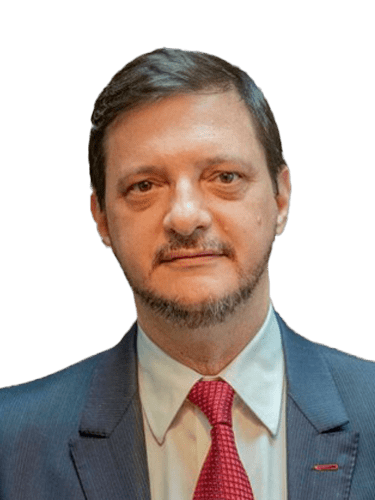
Dr. Manoel Galvao Neto, a prominent figure in medical innovation, particularly in bariatric endoscopy, has made significant contributions to the field. He began his career in Bahia, Brazil, after graduating from the Bahiana School of Medicine in 1989 and completing his residency in digestive surgery and endoscopy. Influenced by his parents, Dr. Galvao Neto ventured into experimental surgery, developing laparoscopic surgery models in rats, which facilitated the training of over a thousand medical students. His pioneering work earned him a Master’s Degree from São Paulo University.
Certified in Digestive Surgery, Gastroenterology, and Digestive Endoscopy, Dr. Galvao Neto's expertise is rare and highly valued. His career highlights include developing training models for laparoscopic bariatric surgery and endoscopy, contributing to the successful bariatric surgery unit at the Gastro Obeso Center, and initiating the Endovita Institute in São Paulo. Dr. Galvao Neto has been instrumental in the evolution of bariatric endoscopy, being the first to address bariatric surgery complications endoluminally and introducing several endoscopic innovations in South America.
Throughout his career, Dr. Galvao Neto has participated in numerous first-in-human trials, showcasing his commitment to advancing medical practices. His work in Natural Orifice Transluminal Surgery (NOTES) and metabolic surgery, including single port laparoscopy and laparoscopic greater curvature plication (LGCP), has been groundbreaking. Additionally, his involvement in developing and proctoring endoscopic sleeve gastroplasty (ESG) and duodenal mucosal resurfacing (DMR) has set new benchmarks in the field.
Dr. Galvao Neto's contributions extend beyond clinical practice to significant academic and teaching roles, serving as a faculty member at prestigious institutions and as a proctor in several landmark trials. His active participation in medical societies, coupled with over 200 peer-reviewed publications, underscores his influence and commitment to medical education and innovation.
His awards, including the “Surgical Innovator Award” from the ASMBS, and leadership roles in various medical societies highlight his dedication to improving surgical and endoscopic techniques. Dr. Galvao Neto's passion for his work, considered more a hobby than a job, is evident in his continuous efforts to push the boundaries of medical practice for the greater good. Supported by his family, Dr. Galvao Neto's career is a testament to his belief in sharing knowledge and striving for excellence in medical innovation.
Selected publications from PubMed
Five-year outcomes of two duodenal switch variants: BPD/DS vs. SADI-S.
Galvao Goncalves G, El Ghazal N, Jodicke GM, Ghanem M, Takla H, Kendrick ML, Galvao Neto M, Ghanem OM, Teixeira A
Surg Endosc. 2026 Jul;40(7):6222-6231 doi: 10.1007/s00464-026-12952-w.
Redo-Endoscopic Sleeve Gastroplasty for Obesity Treatment: a Multicenter Study on Feasibility, Safety, Efficacy, and Technical Predictors of Outcomes.
Espinet-Coll E, Rodríguez-Duque JC, Jerez-Ortiz J, Del Pozo-García AJ, Bernabéu-López J, Muñoz-Tornero M, Nebreda-Durán J, Galvao-Neto M
Obes Surg. 2026 May;36(5):2306-2316 doi: 10.1007/s11695-026-08620-6.
Safety and early results of immediately patent magnetic jejuno-jejunal anastomoses (IMPA-JJ) in Roux-en-Y gastric bypass.
Bhandari M, Contreras JE, Marin P, Bhandari M, Brunaldi VO, Mathur W, Reddy M, Tiwari A, Teixeira A, Wilson EB, Galvao Neto M
Surg Endosc. 2026 Feb;40(2):1719-1725 doi: 10.1007/s00464-025-12490-x.
Long-Term Outcome of Isolated Duodenal Transit Bipartition as Initial Metabolic Surgery: A 19-Year Follow-Up Case Report.
de Melo PRRE, Dib VRM, Madalosso CAS, d'Almeida LAV, de Godoy EP, Chaim EA, de Aquino CGG, Ribeiro RJS, Madalosso CA, Okano Júnior H, Baretta GAP, Kruel NT, Waltrick Junior JJ, Kfouri DS, Dos Santos FAI, Kawahara NT, Abaid RA, de Barros F, Frota Dillenburg C, Sampaio Neto JGM, da Costa RAMB, Goyano GSR, Melo FRE, Braga TC, Caiña DO, Noel P, Yunus TE, Parmar C, Zorron R, Teixeira A, Galvao Neto M, Ramos AC, Torres A
Am J Case Rep. 2026 Jan 12;27:e950650 doi: 10.12659/AJCR.950650.
Endoscopic sleeve gastroplasty (ESG) ‒ A semi-systematic review of current evidence, metabolic impact, special populations, and comparative strategies.
Espinet-Coll E, Nebreda-Durán J, Bautista-Altamirano C, Perretta S, Galvao-Neto M
Rev Esp Enferm Dig. 2025 Dec 18 doi: 10.17235/reed.2025.11719/2025.
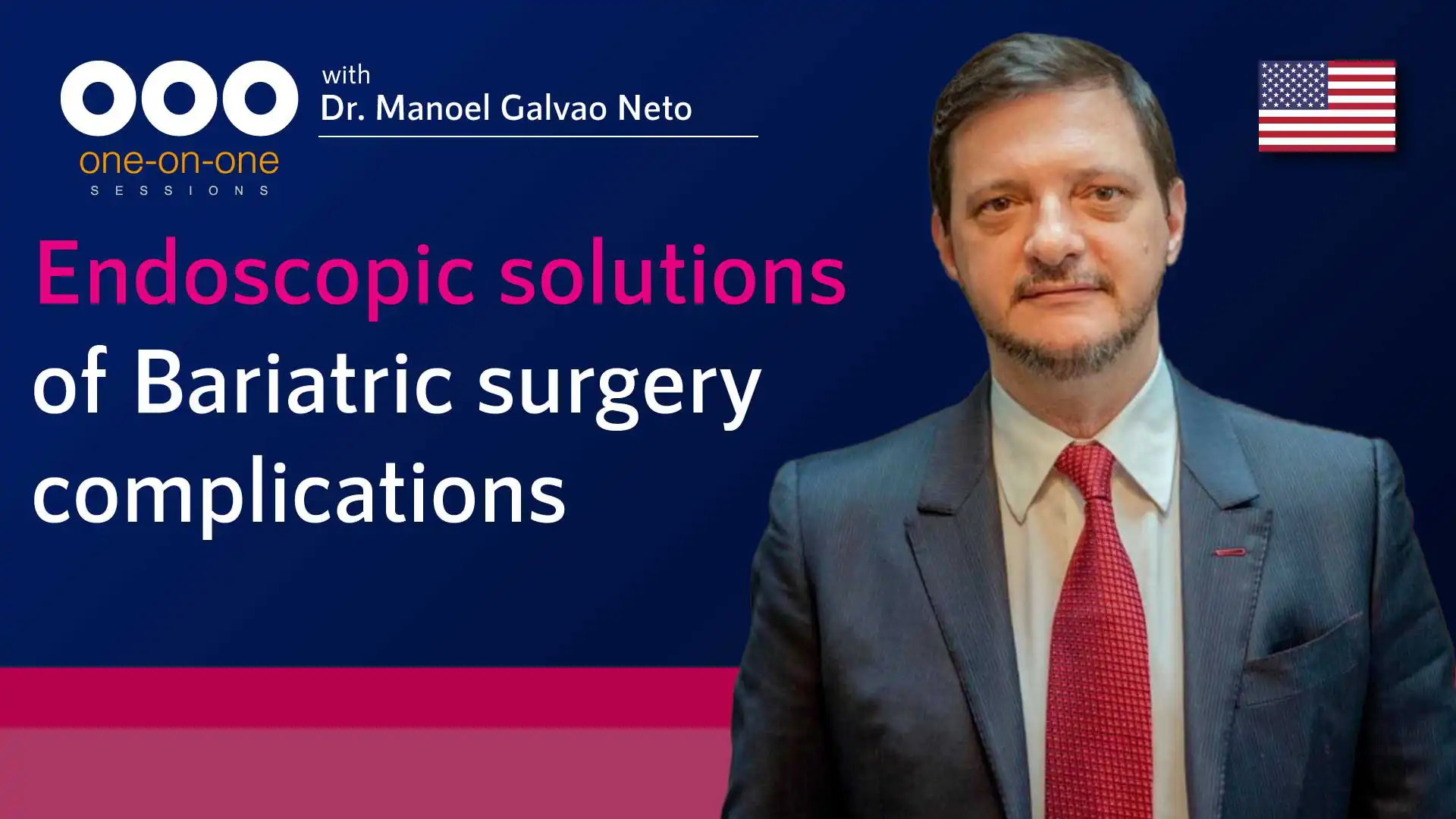
Dr. Manoel Galvao Neto, a prominent figure in medical innovation, particularly in bariatric endoscopy, has made significant contributions to the field. He began his career in Bahia, Brazil, after graduating from the Bahiana School of Medicine in 1989 and completing his residency in digestive surgery and endoscopy. Influenced by his parents, Dr. Galvao Neto ventured into experimental surgery, developing laparoscopic surgery models in rats, which facilitated the training of over a thousand medical students. His pioneering work earned him a Master’s Degree from São Paulo University. Certified in Digestive Surgery, Gastroenterology, and Digestive Endoscopy, Dr. Galvao Neto's expertise is rare and highly valued. His career highlights include developing training models for laparoscopic bariatric surgery and endoscopy, contributing to the successful bariatric surgery unit at the Gastro Obeso Center, and initiating the Endovita Institute in São Paulo. Dr. Galvao Neto has been instrumental in the evolution of bariatric endoscopy, being the first to address bariatric surgery complications endoluminally and introducing several endoscopic innovations in South America. Throughout his career, Dr. Galvao Neto has participated in numerous first-in-human trials, showcasing his commitment to advancing medical practices. His work in Natural Orifice Transluminal Surgery (NOTES) and metabolic surgery, including single port laparoscopy and laparoscopic greater curvature plication (LGCP), has been groundbreaking. Additionally, his involvement in developing and proctoring endoscopic sleeve gastroplasty (ESG) and duodenal mucosal resurfacing (DMR) has set new benchmarks in the field. Dr. Galvao Neto's contributions extend beyond clinical practice to significant academic and teaching roles, serving as a faculty member at prestigious institutions and as a proctor in several landmark trials. His active participation in medical societies, coupled with over 200 peer-reviewed publications, underscores his influence and commitment to medical education and innovation. His awards, including the “Surgical Innovator Award” from the ASMBS, and leadership roles in various medical societies highlight his dedication to improving surgical and endoscopic techniques. Dr. Galvao Neto's passion for his work, considered more a hobby than a job, is evident in his continuous efforts to push the boundaries of medical practice for the greater good. Supported by his family, Dr. Galvao Neto's career is a testament to his belief in sharing knowledge and striving for excellence in medical innovation.
Published
May 2025

PROGRAM Welcome and Introduction - Dr. Claudia Aceves (Mexico) and Dr. Daniel Tomey (USA) Basics of medical communication - Dr. Daniel K. Ojuka (Kenia) Are you listening to your patient? - Dr. Gabriela Möslein (Germany) How to manage challenging interactions - Dr. Manoel Galvao (Brazil) Discussion and closing remarks - All faculty moderated by Dr. Daniel Tomey (USA)
With Johnson & Johnson MedTech
Published
Dec 2022

Endoscopic procedures have been gaining space in the last decade as options for the treatment of obesity. In this lecture we will have an overview of Bariatric Endoscopic procedures. We will address advantages and disadvantages, indications and contraindications, and the results, specially in comparison with surgical interventions.
Published
Jun 2021

Our topic in this AIS benchmark leadership series is "internationalization", which is a challenging one. Leadership is not a person or a position but rather a complex moral relationship among people, based on trust, obligation, commitment, emotion, and a shared vision of the good. As for internationalization, it means expanding and entering the market in different countries. We tell our story in the field of bariatric endoscopy, where 20 years ago we started going in two new directions: creating endoscopic solutions to bariatric surgery complications and developing endobariatric therapies. Our path was all about informal leadership, gaining ground by developing, teaching, publishing, and then exporting to other countries through meetings, courses, roadshows, and especially through proctoring. We made our experience international to receive approval for our developments, select the players worldwide, and develop feasible training models, always respecting the local markets and their stakeholders. Leadership means taking the lead in difficult times such as these, If face to face proctoring is not possible, make use of technology, reinvent yourself, and "teletransport" yourself. So sit back and enjoy our journey in leading the creation of an international new field. Endorsed by: [Image]
With Johnson & Johnson MedTech
Published
Apr 2021

Sleeve gastrectomy has become a common procedure in the field of bariatric surgery. It was initially used in the superobese to get them to a safer weight in order to undergo a more complex procedure, but many have found sufficient weight loss and resolution of comorbidities with the sleeve alone. The simplicity of the procedure and the decreased risk profile make this surgery very appealing. However, the ever-present risk of a staple-line leak is still of great concern and needs further investigation. Gastric leakage remains the most serious complication and occurs in 1 to 3% of all cases and in as much as 7% in one case series. Gastric staple line leakage occurs most commonly in the proximal aspect of the staple line and tends to be subacute in nature. Leakage is associated with a high degree of morbidity for the patient and cost of care for institutions and payers. Reported techniques to minimize occurrence of leakage include changes in calibration tube size, changes in staple cartridge, use of fibrin glues, oversewing of staple line, and use of staple line reinforcement materials. This is a severe complication prolonging the hospital stay, and frequently resulting in the patient’s death. So far, no uniform and standard guidelines for management of this group of patients have been developed, and attempts at treatment of this complication cover a wide range of methods, starting with radiologically guided percutaneous drainage of fluid reservoirs forming in the leakage area, through endoscopic methods (insertion of self-expandable stents into the GI tract, use of tissue glues or special clips), and ending with attempts at sole pharmacological treatment. In this lecture, professor Manoel Galvao provides a detailed review of the possible pathophysiological causes of the appearance of leakage after a sleeve gastrectomy, why these leaks become chronic fistulas, and the different endoscopic treatments available for their treatment.
With International Federation for the Surgery and Other Therapies for Obesity
Published
Nov 2018

The increasing global burden of obesity and its associated comorbidities has created an urgent need for additional treatment options to fight this pandemic. Our understanding of the mechanisms by which bariatric surgery works has evolved from the initially narrow view that weight loss was largely related to mechanical restriction and malabsorption. It is now evident that anatomic surgical manipulations of the GI tract also result in physiological alterations in gut neuroendocrine signaling, GI motility, autonomic nervous system signaling, bile acid production and absorption, and gut microbiota, all of which contribute to weight loss and to improvement in diabetes. Emerging endoscopic technologies can reproduce some of the anatomic alterations created during bariatric surgery and are proving to be effective treatments for obesity in selected patients. They additionally offer the potential benefits of reduced invasiveness, reversibility, repeatability, and cost-effectiveness. These advantages may allow endoscopic procedures to be applied to a larger segment of the population with moderate obesity. In this lecture, Manoel Galvao provides an update on endoscopic bariatric therapies, their effectiveness, and how this minimally invasive treatment approach to obesity can increase treatment options beyond surgery, medications, and lifestyle measures..
Published
Nov 2017
Help your network discover Dr. Manoel Galvao Neto's clinical expertise.