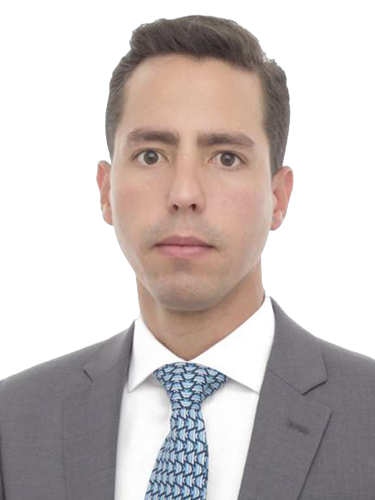
Dr. Luis Felipe Cabrera Vargas is a general physician of El Bosque University, specialist in General Surgery of El Bosque University and Vascular-endovascular Surgery and Angiology Fellow of the Nueva Granada Military University in the Hospital Militar Central in Bogotá, Colombia. He is the director of the Asociación Colombia de Cirugia vascular Fellows Commission. He is the President of the Future Surgeons Chapter of the Colombian Association of Surgery and he is part of the American College of Surgeons Colombian Chapter board. He is one of the founders and Mentors of the Association of Women Surgeons Colombian Chapter. He is the Academic Coordinator of the General Surgery program of Universidad El Bosque in Bogotá, Colombia. He is the Co-Leader of the Research Group in General Surgery and Subspecialties (GICS) and the creator of the Research Seedbed in General Surgery and Subspecialties (SICS) from the Universidad El Bosque, two of the most important research groups in Colombia.
He is the author of more than 120 scientific papers published in peer reviewed impact factored surgical journals. He is ranked as a senior Researcher of MinCiencias – Colciencias in Colombia, the most important institution in investigation in Colombia. He is Assistant Editor of American Journal of Surgery and in the Surgery Journal, two of the top scientific surgical journals in the world. He is a member of the digital media innovation board of Surgery journal.
He is professor of General Surgery in the Universidad de los Andes, Universidad El Bosque and in the Pontificia Universidad Javeriana in Bogotá Colombia, three of the most important universities in Colombia and Latinoamerica. He works in Los Cobos Medical Center and in the Hospital Universitario San Ignacio in the departments of acute care surgery and minimally invasive surgery.
His main professional and scientific interests focus on trauma surgery, acute care surgery, minimally invasive surgery, abdominal wall surgery, vascular surgery and complex aortic surgery, quality of care, risk stratification and modeling, patient reported outcomes health economics, global surgery, leadership, research, diversity, equity and inclusion in surgery.
Selected publications from PubMed
Social media to overcome technological barriers in surgical training: Four Latin American experiences.
Reyes Monasterio A, Reyes T, Acevedo Parrales JD, Mantilla-Sylvain F, Cabrera LF, Lozada ID, Nuñez-Ordoñez N
Am J Surg. 2023 Oct;226(4):562-563 doi: 10.1016/j.amjsurg.2023.05.020.
Participation of Latin American surgeons in Twitter using the hashtag #SoMe4Surgery and #SoMe4IQLatAm.
Castro LB, Cabrera LF, Reyes M, Pedraza M, Lozada-Martinez ID, Forero N, Rahman S
Surg Open Sci. 2022 Jul;9:13-18 doi: 10.1016/j.sopen.2022.03.008.
Multicenter Evaluation with Eckardt Score of Laparoscopic Management with Heller Myotomy and Dor Fundoplication for Esophageal Achalasia in a Pediatric Population in Colombia.
Chams Anturi A, Romero Espitia W, Loockhartt A, Moreno Villamizar MD, Pedraza Ciro M, Villamizar JE, Cabrera LF, Tinoco Guzman NJ, Beltrán J, Fierro F, Holguin A, Silvia A, Giraldo C, Rodriguez M
J Laparoendosc Adv Surg Tech A. 2021 Feb;31(2):230-235 doi: 10.1089/lap.2020.0055.
Minimal invasive surgery for multiple adhesive small bowel obstruction: Results of a comparative multicenter study.
Gómez D, Cabrera LF, Pedraza M, Mendoza A, Pulido J, Villarreal R, Urrutia A, Sanchez-Ussa S, Saverio SD
Cir Cir. 2021;89(6):710-717 doi: 10.24875/CIRU.20000895.
Anterolateral thigh versus radial forearm flap for cervical esophageal reconstruction in cancer patients: A retrospective cohort study in Colombia.
Moreno A, Cabrera LF, Pedraza M, Rojas A, López P, Sanchez S, Gomez MA, Correa S
Cir Cir. 2021;89(4):461-468 doi: 10.24875/CIRU.20000546.
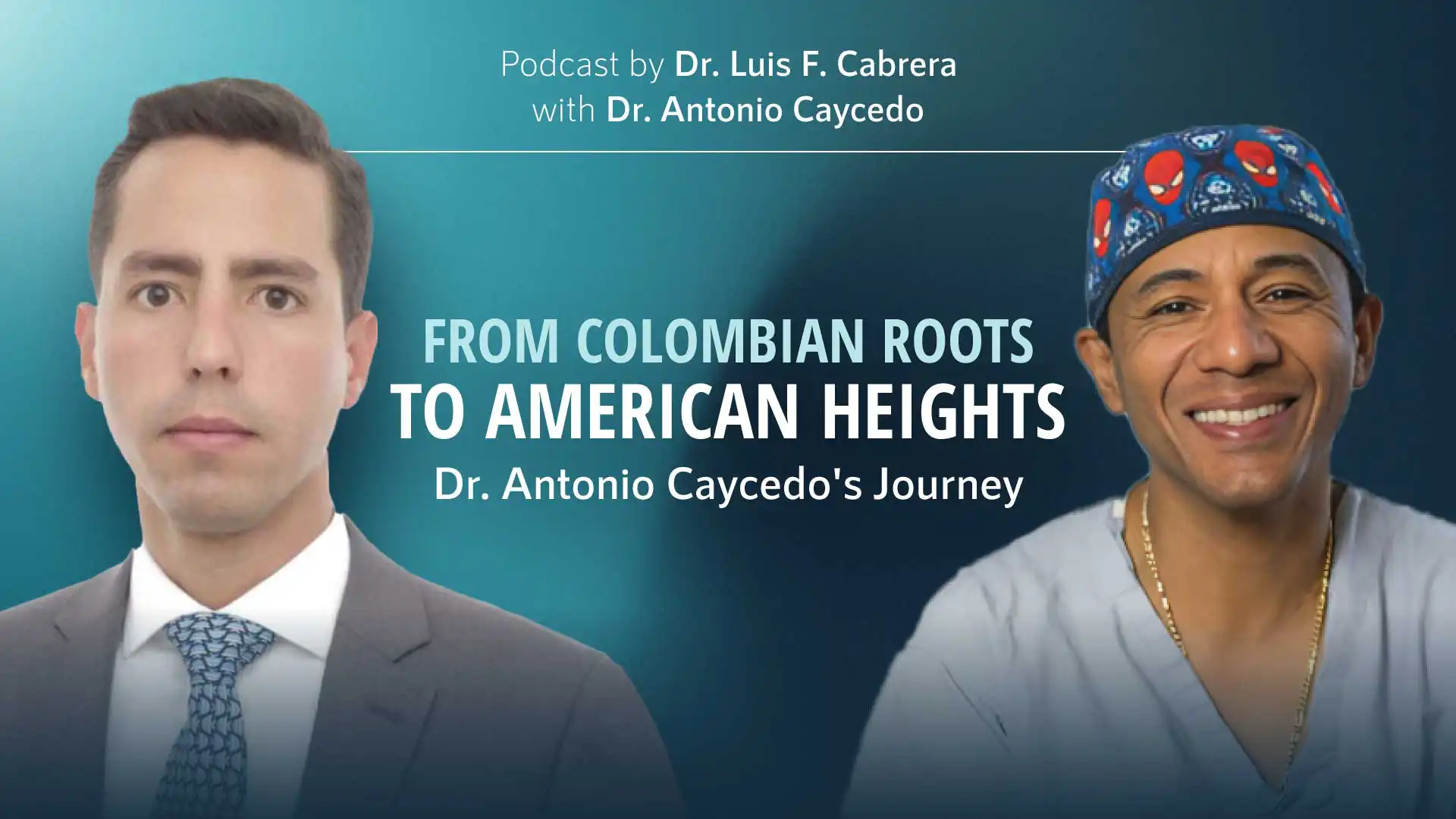
In this episode of the AIS Channel podcast, Dr. Antonio Caycedo-Marulanda, Chief of Colorectal Surgery at Orlando Health in Florida, reflects on his professional journey from medical training in Colombia to leadership roles in academic surgery across North America. He discusses the clinical, academic, and personal challenges of working across healthcare systems, and shares perspectives relevant to international medical graduates, trainees, and established clinicians navigating career transitions, leadership development, and academic growth. Dr. Cabrera: A compelling perspective on the evolution of surgical training in Latin America, offering essential mentorship and strategic advice for young surgeons aiming to excel in high-volume clinical environments. Dr. Caycedo: An insightful journey through the challenges of international surgical migration, sharing gold-standard practices and leadership lessons for those building a world-class specialized career.
Published
Mar 2026
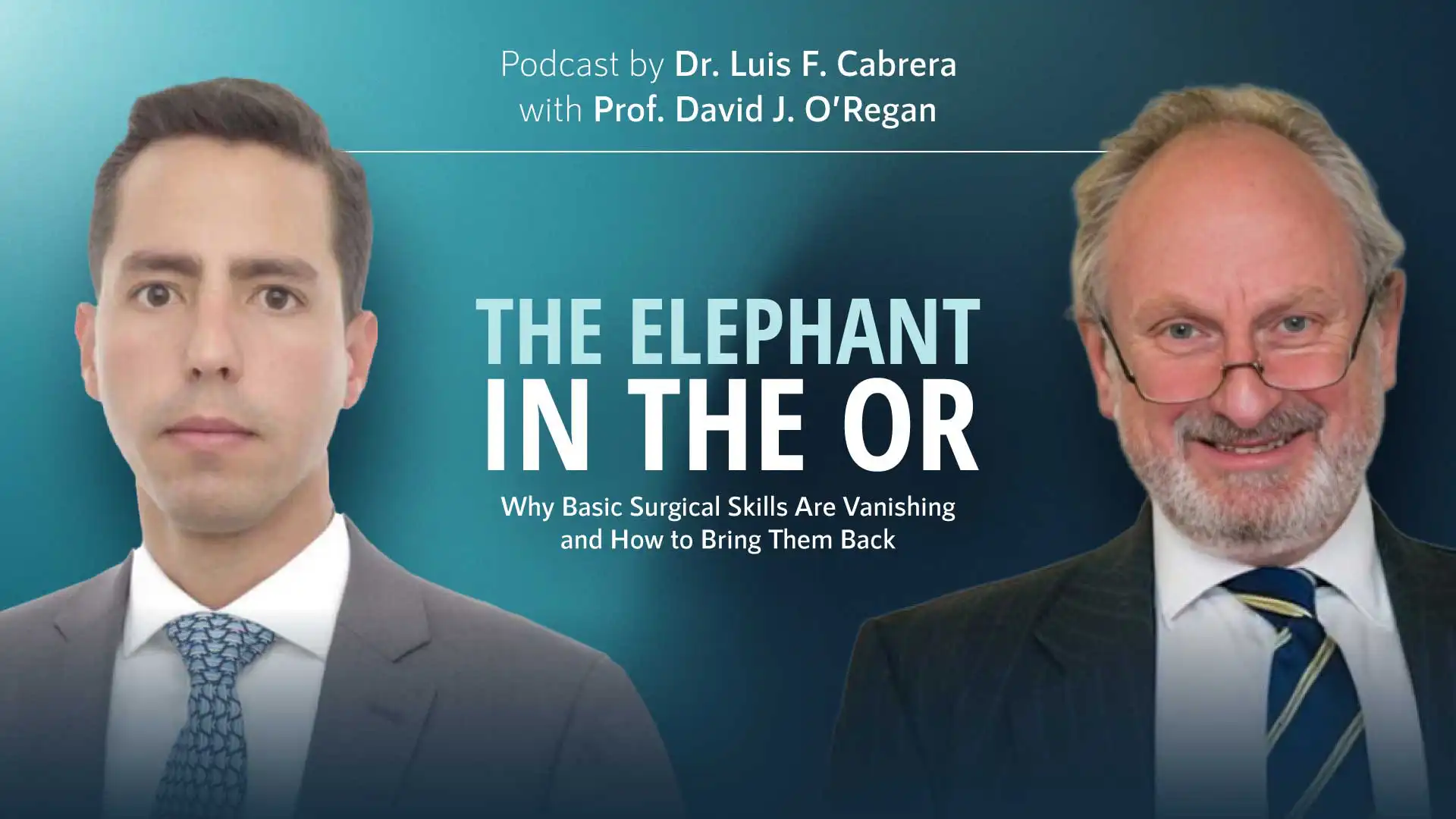
In the hyper-specialized era of general surgery training, an unspoken crisis festers beneath the operating table: the systematic neglect of foundational manual dexterity. Residents worldwide graduate able to recite the latest robotic console specifications yet struggle to tie a secure square knot under tension, select the correct needle for delicate tissue, or position a needle-holder without inducing carpal tunnel precursors. This 500-word abstract previews the December 2025 AIS Channel podcast, where Professor David O’Regan—pioneer of surgical ergonomics and former President of the Association of Surgeons in Training and Now President of The International Collaborative of Surgical Education and Training (ICOSET) —confronts this “elephant under the table” that program directors, accreditation bodies, and even trainees themselves prefer to ignore. The conversation opens with stark data: a 2024 multicenter audit across 42 programs in Europe, Latin America, and North America revealed that 68 % of PGY-3 residents could not demonstrate consistent instrument ergonomics, 54 % misidentified suture needle geometry for specific tissue layers, and 41 % required >3 attempts to achieve hemostasis with a single clamp application during simulated bleeding. These deficits correlate with intraoperative complication rates 2.7 times higher in the bottom quartile of manual proficiency (O’Regan et al., Ann Surg 2025). Yet curriculum hours devoted to basic skills have plummeted 73 % since 2005, displaced by mandatory simulation in robotics, endoscopy, and administrative competencies. Professor O’Regan dismantles three pervasive myths: (1) “see one, do one, teach one” suffices for motor learning; (2) laparoscopic dominance renders open instrumentation obsolete; (3) deliberate practice is unnecessary when talent is presumed. Drawing from aviation’s Crew Resource Management and elite athletic deliberate-practice models, he exposes how current apprenticeship relies on random case exposure rather than structured, metric-driven progression. The centerpiece solution unveiled is the ** Black Belt Academy of Surgical Skills (BBASS)**—a modular, credentialed pathway analogous to martial arts ranking. Level White (pre-intern) masters instrument grip biomechanics and tissue-handling principles via low-fidelity bench models. Level Yellow (PGY-1) achieves 95 % proficiency in 12 core suture patterns under timed, ergonomic scrutiny. Level Green (PGY-2) integrates energy devices and clamp kinematics in high-fidelity pulsatile tissue. Level Brown (PGY-3) leads simulated OR crises requiring real-time decision-making with needle, scissors, and clamp. Level Black (PGY-4) certifies as instructor, closing the feedback loop. Each belt requires 50 logged deliberate-practice hours, objective video assessment using the O-SCORE derivative **Ergonomical Surgical Proficiency Index (ESPI)**, and zero critical failures in tissue trauma metrics. Pilot data from three BBASS SSA sites (Leeds, Bogotá, Kuala Lumpur ) show a 64 % reduction in minor intraoperative errors and 41 % faster knot-tying under duress after Yellow Belt completion. Cost per resident, including all tutoring and certificates, RM 500 —less than one disposable laparoscopic trocar pack. Scalability leverages existing wet labs, open-source low fidelity models , and cloud-based video review. The episode closes with a call to action: surgical societies must mandate BBASS-equivalent milestones for accreditation by 2030, funders must prioritize deliberate practice over gadgetry, and trainees must reclaim ownership of their hands. As Prof O’Regan asserts, “We do not lack technology; we lack the humility to teach a resident how to hold scissors before handing them a Da Vinci.” This podcast is not nostalgia—it is a blueprint to resurrect the artisan surgeon in the age of algorithms.
Published
Dec 2025
.webp)
In the demanding field of surgery, leadership is vital for advancing medical practice and enhancing patient outcomes. This abstract outlines the journey of a young surgeon striving to achieve leadership roles within national and international surgical communities. The path is complex, requiring exceptional surgical expertise, strategic career planning, and meaningful contributions to the field. The young surgeon begins by building a robust foundation through rigorous training, mentorship, and ongoing skill development. Clinical excellence is paramount, complemented by research efforts that add new insights to surgery. Publishing in esteemed journals and presenting at conferences are critical for gaining recognition. To secure national leadership, the surgeon must engage actively with professional organizations. This involves taking on roles such as committee memberships, organizing educational initiatives, or advocating for policies that improve surgical standards. These efforts showcase dedication and competence, paving the way for influence within the national surgical landscape. For international leadership, a global outlook is essential. The surgeon should pursue opportunities like international surgical missions, contributions to global health programs, or collaborative research across borders. Participating in and presenting at international conferences boosts visibility and establishes credibility worldwide. Ultimately, attaining leadership in surgery transcends personal achievement—it’s a platform to shape the field’s future. Through innovation, mentoring emerging surgeons, and championing better surgical care, the young surgeon can leave a lasting legacy. This journey reflects a blend of skill, ambition, and commitment to improving surgery on both national and international stages.
Published
Oct 2025
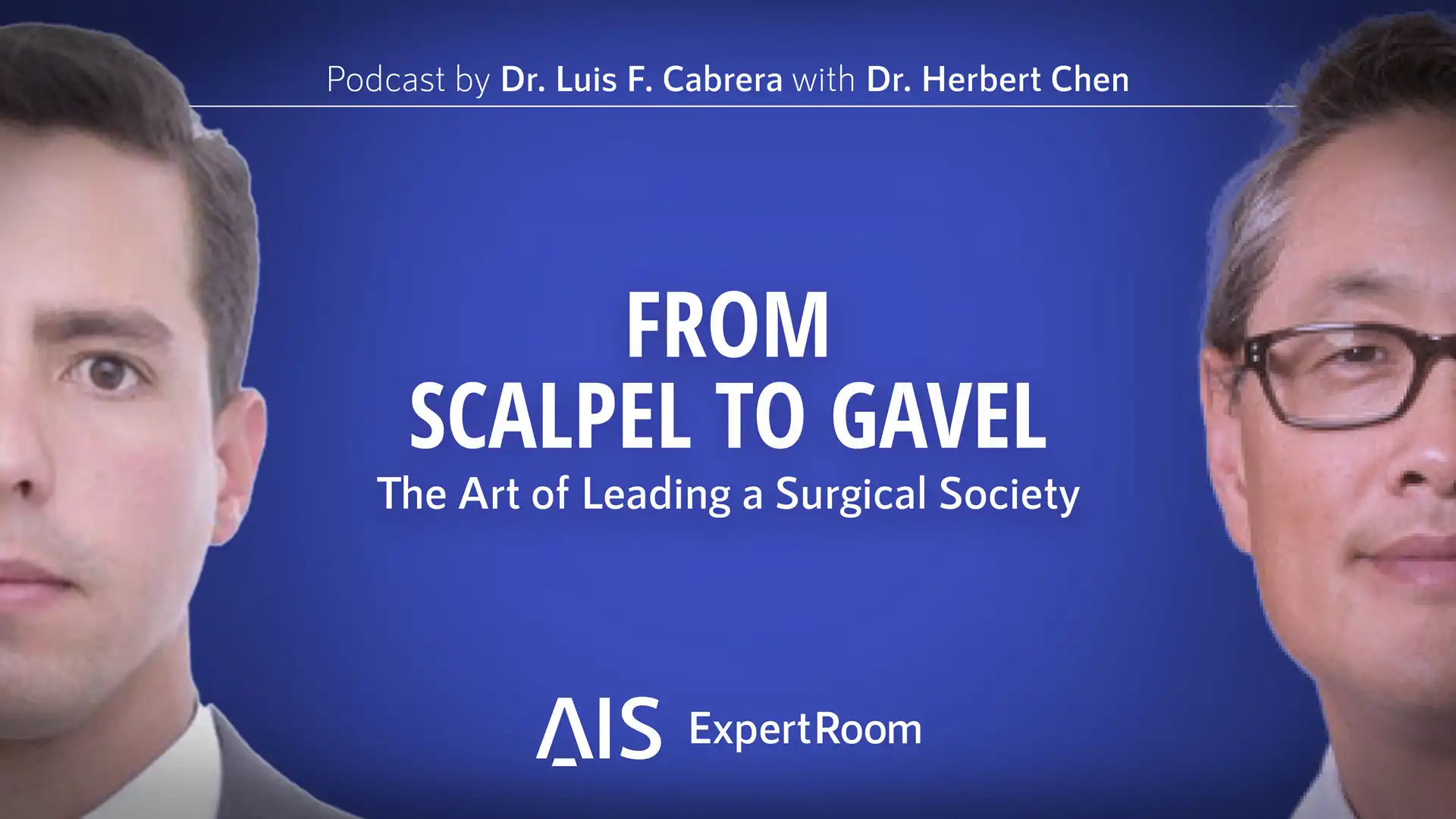
In this episode of the AIS Channel podcast, Dr. Luis Felipe Cabrera Vargas interviews Dr. Herbert Chen, a prominent figure in academic surgery, to explore the meaning and responsibilities of presiding over a surgical association. Dr. Chen describes the presidency as a great honor, a recognition bestowed by one's peers based on contributions and demonstrated leadership. He posits that surgeons are natural leaders, accustomed to guiding teams in the operating room, patient care, and research, making the transition to an organizational leadership role a logical step. The conversation delves into the president's functions, which include setting a vision for the organization, proposing initiatives, and guiding the society during their term. It is highlighted that the objectives are typically organizational in nature, such as increasing membership or the society's influence, rather than focusing on specific technologies. Finally, the discussion turns to what it takes to become president. Dr. Chen emphasizes that there is no single profile; rather, the most crucial factor is a long-term commitment to the organization, demonstrated through continuous service on committees, reliability, and the ability to work collaboratively. The episode concludes that the path to the presidency is built on a foundation of dedicated service and consistent leadership.
Published
Jul 2025

In this episode, Dr. Luis F. Vargas interviews Dr. David Moros, a Colombian physician and cardiovascular research fellow at Cleveland Clinic, about pathways for Latin American surgeons aspiring to academic careers in the U.S. They explore the importance of prioritizing USMLE steps, building strong CVs through fellowships, and leveraging mentorship and sponsorship to unlock opportunities. Dr. Moros provides actionable advice on crafting personalized emails, utilizing networks, and staying persistent when seeking research positions. The discussion highlights the value of clear goals, time management, and resilience in achieving success in the competitive field of academic surgery.
Published
Feb 2025

In this episode, host Dr. Luis F. Cabrera welcomes Dr. Giovanni Cacciamani, a urologist and expert in the integration of artificial intelligence (AI) into surgical practice. Together, they emphasize the importance of adapting to this technology: AI is not here to replace surgeons but to act as a powerful tool that enhances their capabilities in the operating room. Dr. Cacciamani explores the various ways AI is transforming surgeryᅳfrom aiding in preoperative planning and guiding procedures to providing insights during postoperative analysis. With its potential for predictive modeling, image recognition, and even generating automated surgical reports, AI offers a range of capabilities that are improving patient outcomes and boosting overall efficiency. This podcast offers a clear understanding of how AI is revolutionizing the surgical field and why embracing these advancements is essential for healthcare professionals in today's rapidly evolving landscape. Adapt or fall behind!
Published
Oct 2024
Help your network discover Dr. Luis F. Cabrera's clinical expertise.