
Jim Khan is a specialist colorectal surgeon with comprehensive training in general, colorectal and laparoscopic surgery. He is currently appointed as a consultant colorectal & laparoscopic surgeon at Portsmouth Hospitals NHS Trust, where he treats a wide range of disorders affecting the small intestine, colon and rectum. Jim graduated in 1995 and specialised in general surgery and became a fellow of the Royal College of Physicians & Surgeons Glasgow in 2002. He completed his specialist registrar training in colorectal surgery in Wessex region. He learned complex pelvic and rectal cancer surgery while working with Professor Heald at Basingstoke. His specialist colorectal training included the UK National Laparoscopic Fellowship at Colchester in 2007, where he received training from Professor Roger Motson in advanced laparoscopic pelvic surgery. Later on he was awarded a travelling clinical fellowship at Mayo Clinic Rochester (US). At Portsmouth he is actively involved in medical education and clinical training. He is working in collaboration with Portsmouth University on a few research projects and helping trainees enrolled for higher degree courses. He trains on a variety of courses both nationally and internationally including basic surgical skills, laparoscopic skills, ATLS, TEMS, Laparoscopic colorectal surgery and coloproctology courses. He has been a national trainer for consultants’ training in laparoscopic colorectal surgery (LapCo) - a programme run by the Department of Health for promotion of training in key-hole bowel cancer surgery.
Selected publications from PubMed
A systematic literature review of colorectal robotic surgery with the Hugo robotic-assisted surgery (RAS) system: feasibility, safety, and clinical applications.
Carannante F, Sejfullai K, Miacci V, Piozzi GN, Costa G, Khan JS, Caricato M, Capolupo GT
Ann Coloproctol. 2026 Aug;42(4):386-395 doi: 10.3393/ac.2025.01431.0204.
Development of a robotic training curriculum for visceral and gastrointestinal surgical trainees: an international Delphi study.
Fadel MG, Walshaw J, Yiasemidou M, Boal M, Pecchini F, Elhadi M, Massey LH, Carrano FM, Fehervari M, Walsh CM, Boshier PR, Eckhoff J, Buckle P, ERSC Study Group, Gisbertz SS, Bouvy N, Arezzo A, Perretta S, Nickel F, Khan J, Hanna GB, Seeliger B, Antoniou SA, Fuchs HF, Francis NK, Kontovounisios C
Surg Endosc. 2026 Aug;40(8):6913-6927 doi: 10.1007/s00464-026-12781-x.
Laparoscopic Versus Robot-Assisted Low Anterior Resection With Mesorectal Excision for Rectal Cancer (2014-2021): A Propensity Score-Weighted Multicenter Cohort Study of Long-term Oncological Outcomes (RESOLUTION).
Geitenbeek RTJ, Duhoky R, Burghgraef TA, Piozzi GN, Fleming CA, Masum S, Hopgood AA, Rockall TA, Denost Q, Taoum C, Hompes R, Briggs J, Khan JS, Consten ECJ, RESOLUTION and EUREKA study groups
Dis Colon Rectum. 2026 Aug 1;69(8):2052-2066 doi: 10.1097/DCR.0000000000004231.
Oncologic standards in colon cancer resection: from margins to lymph node yield and mesentery.
Portinaio M, Schena CA, Ammendola M, Wong GYM, Tejedor P, Rosa F, Reitano E, Pedrazzani C, Khan J, de'Angelis N
Front Surg. 2026;13:1831262 doi: 10.3389/fsurg.2026.1831262.
Development of a robotic training curriculum for visceral and gastrointestinal surgical trainees: an international Delphi study.
Fadel MG, Walshaw J, Yiasemidou M, Boal M, Pecchini F, Elhadi M, Massey LH, Carrano FM, Fehervari M, Walsh CM, Boshier PR, Eckhoff J, Buckle P, European Robotic Surgery Consensus (ERSC) Study Group, Gisbertz SS, Bouvy N, Arezzo A, Perretta S, Nickel F, Khan J, Hanna GB, Seeliger B, Antoniou SA, Fuchs HF, Francis NK, Kontovounisios C
Br J Surg. 2026 Jun 4;113(6) doi: 10.1093/bjs/znag054.
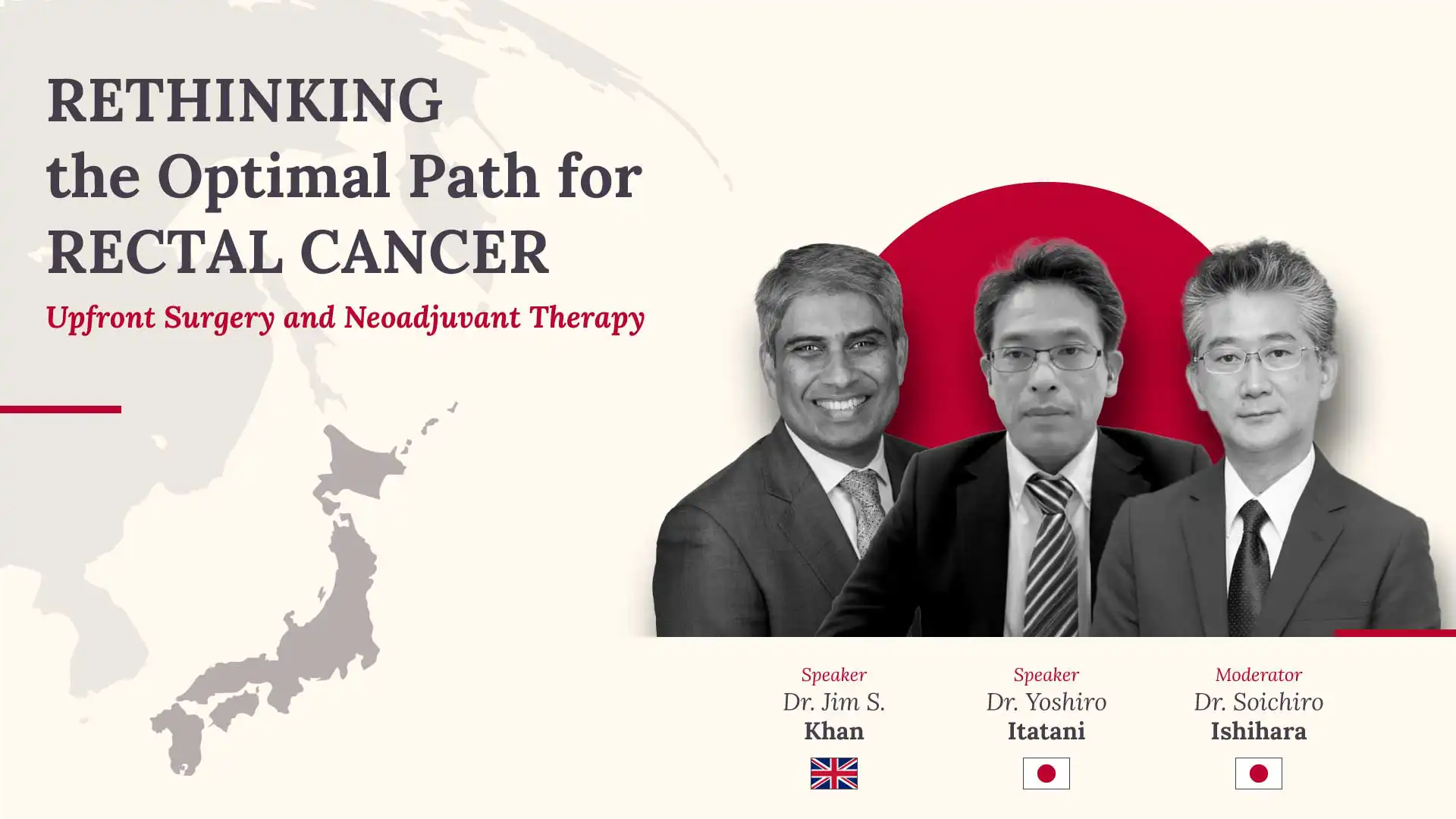
In recent years, the debate between upfront surgery and neoadjuvant therapy has become a cornerstone in the management of rectal cancer. Choosing the optimal path requires a deep understanding of varying international guidelines and the precision offered by modern surgical techniques. Thanks to the integration of laparoscopic and robotic-assisted systems, surgeons can now achieve higher levels of precision in Local Axial Resection (LAR), adhering to rigorous clinical standards to improve patient quality of life.
With Johnson & Johnson MedTech
Published
Feb 2026
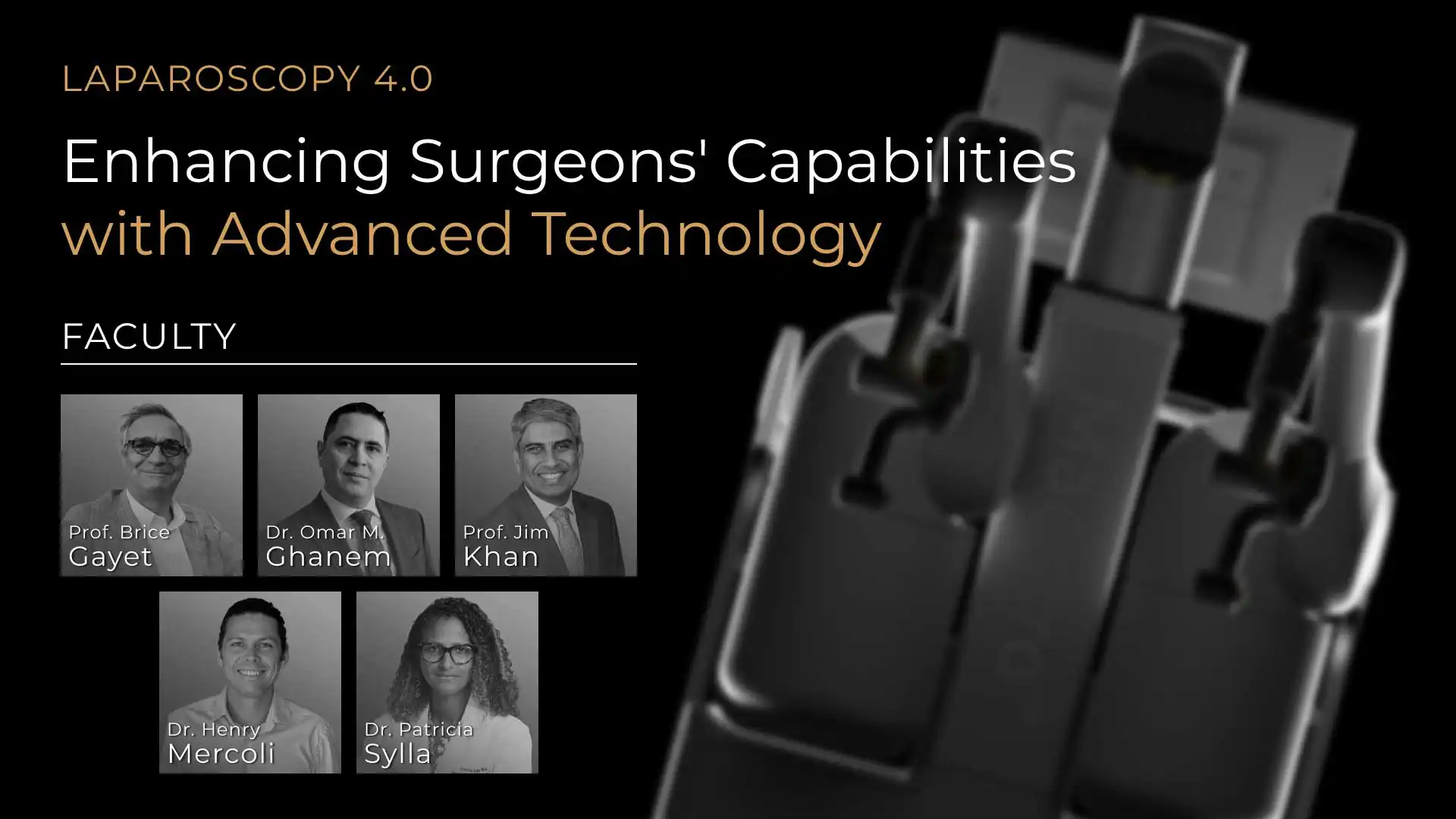
The world of surgery is undergoing a major transformation with the advent of Laparoscopy 4.0, where advanced technologies such as robotics and AI are reshaping the landscape of medical practice. This new era is characterized by innovations that not only empower surgeons with enhanced capabilities but also improve the efficiency of the entire operating room team. In this webinar, we will explore how technologies like robotic-assisted surgery are making a significant impact on laparoscopic procedures, offering surgeons greater precision and control.
With Moon Surgical
Published
Apr 2025

Minimally invasive surgery has been repeatedly proven to have many benefits. While laparoscopy, the original form of minimally invasive surgery, revolutionized abdominopelvic surgery, it has some potential limitations. During the last almost 35 years, minimally invasive technology has evolved to optimize outcomes. In addition, global access to safe cost-effective platforms is essential to make the benefits of minimally invasive surgery available to patients around the world. In this program, several internationally renowned experts discuss some potential limitations to laparoscopy and present some innovative technologies designed to further advance minimally invasive surgery.
With Livsmed
Published
Apr 2022

First, the past, present and future of the total mesorectal excision were discussed by its creator, Richard Heald. Then a series of lectures given by Mariana Berho, Paris Tekkis and Steven Wexner focused on hot topics: Do the results of TME vary by technique?, Do the clinical outcomes vary with technique? and Attempts to reduce anastomotic leaks. A block of videos was broadcast where the surgical approaches to TME were evaluated. Brendan Moran talked about the open approach and its place in current practice. Yves Panis talked about the laparoscopic TME and its advantages. Jim Khan was in charge of demonstrating the robotic TME, showing how an accurate dissection was performed. And Antonio Lacy explained all the essentials, tips and tricks to perform a taTME, which is the most innovative and least invasive approach. The most interesting part of the event was having great surgeons perform simultaneous and live open, laparoscopic, robotic and transanal TME procedures. This dynamics made it possible to compare the benefits, limitations and pitfalls of the current approaches in front of a huge audience of surgeons from all over the world. It was an amazing experience. Once the specimens had been resected the quality of the dissection was assessed by Mariana Berho and Nicholas West. Finally the panel of experts held a discussion, giving their views and recommendations. Regarding the statistics of the event, the AIS Channel Winter Event 2016 was again hugely successful. It was seen live by more than 25,000 viewers from 102 countries. Interaction with the global audience was once again very powerful. Moreover, these amazing figures will increase once the event is published on AIS for permanent viewing in the next few days.
Published
Nov 2016
Help your network discover Prof. Jim Khan's clinical expertise.