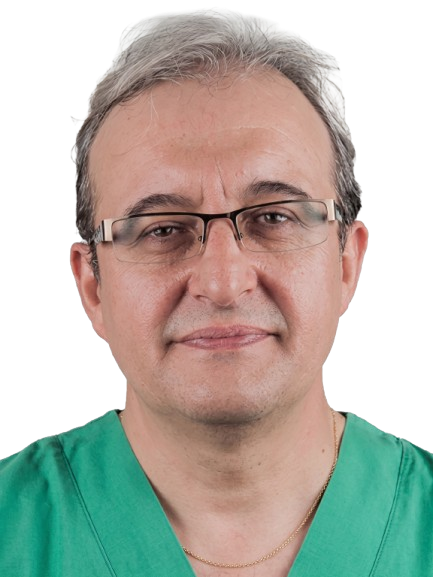
Dr. Sánchez is the Scientific Director at the Jesús Usón Minimally Invasive Surgery Centre (JUMISC) located in Cáceres, Spain.
The JUMISC is a multidisciplinary institution delivering excellence in research and training of minimally invasive surgical techniques. It promotes technological development and innovation applied to medicine and health, in close collaboration with companies around the world. Project Manager for minimally invasive techniques with particular responsibility regarding biomaterials, medical devices, new techniques, preclinical trials and imaging diagnosis in laparoscopic, endoscopic and other minimally invasive procedures and surgical technologies.
Selected publications from PubMed
Training4all project - from an advanced minimally invasive surgery course to a national training program.
Gonçalves MR, Morales-Conde S, Marinho R, Ferreira C, Salido S, Oliveira A, Albuquerque A, Sánchez-Margallo FM, Sousa MC, de Matos JN
J Robot Surg. 2026 Mar 5;20(1) pii: 317. doi: 10.1007/s11701-025-02944-8.
Comparative Study of Ergonomics in Conventional and Robotic-Assisted Laparoscopic Surgery.
Pérez-Salazar MJ, Caballero D, Sánchez-Margallo JA, Sánchez-Margallo FM
Sensors (Basel). 2024 Jun 14;24(12) doi: 10.3390/s24123840.
European association for endoscopic surgery (EAES) consensus statement on single-incision endoscopic surgery.
Morales-Conde S, Peeters A, Meyer YM, Antoniou SA, Del Agua IA, Arezzo A, Arolfo S, Yehuda AB, Boni L, Cassinotti E, Dapri G, Yang T, Fransen S, Forgione A, Hajibandeh S, Hajibandeh S, Mazzola M, Migliore M, Mittermair C, Mittermair D, Morandeira-Rivas A, Moreno-Sanz C, Morlacchi A, Nizri E, Nuijts M, Raakow J, Sánchez-Margallo FM, Sánchez-Margallo JA, Szold A, Weiss H, Weiss M, Zorron R, Bouvy ND
Surg Endosc. 2019 Apr;33(4):996-1019 doi: 10.1007/s00464-019-06693-2.
Intestinal histopathological changes in a porcine model of pneumoperitoneum-induced intra-abdominal hypertension.
Párraga Ros E, Correa-Martín L, Sánchez-Margallo FM, Candanosa-Aranda IE, Malbrain MLNG, Wise R, Latorre R, López Albors O, Castellanos G
Surg Endosc. 2018 Sep;32(9):3989-4002 doi: 10.1007/s00464-018-6142-z.
Time-course evaluation of intestinal structural disorders in a porcine model of intra-abdominal hypertension by mechanical intestinal obstruction.
Párraga Ros E, Correa-Martín L, Sánchez-Margallo FM, Candanosa-Aranda IE, Malbrain MLNG, Wise R, Latorre R, López Albors O, Castellanos G
PLoS One. 2018;13(1):e0191420 doi: 10.1371/journal.pone.0191420.

Introduction Endourological techniques currently involve a long, sequential learning curve and take up significant learning time, so young urologists sometimes have little opportunity to develop and refine their skills in daily clinical practice. The possibility of carrying out different stages of training through validated simulation programs brings great advantages: it is carried out in a stress-free environment, it allows for step-by-step training of techniques, self-evaluation, it allows for standardization of training, it has proven to be cost-effective and positive for increasing both technical and non-technical skills, such as leadership, complication management, stress management, strengthens teamwork, etc. The aim of this study is to show and validate our endourology retrograde approach training model with full immersion in OR. It is based on three modules, which combines the use of bench models and a porcine animal model. Module I. Acquisition of basic knowledge in retrograde Endourology Module II. Practice in bench models in OR. Module III. Practice in porcine animal model We evaluated 356 trainees who have gone through our Endourology training activities following this realistic and organized model. Results The final parameter to take into account in any training programme is its validation. Training programmes must be validated to show that they are useful to increase and measure the acquisition of technical skills. Trainees’ satisfaction with the face and content validity of our Training program in Retrograde Endourology is high. Construct validity is used to determine how well a test measures what it is supoosed to measure. In our case, statistical analisys showed differences between experienced urologists and trainees. Our trainees increase their technical skills by 20 to 44%. Conclusions We believe that training using these models has great value in the initial steps before contact with a patient and to refine techniques and skills. Moreover, the integration of simulators into the surgical training CV allows urologist to acquire basic surgical skills, which would otherwise stretchen on the time. Our “realistic enviroment” endourology training model allows the acquisition of technical knowledge and skills, as face, content and constructive validation show. A structured use of non-biological and biological simulators, as well as the use of animal models lead to an increase in endourology skills.
Published
Apr 2019

Urology is becoming increasingly dependent on interdisciplinary cooperation between different areas of knowledge, technology and innovation. Thus, to meet new challenges, the current skills training and certification system requires permanent revision. Laparoscopic surgery (LS) in urology has developed rapidly in recent decades. Considering the benefits of LS over conventional surgery, it is reasonable to increase the number of surgeries through this technique. However, this should imply an ongoing process of improvement in the provision of health services and also in the training of surgeons. The design of a training program, in structured segments and with progressive complexity, provides adequate guidance to transfer the acquired skills to a real scenario with the appropriate safety levels for the patient. Therefore, simulators and animal models are essential tools as a follow-up to clinical training. In addition, ongoing training is crucial to update and renew knowledge and, in a field such as laparoscopy, mandatory. In addition to the evident advances in robotics, there are many other developments that are emerging within the Urology field, in which urologists must necessarily be trained, such as portable technology and the development of medical imaging techniques, in collaboration with other specialists. The traditional method of surgical training with a clear focus on motor skills and theoretical knowledge is still prevalent. However, non-technical skills should also be considered. Training programmes should provide a curriculum that covers not only this, but also communication, cognitive and non-technical expertise. However, most urologists do not receive a formal education and adequate training in these disciplines. Similarly, current evaluation is often limited to theoretical knowledge rather than specific skills. We understand that assessment is an integral component of training, and the solid foundation upon which to base its accreditation. By establishing the use of a valid and objective tool, under clearly defined criteria, we will be able to ensure a thorough and rigorous evaluation that guarantees surgical training. The technological revolution in which Urology also participates must be adequately reflected in the training plans for urologists. However, training in new techniques, approaches and technology cannot ignore training in conventional surgery, which should continue in a structured manner, with an effective ongoing training programme throughout the surgeon's professional career. Finally, the evaluation of any given surgeon's skills, and the analysis of health outcomes, is the ideal tool to validate the effectiveness of a training program.
Published
Apr 2019
Help your network discover Dr. Francisco M. Sánchez Margallo's clinical expertise.