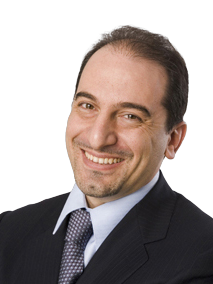
Professor Rubino’s research showed that the anti-diabetes effect of certain bariatric procedures, particularly gastric bypass surgery, results from mechanisms beyond weight loss. This evidence provided a scientific rationale for surgical treatment of type 2 diabetes, including that of less obese patients. Professor Rubino’s research-finding and theories also point to a role of the gastrointestinal tract in the pathophysiology of diabetes and obesity. His clinical expertise includes laparoscopic, bariatric, metabolic and upper digestive surgery, including gastric bypass, sleeve gastrectomy, gastric banding and novel procedures. He is internationally recognized as one of the world’s leaders in the research, teaching and practice of metabolic and weight-loss surgery. Professor Rubino received his MD and completed his residency in general surgery at the Catholic University / Policlinico Gemelli in Rome, Italy. He completed fellowships in laparoscopic surgery at the European Institute of Telesurgery in Strasbourg, France; Mount Sinai Medical Center, New York; and Cleveland Clinic. A member of many professional organizations, Professor Rubino is the recipient of numerous awards, has given hundreds of presentations throughout the world, and is the author of over 100 articles in peer-reviewed journals and book chapters. He was one of the co-organizers of the landmark Diabetes Surgery Summit in Rome in 2007, an influential scientific event where leading international authorities for the first time reached a consensus on the best candidates for the surgical treatment of diabetes. Professor Rubino also served as Congress Director and organized the 1st and 2nd World Congress on Interventional Therapies for Type 2 Diabetes in New York City, bringing together over 1,000 multidisciplinary diabetes experts from 62 countries. For several consecutive years, Professor Rubino was selected by both US News & World Report and Castle Connolly as one of “America’s Top Doctors” and was selected by Crain’s NY Business as a notable “40 under 40”, which recognizes young rising stars in the healthcare, business, non-profit and entertainment industries. His work has been featured in journals such as the New York Times, the Wall Street Journal, Newsweek, 60 Minutes on CBS, the Guardian, and the New Scientists as well as on national TVs and newspapers in Japan, Italy, Qatar, Brazil, South Africa and other countries.
Selected publications from PubMed
New Obesity Definition and Clinical Obesity Prevalence for Global Metabolic Bariatric Surgery.
Cremona S, Cohen RV, Pattou F, Casajoana A, Sampaio Souza G, Raverdy V, Verkindt H, Blasio BTL, Roser P, Caiazzo R, Benaiges D, Zanata Petry TB, Rubino F
JAMA Netw Open. 2026 Aug 3;9(8):e2628395 doi: 10.1001/jamanetworkopen.2026.28395.
Correction: Post-Operative Safety Outcomes and 5-Year Healthcare Utilisation After Bariatric Surgery vs. Other Elective Types of Surgical Treatments - A Retrospective Observational Cohort Study.
Chamseddine G, McIntyre RD, Panagiotopoulos S, Rudisill AC, Casella J, Castagneto-Gissey L, Chang A, Galata G, Haji A, Haq A, Genser L, Mingrone G, Patel A, Salerno A, Tassinari D, Rubino F
Obes Surg. 2026 Jun;36(6):2765-2766 doi: 10.1007/s11695-026-08678-2.
Post-Operative Safety Outcomes and 5-Year Healthcare Utilisation After Bariatric Surgery vs. Other Elective Types of Surgical Treatments - A Retrospective Observational Cohort Study.
Chamseddine G, David McIntyre R, Panagiotopoulos S, Rudisill AC, Casella J, Castagneto-Gissey L, Chang A, Galata G, Haji A, Haq A, Genser L, Mingrone G, Patel A, Salerno A, Tassinari D, Rubino F
Obes Surg. 2026 Jun;36(6):2753-2764 doi: 10.1007/s11695-026-08584-7.
From BMI to Disease Diagnosis: What Clinical and Pre-clinical Obesity Mean for Surgeons.
Rubino F, Brown WA, Schauer PR, Pattou F, Cohen RV
Obes Surg. 2025 Nov;35(11):4559-4564 doi: 10.1007/s11695-025-08159-y.
Vitamin D receptor is necessary for metabolic health after sleeve gastrectomy.
Moscalu A, Stupalkowska W, Zhao L, Li Y, Roberts CF, Chen Y, Ye F, Gold R, Bewick G, Rubino F, Tavakkoli A, Devlin AS, Sheu EG
bioRxiv. 2025 Oct 24 pii: 2025.10.24.684160. doi: 10.1101/2025.10.24.684160.

This lecture focuses on diabetes and metabolic surgery. For some years now, due to the increase in bariatric surgery and experimental research, the role of the gastrointestinal tract in type 2 diabetes and metabolic diseases has come into the foreground. This has made it possible to repurpose bariatric surgery and design novel drugs for obesity and other metabolic disorders. Since the 2nd Diabetes Surgery Summit (DSS-II) International Guidelines, in 2016, surgery has been a standard treatment option for type 2 diabetes. Metabolic surgery improves glycemia levels and the chance of diabetes remission, and reduces cardiovascular risk as well as mortality and patient complexity. In this lecture the surgical treatment of diabetes will be discussed, and information on the ASK study will be given. Endorsed by: [Image]
With Johnson & Johnson MedTech
Published
Apr 2021

Over the last few years, the idea of re-purposing bariatric procedures specifically for the treatment of type 2 diabetes (T2DM) has received increasing support by scientific evidence and, consequently, by new clinical guidelines endorsed by diabetes and surgical societies from around the world. There is, however, still some confusion about what defines metabolic/diabetes surgery. A common misconception is that metabolic surgery is defined by the use of novel procedures (i.e. duodenojejunal bypass, ileal interposition or endoluminal approaches), distinct from those traditionally offered for the treatment of morbid obesity or that it would only refer to surgery performed in patients with BMI< 35Kg/m2. In reality, metabolic surgery is defined neither by a specific BMI threshold nor by the type of surgical procedures - in the same way as colon cancer surgery is not defined by the type of colectomy being used. What really characterises metabolic/diabetes surgery is the use of gastrointestinal operations - whatever they are and whatever the BMI - with the specific intent to treat type 2 diabetes (or other established metabolic disease). Hence, traditional Roux-en-Y gastric bypass, sleeve gastrectomy, and biliopancreatic diversion or even laparoscopic adjustable gastric band are all “metabolic surgery” when they are intentionally used to treat diabetes as a primary indication. The selection of the surgical procedure in metabolic surgery - not unlike in any other fields of surgery - should be based on careful considerations about disease state and severity, mechanisms of action of different procedures, as well as clinical evidence. It is important to note that patients’ motives for surgery and referral patterns can be very different when surgery is offered as a diabetes therapy or as a mere weight loss intervention – this significantly influences the selection of surgical candidates and baseline characteristics of patients populations. Hence, we cannot properly assess the relative efficacy and safety of different operations in patients with diabetes from historical series of “bariatric surgery”. Specific studies of “metabolic surgery” that include patients with the full spectrum of diabetes severity and, ideally, data from randomized trials are crucial before drawing conclusions about the relative efficacy of surgery vs medical therapy and the efficacy and safety of different surgical procedures. Currently, RY-gastric bypass (RYGB), sleeve gastrectomy, gastric banding, and biliopancreatic diversion can all be considered as standard procedures for diabetes surgery, as they all have been assessed in randomized trials against conventional diabetes therapies. These trials also show that a gradient of efficacy and safety across the above procedures exists. Although current evidence shows that RYGB may have the best risk/benefit profile in most patients with T2DM, the choice of the procedure in each patient should be based on an careful and individual assessment of risks and benefits.
With International Federation for the Surgery and Other Therapies for Obesity
Published
Oct 2018

Clinical Case The Diabetes Surgery Summit guidelines, endorsed by multiple scientific societies, summarize the consensus on metabolic surgery for the treatment of diabetes. The landscape of diabetes care has significantly changed in recent years, and now surgery is included in the guidelines as a part of diabetes treatment. Dr Rubino gives an overview of the guidelines, which address the multidisciplinary approach to diabetes, the impact of metabolic surgery on gut physiology, as well as indications for surgical treatment and the type of surgery recommended. [Image]
Published
Oct 2017
Help your network discover Dr. Francesco Rubino's clinical expertise.