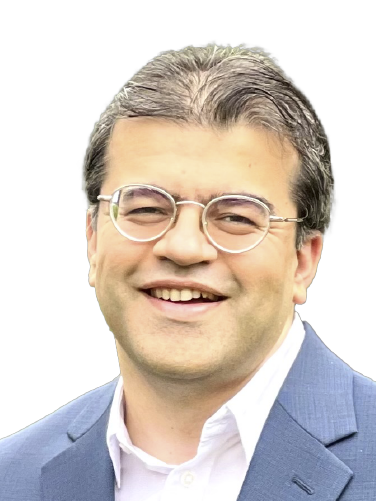
Faisal Aziz, MD is a vascular surgeon, serving as an Associate Professor of Surgery and Gilbert & Elsie Sealfon Chief of Vascular Surgery at the Penn State University College of Medicine. He also serves as the program director for the integrated vascular surgery residency program.
Dr. Aziz is the current chair of the education committee of the Association for Program Directors in Vascular Surgery (APDVS), the research council for the American Venous Forum, and Chair of the membership committee for the Eastern Vascular Surgery society. He is associate editor and the social media editor for the Annals of Vascular Surgery and serves on the editorial boards for the Journal of Vascular Surgery and the Journal of Surgical Research.
He has served on the ACGME Milestones 2.0 development committee and is a distinguished fellow of the Society for Vascular Surgery and the American Venous Forum. He is the author of close to 100 peer-reviewed scientific articles.
His clinical interests focus on complex aortic surgery and his research focus has been vascular surgery outcomes. He is the founder of the Vascular Surgery Outcomes Research Team (VSORT) at Penn State University.

The main issue discussed during this SOC is how to identify mentors and sponsors as a mid-career surgeon. During the first part of the session, Dr. Faisal Aziz talks about how his career started in college and medical schools. Moreover, he highlights the main four mentors during his career, most parts of them were after attending Medical School. During this mentoring period, he learned a lot about many cases and situations, especially how to manage through in emergencies in the hospital. When you are starting your career as a doctor, you need a mentor who believes in you and motivates you to achieve your goals. The main motivations according to Dr. Aziz are the motivation to continue the surgical career and keep with continuous training. Furthermore, enhance leadership skills and research to build new 1 things. When it comes to a mentor role, it’s important to bear in mind that it will be someone who supports strongly us on some specific issues. Mentees also need to be challenged and helped in deciding the next steps in their career. Mentors must have a professional reputation and you must feel comfortable with them. However, mutual respect is also important the relationship can be format but also informal. Finally, he also talks about the term coaches and the differences in comparison with mentors. Moreover, a sponsor is really important because are people who have a reputation for promoting juniors and they want to promote surgeons and your name.
Published
May 2022

As one’s surgical career evolves, there are challenges and circumstances to navigate at every stage. The mid-career surgeon is now accomplished in clinical skills, but other aspects of their practice may still be in flux. Mid- career surgeons may find themselves starting at a new position/institution, evolving leadership roles, facing challenges in diversity, managing education and trainees, or identifying mentors to help guide one’s career. This program is sponsored by the Young Fellows Association (YFA) of the American College of Surgeons. It will focus on unique challenges for surgeons entering the mid-career stage. While most programs focus on new practicing surgeons, this program will focus on the unique concerns of mid- career surgeons. Please join us for a thoughtful and interactive discussion of the obstacles that mid-career surgeons need to overcome during this stage in their professional lives.
With Johnson & Johnson MedTech
Published
Mar 2022
Help your network discover Dr. Faisal Aziz's clinical expertise.