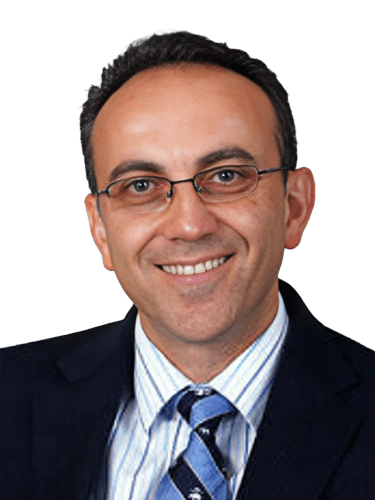
Dimitrios Stefanidis, MD, PhD, FACS, FASMBS is a professor of surgery at Indiana University School of Medicine, and serves as the chief of Minimally Invasive and Bariatric Surgery and vice chair of education for the Department of Surgery. Dr. Stefanidis received his medical school degree from the Aristotle University of Thessaloniki in Greece, and did his doctoral work at the University of Bonn in Germany. He completed his general surgery residency at the University of Texas Health Sciences Center in San Antonio, a surgical simulation research fellowship at Tulane University School of Medicine in New Orleans, LA, and his minimally invasive bariatric surgery fellowship at Carolinas Medical Center in Charlotte, NC. Dr. Stefanidis joined IU after 10 years at Carolinas Healthcare System in Charlotte, North Carolina where he helped establish Carolinas Simulation Center, a dually accredited education institute by the ACS and SSH. He served as the center’s first medical director and later surgical and research director.
Dr. Stefanidis has been actively involved with the Consortium of the Accredited Education Institutes of the American College of Surgeons since 2008 and currently serves as the co-chair of the Research and Development Committee and a member of the Patient Education Committee. He also serves as a board member of the Association for Surgical Education (ASE) and program chair of the 2017 ASE annual meeting, and as a board member of the Society of American Gastrointestinal and Endoscopic Surgeons (SAGES) and chair of the SAGES Guidelines Committee. He is an associate editor for the Journal of Simulation in Healthcare, and the ASE recorder of the American Journal of Surgery. He is an active member of numerous other national committees. His contributions to the education of surgeons and other healthcare workers have earned him the Educator of the Year award by the Charlotte Business Journal in 2012 and a presidential citation.
Dr. Stefanidis has served as principal or co-investigator on research projects totaling over 2 million dollars, has more than 120 peer-reviewed publications, has written several book chapters, and has won numerous competitive grants and research awards. His research focuses on surgical education, simulation, surgical outcomes and patient safety. His most recent research projects include the development of a mental skills curriculum for surgeons funded by the AHRQ and the development of a coaching mechanism for practicing surgeons funded by CMS. He has mentored numerous surgical fellows, residents, and medical students over the years and has helped them grow as clinicians and researchers.
Selected publications from PubMed
Temporal trends in patient demographics and postoperative outcomes in metabolic and bariatric surgery: a longitudinal analysis of the MBSAQIP database in the GLP-1 era.
Airhart AE, Bach K, Thompson A, Alogakos M, Na SY, Stefanidis D, Yuce TK
Surg Obes Relat Dis. 2026 Jun 1 pii: S1550-7289(26)00710-0. doi: 10.1016/j.soard.2026.05.029.
Preoperative GLP-1 Receptor Agonist Use and Weight Loss Outcomes Following Bariatric Surgery.
Holler E, Samuels JM, Stefanidis D, Yuce TK
Ann Surg. 2026 Mar 3 doi: 10.1097/SLA.0000000000007042.
Accuracy of the Metabolic and Bariatric Surgery Accreditation Quality Improvement Program risk/benefit calculator in predicting outcomes of revisional bariatric surgery.
AbuHasan Q, Chesnova B, Sanduka D, Saeidi S, Chang W, Yuce TK, Stefanidis D
Surg Obes Relat Dis. 2025 Dec;21(12):1326-1333 doi: 10.1016/j.soard.2025.06.019.
The Impact of Patient Distance from Hospital on Length of Stay and Postoperative Outcomes Following Bariatric Surgery.
AbuHasan Q, Airhart AE, Ross-Driscoll K, Stefanidis D, Yuce TK
Obes Surg. 2025 Oct;35(10):4055-4061 doi: 10.1007/s11695-025-08240-6.
Objective performance indicators during robotic Roux-en-Y gastric bypass distinguish experienced from trainee surgeons: a cross-sectional study.
Li WS, AbuHasan Q, Athanasiadis DI, Yee A, Stefanidis D
Surg Endosc. 2025 Aug;39(8):5178-5188 doi: 10.1007/s00464-025-11873-4.
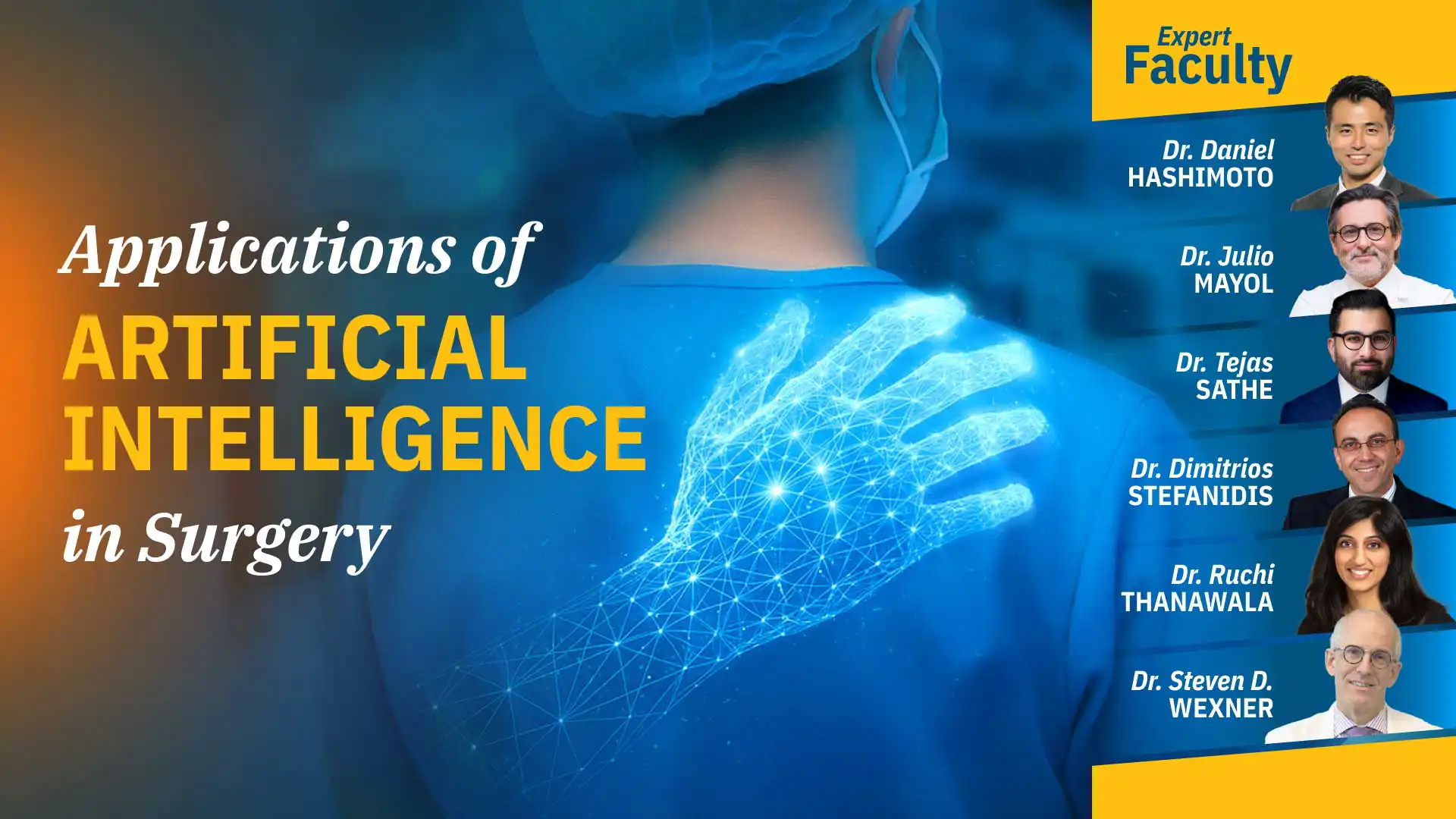
Artificial Intelligence (AI) is transforming the way surgery is practiced, researched, and taught. For residents, understanding AI is no longer optional, it is becoming an essential part of modern surgical education and practice. From clinical decision-making and research support to future innovations that may reshape surgical procedures, AI offers powerful tools that can improve outcomes, efficiency, and training.
With Johnson & Johnson MedTech
Published
Sep 2025
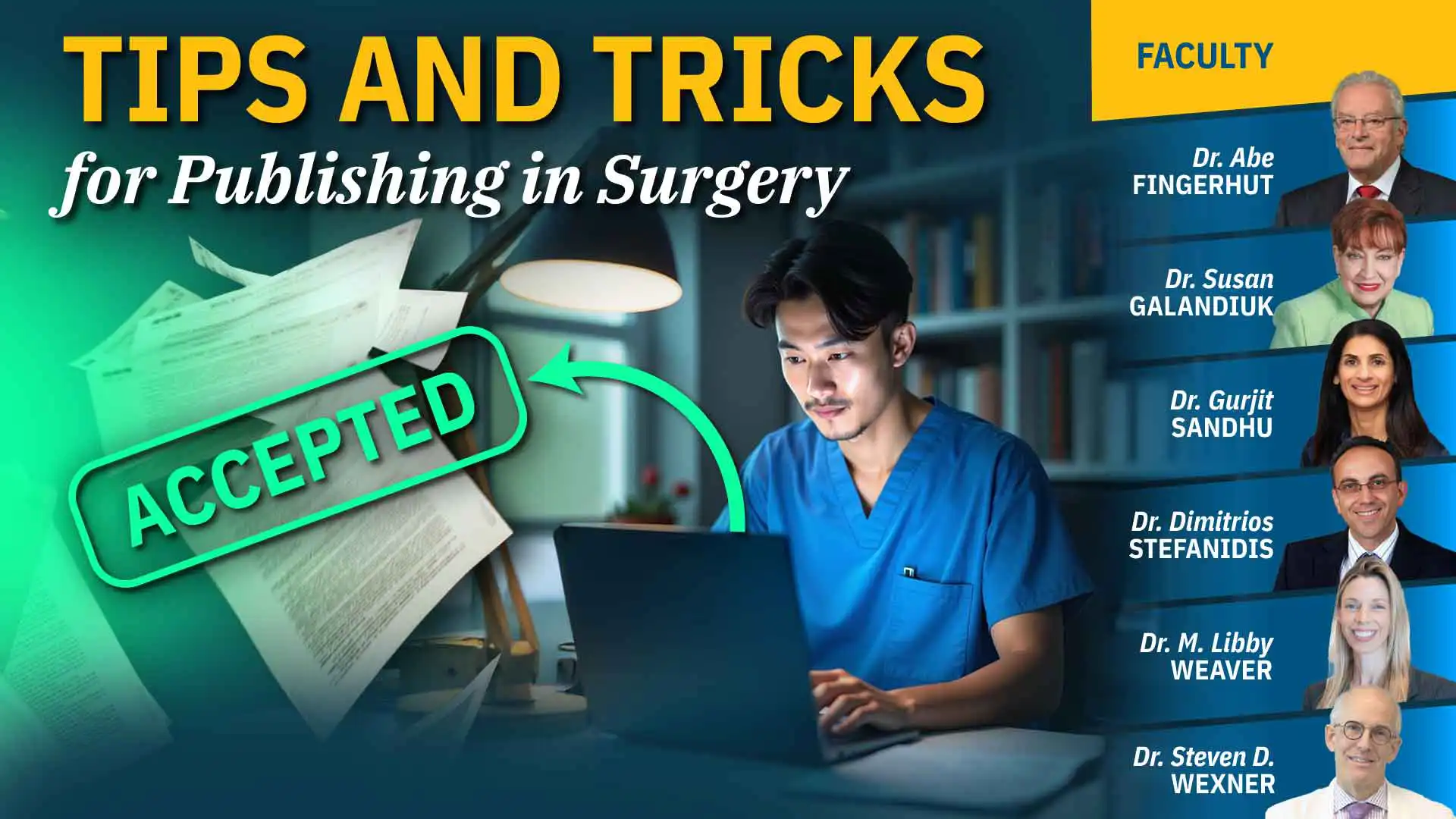
Publishing in the field of surgery is an essential step for residents looking to advance their careers, contribute to medical knowledge and gain recognition in the surgical community. However, navigating the world of academic publishing can be daunting, especially for those new to the process. In this event, we will explore practical tips and tricks for residents aiming to publish their work in surgical journals. From selecting the right journal and preparing a compelling manuscript, to understanding the peer-review process and enhancing visibility, these insights will equip you with the tools needed to successfully publish your research and make a meaningful impact in the field of surgery. Whether you're aiming for your first publication or seeking to refine your approach, this guide will help you move from concept to publication with confidence.
With Association for Surgical Education
Published
Mar 2025

The integration of Artificial Intelligence (AI) into residency training is reshaping medical education, focusing on improving surgical performance and preparing future healthcare professionals.
With Johnson & Johnson MedTech
Published
Jun 2024
.webp)
Published
Feb 2024

This session will describe best evidence approaches to effective curriculum design. We will specifically discuss how to implement Kern’s 6-step curriculum development process and the potential benefits of backwards design, how to perform a needs assessment, and how to engage your faculty and learners in your curriculum. A panel discussion will address common issues with curricula development implementation. Participants will be able to get their questions on this topic answered live by our presenters.
With Johnson & Johnson MedTech
Published
May 2023
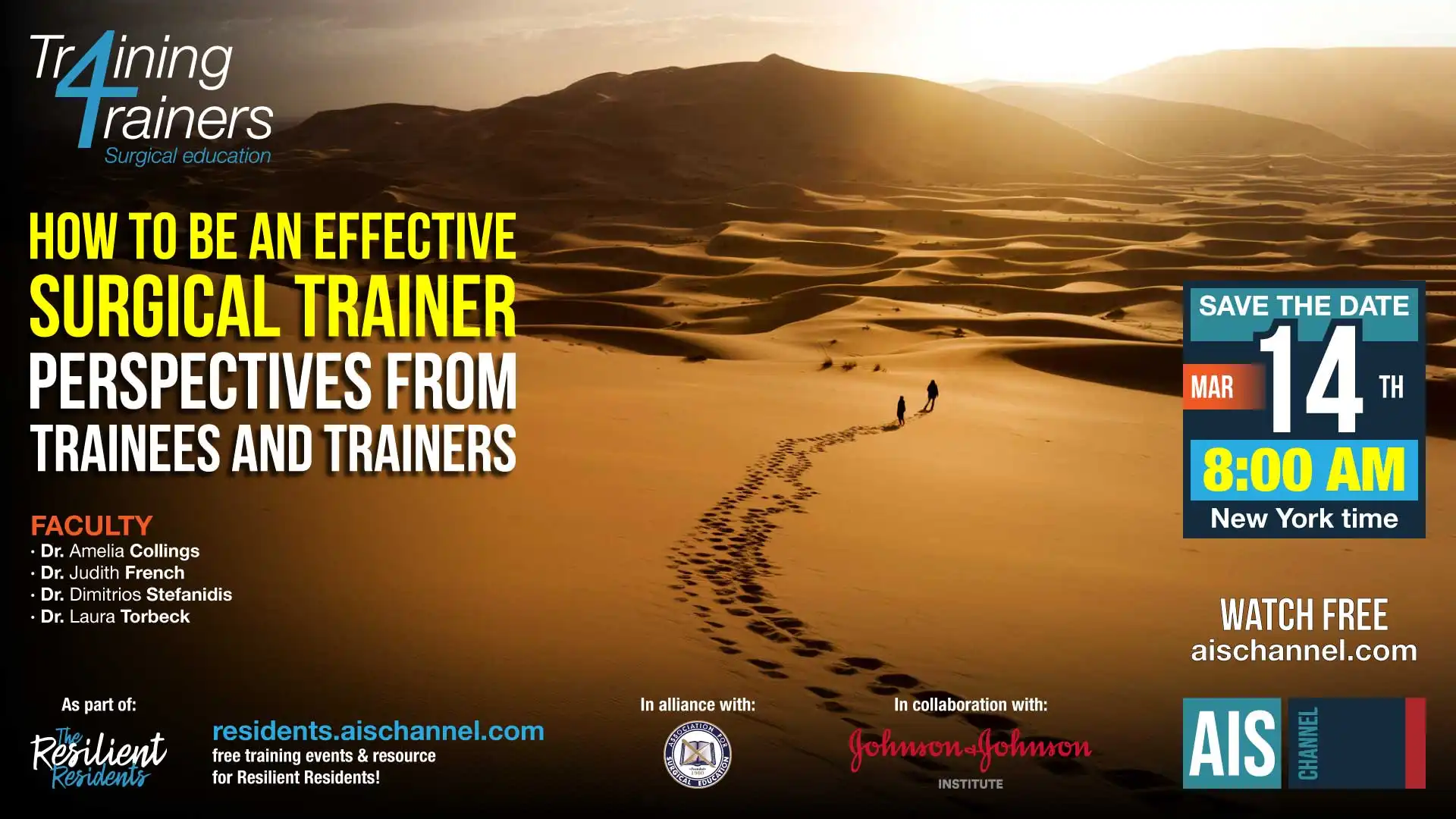
Welcome and Introduction - Dr. Dimitrios Stefanidis (USA) What are the attributes of a successful surgical trainer? - Dr. Amelia Collings (USA) Changes in the teaching methods of surgical instructors over the last decades - Dr. Judith French (USA) Dealing with the difficult learner - Dr. Laura Torbeck (USA) Panel discussion and closing remarks - All faculty moderated by Dr. Dimitrios Stefanidis (USA)
With Johnson & Johnson MedTech
Published
Mar 2023
Help your network discover Dr. Dimitrios Stefanidis's clinical expertise.