AIS Residents Ambassador USA
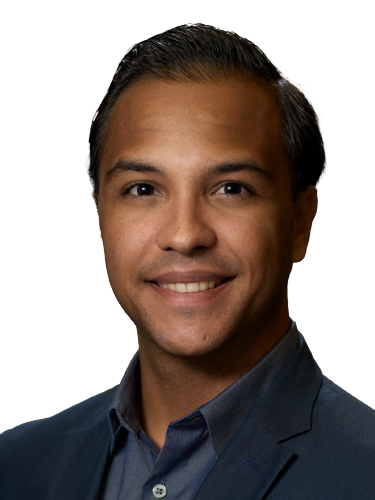
Dr. Daniel A. Tomey Barboza is a Senior Research Fellow of the Robotic General Surgery Department at Houston Methodist Hospital and the Houston Methodist Research Institute for Technology, Innovation, and Education (MITIE), both located at Houston medical center, USA.
He was born in Maracaibo, Venezuela in 1993. Started the medical career in his Alma Mater hometown, The University of Zulia finishing his studies in 2019, and receiving his degree as Medical Doctor with the Cum Laude distinction. Dr. Tomey during his years as a student, was an active member of the Endocrine and Metabolic Research Center from the University of Zulia’s Faculty of Medicine. He practiced medicine for a couple of months in a Type I Rural Hospital located in the Zulia state, and then move to the United States in 2019 to pursue the USMLE exams, clinical/research development, and his residency.
Dr. Tomey is an active Committee Member of the American Society for Metabolic and Bariatric Surgery (ASMBS) since 2021, a resident member of the American College of Surgeons (ACS) and many other surgical and gastroenterology societies around the world. Also, he is the Texas State Coordinator of MUV (Medicos Unidos Venezuela -United Doctor Venezuela-), a non-profit organization that helps not just Venezuelan physicians, but from all other nationalities, to improve their career development and professional network in the U.S healthcare system, showing his commitment to leadership and support to the IMG (International Medical Graduates) community.
He is the Author and Co-author of several scientific papers published in peer-reviewed impact-factored scientific journals with a personal research interest of 58.1, more than 100 citations, and more than 500 reads on ResearchGate. Also, Author and Co-Author of more than 20 submissions between surgical video case presentations and abstracts in Clinical Congresses of renowned surgical societies from the United States and Europe.
His main professional and scientific interest focus on General and Foregut surgery, Bariatric and Metabolic Surgery, Obesity, Minimally Invasive Surgery, Acute Care Surgery, Transplant surgery, Colorectal surgery, Flexible Endoscopy, Quality of care, Risk stratification and Modeling, Patient-reported outcomes, International Development, Diversity, and Inclusion.
Selected publications from PubMed
A comprehensive report on same-day discharge (SDD) following total hip arthroplasty (THA): a multicentre database analysis.
Bulut H, Maestre MJ, Tomey D
Hip Int. 2025 Nov;35(6):543-549 doi: 10.1177/11207000251357484.
Outcomes of Metabolic and Bariatric Surgery in Populations with Obesity and Their Risk of Developing Colorectal Cancer: Where Do We Stand? An Umbrella Review on Behalf of TROGSS-The Robotic Global Surgical Society.
Goyal A, Macias CA, Corzo MP, Tomey D, Shetty S, Peña V, Bulut H, Abou-Mrad A, Marano L, Oviedo RJ
Cancers (Basel). 2025 Feb 17;17(4) doi: 10.3390/cancers17040670.
Predictors and risk factors of pulmonary embolism after total hip arthroplasty: an NSQIP study.
Bulut H, Maestre MJ, Tomey D
Hip Int. 2025 Jan;35(1):70-75 doi: 10.1177/11207000241270205.
Same-day discharge following lumbar spine neural decompression.
Bulut H, Maestre M, Tomey D
J Clin Neurosci. 2024 Dec;130:110875 doi: 10.1016/j.jocn.2024.110875.
Periprocedural clinical outcomes of revision hip arthroplasty: a multi-centric comparison of current strategies based on the NSQIP.
Bulut H, Maestre M, Tomey D
Arch Orthop Trauma Surg. 2024 Nov;144(11):4707-4713 doi: 10.1007/s00402-024-05519-8.

Technology is rapidly advancing the field of surgical training offering a variety of tools to help surgery residents develop and refine their skills. Virtual reality simulators, for example, allow residents to practice complex surgical procedures in a safe and controlled environment, without putting real patients at risk. Advanced imaging technology, such as magnetic resonance imaging (MRI) and computed tomography (CT) scan, offers detailed visualization of the human body, giving surgeons the ability to accurately plan and execute surgical procedures. Robotics also play an increasingly important role in surgery allowing for more precise minimally invasive procedures. Additionally, telemedicine technology has made it possible for surgeons to receive remote guidance and assistance from experienced colleagues during surgeries. These technologies have the potential to improve patient outcomes, reduce surgical complications, and ultimately, enhance the overall quality of surgical care. As a surgery resident, is important to stay up to date with the latest technological advancements in surgical training in order to provide the best care for your patients.
With Johnson & Johnson MedTech
Published
Apr 2023

Robotic Single Anastomosis Duodeno-Ileal Switch (SADI-S) is a minimally invasive weight loss surgery that has gained popularity in recent years. It is a modification of the traditional duodenal switch procedure, and it involves creating a single anastomosis between the stomach and the ileum, bypassing a significant portion of the small intestine to reduce the amount of calories absorbed. The use of robotics in SADI-S surgery has advantages such as improved visualization, more precise dissection, and reduced tissue trauma compared to traditional open surgery. The indications for robotic SADI-S are similar to those for traditional weight loss surgeries, including a body mass index (BMI) of 40 or greater or a BMI of 35 or greater with obesity-related comorbidities. Patients with a history of previous abdominal surgeries or significant gastroesophageal reflux disease may not be suitable candidates for the procedure. The history of SADI-S surgery can be traced back to the early 2000s when it was first described as a modification of the duodenal switch procedure. It was initially performed using traditional open surgery techniques but has since evolved to minimally invasive laparoscopic and robotic-assisted surgery. Robotic SADI-S was first reported in the literature in 2014, and since then, numerous studies have reported its safety and efficacy in weight loss and comorbidity improvement. In conclusion, robotic SADI-S is a minimally invasive weight loss surgery that has gained popularity in recent years. It is indicated for patients with a BMI of 40 or greater or a BMI of 35 or greater with obesity-related comorbidities. The use of robotics in SADI-S surgery allows for improved visualization, more precise dissection, and reduced tissue trauma. Robotic SADI-S has shown to be safe and effective in weight loss and comorbidity improvement, and it continues to evolve as a surgical option for the treatment of obesity.
Published
Mar 2023

1. Welcome and Introduction - Dr. Luis Felipe Cabrera Vargas (Colombia) 2. Residents Worldwide - Testimonials and perspectives 3. The RR: Highlights - Dr. Luis Felipe Cabrera Vargas (Colombia) 4. Industry Perspective- Mr. Rich Merklinger (USA) 5. The Resilient Chain - Dr. Barham Abu Dayyeh (USA), Dr. Julia Coleman (USA), Dr. Zoe Garoufalia (USA), Dr. James Glasbey (UK), Dr. Geeta Lal (USA), Dr. Emanuele Lo Menzo (USA), Dr. Winnie Mathur (India), Dr. Violeta Moizé (Argentina), Dr. Sara Tavares Nogueira (Spain), Dr. Daniel Tomey (USA) 6. Closing remarks - Dr. Luis Felipe Cabrera Vargas (Colombia)
With Johnson & Johnson MedTech
Published
Dec 2022

PROGRAM Welcome and Introduction - Dr. Claudia Aceves (Mexico) and Dr. Daniel Tomey (USA) Basics of medical communication - Dr. Daniel K. Ojuka (Kenia) Are you listening to your patient? - Dr. Gabriela Möslein (Germany) How to manage challenging interactions - Dr. Manoel Galvao (Brazil) Discussion and closing remarks - All faculty moderated by Dr. Daniel Tomey (USA)
With Johnson & Johnson MedTech
Published
Dec 2022
Help your network discover Dr. Daniel Tomey's clinical expertise.