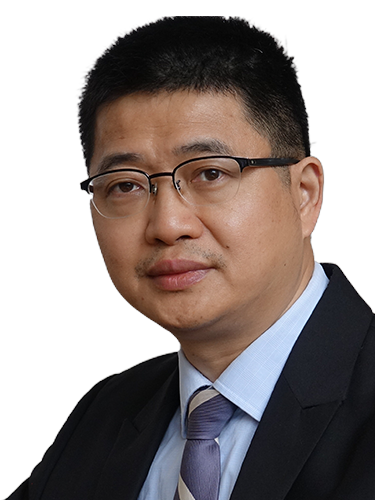
Professor Cunchuan Wang was born in the Sichuan Province in China, the beautiful hometown of the panda. He graduated from Luzhou Medical College (now named as Southwest Medical University) in Sichuan Province, China, and then worked in the Department of General Surgery in Xuanhan People’s Hospital for 2 years. After his postgraduate study in Jinan University, Professor Wang started working as a laparoscopic surgeon in the Department of General Surgery, the First Affiliated Hospital of Jinan University in Guangzhou, China. Later, he obtained his PhD Degree in Huazhong University of Science and Technology Tongji Medical College. Professor Wang is a pioneer of laparoscopic surgery in China. He was also a visiting scholar at Mount Sinai Medical Center in the USA in 2000, where he met Professor Michel Gagner, a world renowned laparoscopic bariatric surgeon. Professor Wang started performing metabolic and bariatric surgery in China in 2000, becoming the first surgeon to perform the laparoscopic Roux-en-Y gastric bypass (LRYGB) in mainland China. Additionally, Professor Wang performed a LRYGB on a male with a BMI of 99 who was at the time considered as the man with highest BMI in China. Professor Wang also introduced the concept of “Precise metabolic and bariatric surgery” which resulted in better surgical outcomes and safety. In his center, the procedures primarily performed are the LRYGB, laparoscopic sleeve gastrectomy (LSG), reduced ports or single port LRYGB or LSG, and a variety of revisional surgeries, etc. Currently, his center has the largest case volume in China. Professor Wang initiated the founding of the Chinese Society for Metabolic and Bariatric Surgery (CSMBS) in 2012 with experts from Shenyang and Shanghai. He is currently the President of the CSMBS, Vice-President of the First Affiliated Hospital of Jinan University, and Director of the Department of Metabolic and Bariatric Surgery (International Bariatric Center). As the bariatric expert of China, he also received special government allowances from the State Council in China.
Selected publications from PubMed
Metabolic Improvements and Weight Trajectories After Metabolic-Bariatric Surgery in Women with Polyendocrine Metabolic Ovarian Syndrome.
Zhang L, Li X, Zhang S, Zhou B, Hu B, Gai Y, Wang C, Yang G, Meng H
Obes Surg. 2026 Sep 5 doi: 10.1007/s11695-026-08916-7.
Epigenetic Signature of the Metastable Epiallele VTRNA2-1: Adipose Dysfunction and Suboptimal Bariatric Outcomes.
Huang YC, Hou KJ, Tsai ML, Liu KH, Ho MY, Yeh JK, Chen CC, Chia CY, Fan WL, Hsieh IC, Ye TS, Wang HD, Tsai CN, Wang CY
Obesity (Silver Spring). 2026 Sep;34(9):1785-1795 doi: 10.1002/oby.70268.
Gut microbiota-derived imidazole propionate is associated with obesity.
Li L, Wang C, Liu L, Xu T, Nie X, Liu Y, Zhang H, Yang C, Di J
Front Nutr. 2026;13:1861257 doi: 10.3389/fnut.2026.1861257.
Explainable Machine-Learning Model for Predicting Severe Obstructive Sleep Apnea in Patients Undergoing Metabolic Bariatric Surgery.
Chen W, Li L, Peng J, Wang C, Gao G, Dong Z
Obes Surg. 2026 Aug;36(8):4334-4346 doi: 10.1007/s11695-026-08831-x.
Impact of preoperative depression severity and antidepressant medication use on perioperative outcomes and long-term weight loss following primary bariatric surgery.
Maric E, Wang C, Zukancic S, Kuchta K, Amundson JR, Rolnik A, Hedberg HM, Linn J, Denham EW, Ujiki M, Liu N
Surg Endosc. 2026 Aug;40(8):7133-7142 doi: 10.1007/s00464-026-12943-x.
Help your network discover Dr. Cunchuan Wang's clinical expertise.