

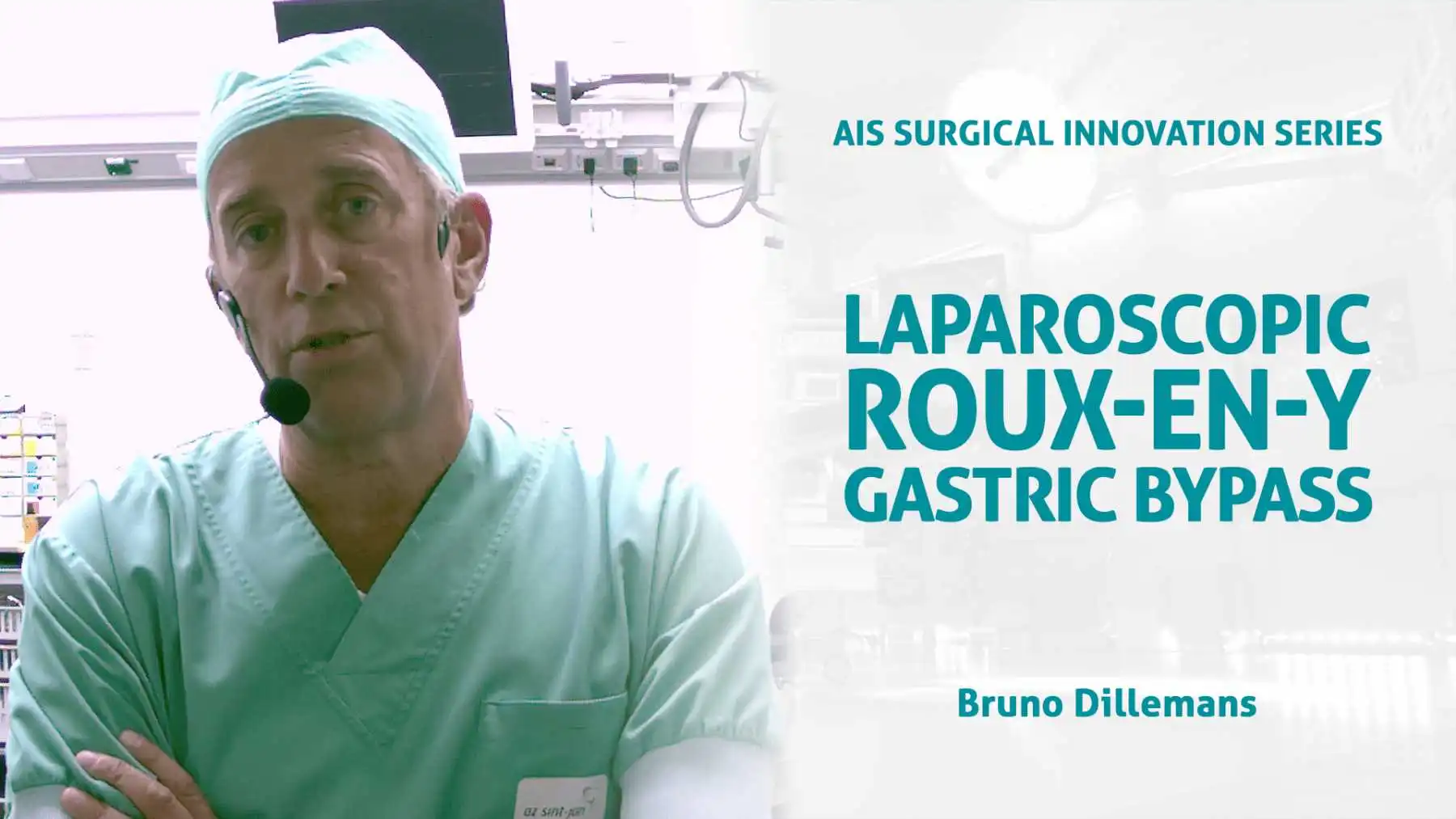
RNY to GJ-S performed by Dr. Dillemans.
With Johnson & Johnson MedTech
Published
Mar 2021
Weight regain after gastric band removal and endoscopic Sleeve
With Olympus
Published
Jan 2020

Progressive dysphagia is a known complication of the VBG due to the presence of the ring that has been placed. A recurrence of the sliding hernia after a Nissen fundoplication is also a well-described entity. Unfortunately, our patient experienced both problems concomitantly. Our theory is that the recurrence of the sliding hernia aggravated the dysphagia caused by the earlier placed ring of the VBG. The symptoms have grown gradually worse over the years. The patient’s weight regain, which augments intra-abdominal pressures will not have helped in this matter. In order to alleviate all of our patients’ problems we needed to tackle this case from every angle. Firstly, to make sure the dysphagia and vomiting is gone the ring will have to be removed. To ensure alleviation of her reflux we needed to reduce the hernia. Lastly, because of her weight regain extra measures needed to be taken. Adding more restriction alone would not have helped this patient who already complains of dysphagia and vomiting, so we opted for a conversion to a Roux-en-Y gastric bypass. This is still the gold standard treatment for GERD in the obese population, will result in a significant weight loss and - when the pouch is constructed above the formerly placed ring - her dysphagia and vomiting will also subside.
With Johnson & Johnson MedTech
Published
Mar 2019

In previous events, four of the best bariatric surgeons in the world performed LIVE four of the most common revisional techniques. NOW it’s time to report, analyze and discuss their results and the rationale for their choices! In an interactive format, featuring Dr. Karl Miller as moderator, Dr. Camilo Boza, Dr. Bruno Dillemans, Dr. Michel Gagner and Dr. Robin Blackstone are discussing the mid-term outcomes of: Gastric Sleeve to Re-Sleeve, Gastric Sleeve to Gastric Bypass, Gastric Sleeve to Duodenal Switch & Revision of Banded Gastric Bypass respectively, regarding not only weight loss and co-morbidities resolution, but also complications and patient satisfaction.
With Johnson & Johnson MedTech
Published
Nov 2018

Up to 60% of bariatric patients present with gastroesophageal reflux disease (GERD) and approximately 20% will develop de novo GERD after bariatric surgery, particularly after a sleeve gastrectomy. Esofago-gastric reflux after a sleeve gastrectomy is caused by several factors: injury to the lower esophageal sphincter, obstructive sleeve (long and narrow tube with high intraluminal pressure), dilatation of the upper part of the sleeve, and hiatal hernia with intra-thoracic migration of the gastric tube. Several treatment regimes have been proposed for treatment of reflux after sleeve, from medical therapy to surgical revision. In this IFSO Online Symposium, Camilo Boza and Chih-Kun Huang present the cases and treatments of patients with reflux after sleeve gastrectomy. An interesting discussion on the most appropriate treatment by a panel of IFSO experts follows.
Published
Aug 2018
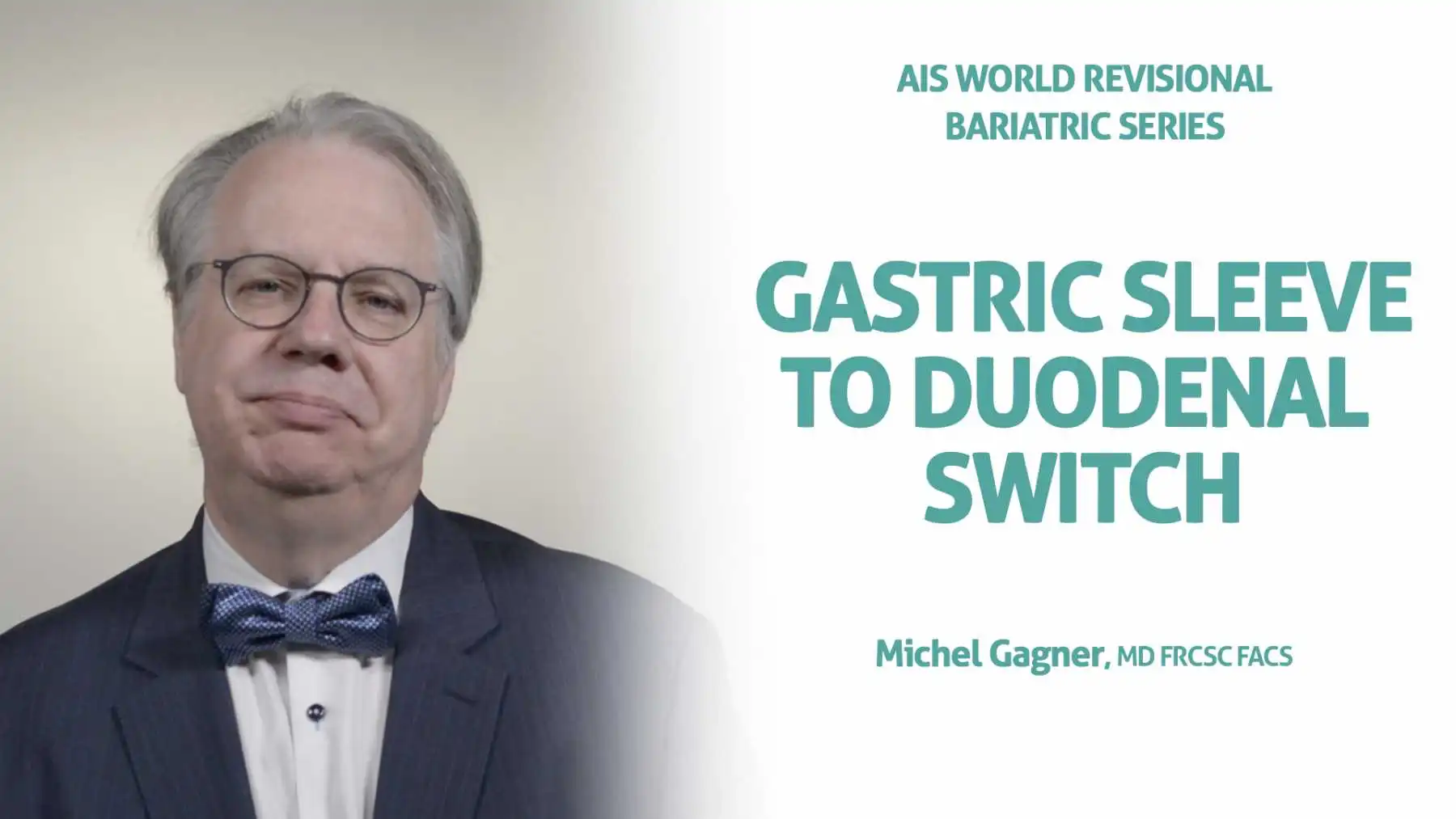
Sleeve gastrectomy (SG) is currently regarded as a standalone procedure for most morbidly obese patients due to its results for both weight loss and comorbidity resolution. Nevertheless, up to 64 and 70% of patients can present with insufficient weight loss and weight regain in the long term. Hence revisional techniques are often needed in order to improve both weight loss and metabolic control. Although there is no consensus on which technique should be performed after SG as a second-step procedure, Roux-en-Y Gastric Bypass (RYGBP), re-sleeve and bilio-pancreatic diversions (duodenal switch, SADI-S, SIPS) are commonly considered. Due to its excellent results for both weight loss and comorbidity improvement, specially in super-obese patients, duodenal switch can be an optimal option for those patients with very significant weight regain or por metabolic control.
With Johnson & Johnson MedTech
Published
Jun 2018
Help your network discover Dr. Bruno Dillemans's clinical expertise.