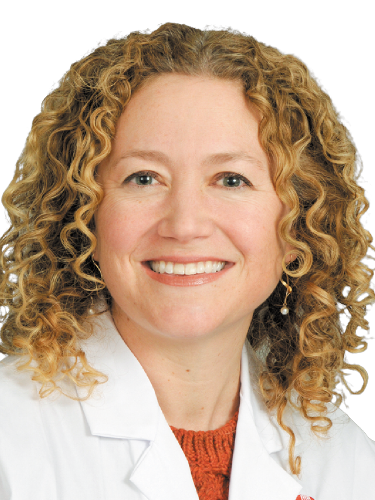
Dr. Pryor is Surgeon in Chief at Long Island Jewish Hospital and System Director for Bariatric Surgery at Northwell Health. She grew up in Ann Arbor, Michigan and received her undergrad degree in engineering and her MD from Duke University. She completed her residency in General Surgery at Duke, followed by a fellowship in minimally invasive surgery. She was on the faculty at Duke from 2003-2011. She held multiple leadership roles at Duke. Moving to New York in 2011, she served as Vice Chair of Surgery, Chief of Bariatric, Foregut and Advanced GI Surgery and Director of the Bariatric and Metabolic Weight Loss Center at Stony Brook from 2011-2022. She was also director of the Advanced GI/MIS/Bariatric/Foregut fellowship at Stony Brook. Dr. Pryor was the 2019-2020 President of the Society of American Gastrointestinal and Endoscopic Surgeons (SAGES), with membership of more than 7,000 surgeons. She has also served as the SAGES Treasurer, Finance Chair, Membership Chair and the Research and Career Development Chair, among other roles. Dr. Pryor currently serves on the American Board of Surgery as a Councilor and as the Vice Chair of the General Surgery Board. She is also Chair of the In Training Exam Committee and Chair of the Video Based Assessment (VBA) Task Force. In addition, Dr. Pryor served the American Society of Metabolic and Bariatric Surgery (ASMBS) as the NY chapter President from 2021-22. She has served multiple national leadership roles within ASMBS including as a member of the Executive Council from 2014-2017. She is past President of the Eastern Long Island Chapter of the American College of Surgeons and the Fellowship Council. She is an Associate Editor for Surgery for Obesity and Related Diseases, has served as Subject Editor for Surgical Endoscopy. She serves on the editorial boards of Annals of Surgery and the Journal of the American College of Surgeons. In 2021, she started the Women’s Leadership in Surgery Society for which she was the inaugural President. Dr. Pryor’s work has appeared in more than 250 publications, and she has co-edited four textbooks. She has given more than 300 presentations worldwide, has received a number of research grants and holds patents for several surgical technologies, including the Transenterix SPIDER single port system. Her current research efforts focus on advancing laparoscopic bariatric and GI surgery techniques and outcomes, and on new technology in surgery. Her clinical care focuses on individualized treatment options of patients with gastroesophageal diseases, obesity and hernia. She offers a range of laparoscopic, endoscopic and traditional surgical approaches. She has actively engaged in several FDA trials and offers the latest available treatment options to her patients.
Selected publications from PubMed
Four-Year Experience With Performance Coaching in Surgery: A Sustainable Framework at a Large Academic Medical Center.
Lynch K, Stanley M, Appleton D, Haas-Rodriguez A, Ahle S, Cioffi W, Pryor AD, Miner T
J Surg Educ. 2026 Sep 3;83(11):104126 doi: 10.1016/j.jsurg.2026.104126.
A Recommendation for FLS Certification for General Surgery Residents By the End of the PGY-2 Year.
Seymour NE, Nepomnayshy D, Hanson MN, Pryor AD, Greenberg JA, Lindeman B, Brasel KJ
Ann Surg. 2026 Jan 21 doi: 10.1097/SLA.0000000000007015.
EAES/SAGES evidence-based recommendations and expert consensus on optimization of perioperative care in older adults.
Keller DS, Curtis N, Burt HA, Ammirati CA, Collings AT, Polk HC Jr, Carrano FM, Antoniou SA, Hanna N, Piotet LM, Hill S, Cuijpers ACM, Tejedor P, Milone M, Andriopoulou E, Kontovounisios C, Leeds IL, Awad ZT, Barber MW, Al-Mansour M, Nassif G, West MA, Pryor AD, Carli F, Demartines N, Bouvy ND, Passera R, Arezzo A, Francis N
Surg Endosc. 2024 Aug;38(8):4104-4126 doi: 10.1007/s00464-024-10977-7.
SAGES surgical data science task force: enhancing surgical innovation, education and quality improvement through data science.
Madani A, Liu Y, Pryor A, Altieri M, Hashimoto DA, Feldman L
Surg Endosc. 2024 Jul;38(7):3489-3493 doi: 10.1007/s00464-024-10921-9.
SAGES/AHPBA guidelines for the use of microwave and radiofrequency liver ablation for the surgical treatment of hepatocellular carcinoma or colorectal liver metastases less than 5 cm.
Ceppa EP, Collings AT, Abdalla M, Onkendi E, Nelson DW, Ozair A, Miraflor E, Rahman F, Whiteside J, Shah MM, Ayloo S, Dirks R, Kumar SS, Ansari MT, Sucandy I, Ali K, Douglas S, Polanco PM, Vreeland TJ, Buell J, Abou-Setta AM, Awad Z, Kwon CH, Martinie JB, Sbrana F, Pryor A, Slater BJ, Richardson W, Jeyarajah R, Alseidi A
Surg Endosc. 2023 Dec;37(12):8991-9000 doi: 10.1007/s00464-023-10468-1.

Dr. John D. Mellinger, Dr. Patricia Sylla,Dr. Steven D. Wexner, Dr. John D. Mellinger, Dr. Liane Feldman, Dr. Alia Qureshi, Dr. Shaneeta Johnson, Dr. Aurora Pryor present multiple solutions to address DEI within Surgical Organizations.
With Johnson & Johnson MedTech
Published
Feb 2023

Obesity remains a significant disease around the world. Bariatric surgery is the most effective treatment to help promote weight loss and management of weight-related comorbidities. However, there are patients who need more than one procedure to manage these issues or they experience side effects. This session will focus on revisional or conversional bariatric surgery and surgical management of chronic complications. Our faculty will offer insights into the management of these complex patients.
With Medtronic
Published
May 2022

Women surgeons are increasing in numbers and a critical component of the surgical workforce. At the same time, women are the bearers of children and may continue to bear majority responsibility for raising children to adulthood. It is essential for the profession to improve support of pregnant and parenting surgeons through policies and pathways that promote flexibility and parity for all. This AIS Channel session will discuss some of the issues and solutions for successful navigation of this challenge.
Published
Jan 2022

The continued success of bariatric surgery in treating obesity and obesity-associated metabolic conditions creates a need for a strong understanding of clinical nutrition both before and after these procedures. Bariatric surgery is being increasingly used to manage obesity and obesity-related comorbidities, but may lead to the development of micro and macronutrient deficiencies postoperatively. Anatomical, physiological, nutritional, and behavioral reasons for nutritional vulnerabilities, along with recommendations for routine monitoring and supplementation, should always be considered after bariatric surgery. Monitoring by a multidisciplinary team is very important. The role of the dietician and their contribution to the identification, prevention and postoperative management of nutritional vulnerabilities in bariatric patients, as well as a correct follow-up by the endocrinologist and the bariatric surgeon, are also crucial. In this talk, Dr. Aurora D. Pryor summarizes current knowledge about the nutrient deficiencies that can develop after bariatric surgery, and highlights follow-up and treatment options for bariatric surgery patients who develop a nutritional deficiency. The main macronutrient deficiency after bariatric surgery is protein malnutrition. Micronutrient deficiencies, which include trace elements, essential minerals, and water-soluble and fat-soluble vitamins, are common before bariatric surgery and often continue after the operation, despite worldwide recommendations for multivitamin and mineral supplements. Other disorders, including bacterial overgrowth of the small intestine, can promote micronutrient deficiencies, especially in patients with diabetes mellitus. Recognition of the clinical presentations of micronutrient deficiencies is important, both to allow early intervention and to minimize long-term adverse effects. Endorsed by: [Image]
With Johnson & Johnson MedTech
Published
Apr 2021
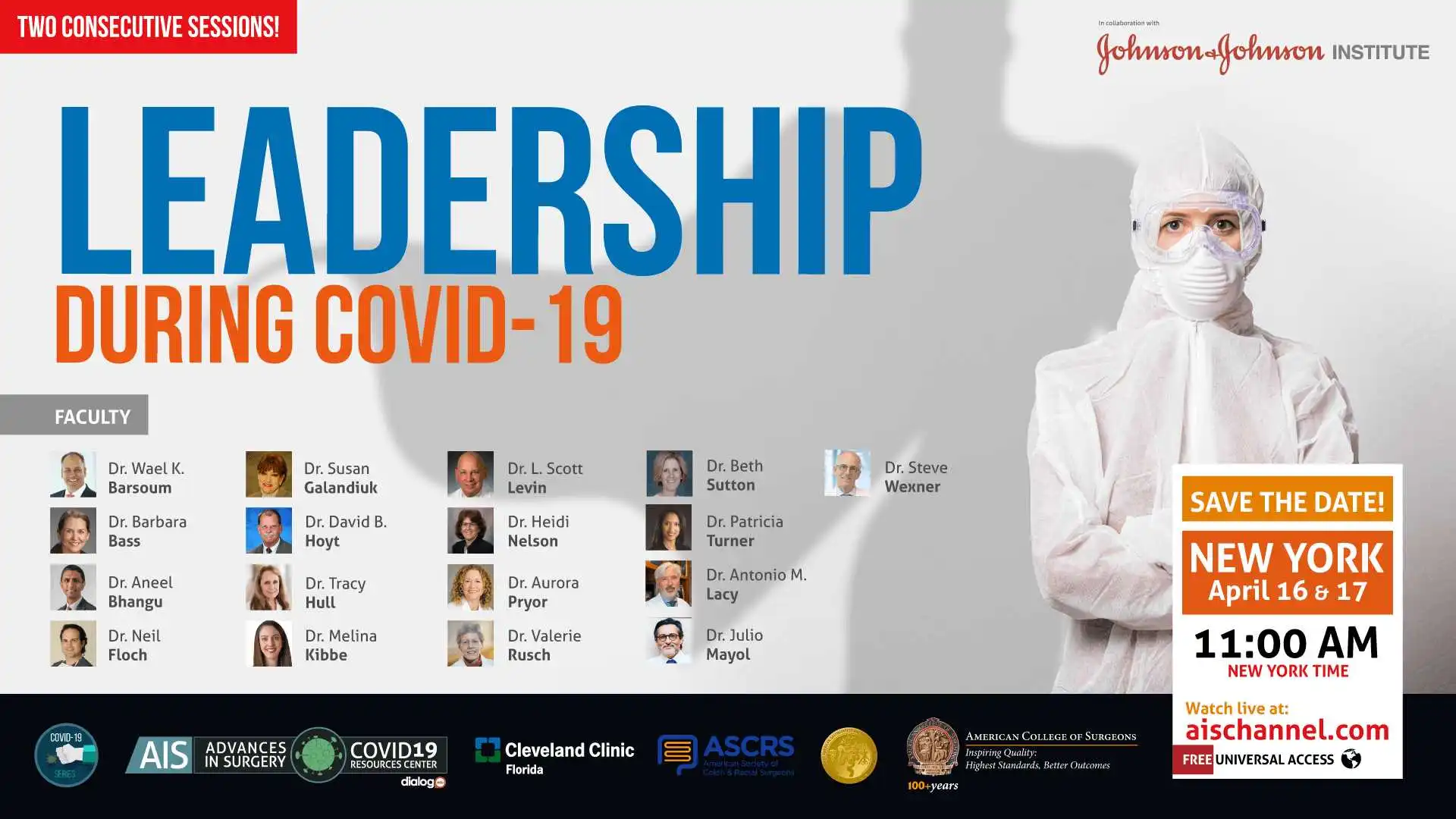
The second part of the "Leadership During COVID-19" event presented Wael K. Barsoum, Barbara Bass, Aneel Bhangu, Neil Floch, Susan Galandiuk, David B. Hoyt, Tracy Hull.
With Johnson & Johnson MedTech
Published
Apr 2020

Laparoscopic bariatric surgery demands a tailored approach from the surgical team, especially the anesthesiologist and surgeon. Collaboration is key in the attempt to achieve good outcomes and a low rate of complications. Deep neuromuscular blockade during laparoscopic surgery helps to improve the surgical space conditions; facilitate the use of low-pressure pneumoperitoneum; prevent sudden patient movements; and reduce postoperative pain.
With Merck
Published
Nov 2018
Help your network discover Dr. Aurora Pryor's clinical expertise.