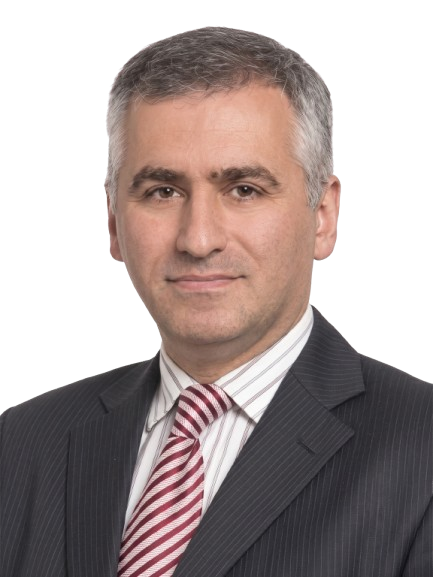
Ali Aminian, M.D. is Director of Bariatric and Metabolic Institute at the Cleveland Clinic and a Professor of Surgery at the Cleveland Clinic Lerner College of Medicine. He is board-certified by the American Board of Surgery and licensed by the State Medical Board of Ohio. His clinical interests include gastrointestinal surgery, advanced laparoscopic surgery, and specifically surgery for severe obesity, diabetes, and metabolic disease.
As an academic surgeon at the Cleveland Clinic Main Campus, Dr. Aminian has been involved in clinical and experimental research on the role of minimally invasive gastrointestinal procedures in management of obesity, diabetes, metabolic disease, and fatty liver disease. He has an outstanding record of peer-reviewed publications (>250) in high impact journals including New England Journal of Medicine, JAMA, Diabetes Care, and Annals of Surgery. His studies have been widely covered by the media such as New York Times, Wall Street Journal, Washington Post, TIME, CNN, Reuters, Newsweek, and Forbes, indicating their importance from public health perspective. Prior to joining the Clinic in 2012, he served as Assistant Professor of Surgery at Tehran University of Medical Sciences, Iran for 6 years.
Selected publications from PubMed
Cost-Effectiveness of Pharmacologic Therapies for Metabolic Dysfunction-Associated Steatohepatitis With Significant Fibrosis in the United States.
Abdeen AA, Ayer T, Biswas A, Wehrle CJ, Laique SN, Aminian A
Diabetes Obes Metab. 2026 Sep;28(9):8378-8389 doi: 10.1111/dom.71020.
A 10-Year Update: Bibliometric Analysis of the Top 100 Papers in Metabolic and Bariatric Surgery.
Corpodean F, Kachmar M, Popiv I, Saqer S, Lovelace J, Lenhart D, Cook M, Aminian A, Cohen RV, Albaugh VL, Schauer PR
Obes Rev. 2026 May 21;:e70146 doi: 10.1111/obr.70146.
Same-day Discharge Metabolic and Bariatric Surgery: a GRADE-based International Federation for the Surgery and Other Therapies for Obesity (IFSO) Position Statement.
Kermansaravi M, Cohen RV, Shikora SA, Chiappetta S, Parmar C, Mahawar K, Aminian A, Dillemans B, Monami M, Belluzzi A, Nimeri A, Angrisani L, Di Lorenzo N, Prager G, Petry TB, Kassir R, De Luca M
Obes Surg. 2026 Apr;36(4):1932-1945 doi: 10.1007/s11695-026-08555-y.
Effect of Social Vulnerability on Efficacy of Bariatric Surgery Versus Medical and Lifestyle Intervention for Type 2 Diabetes: Analysis of the ARMMS-T2D Consortium of Randomized Trials.
Patti ME, Hu B, Kirschling S, Wang HJ, Foster K, Sarig Y, Simonson DC, Wolfs D, Arterburn D, O'Brien MJ, Vernon AH, Jakicic JM, Laffel L, Ojukwu S, Kashyap SR, Aminian A, Schauer PR, Cummings DE, Gourash WF, Courcoulas A, Kirwan JP
Ann Intern Med. 2026 Mar;179(3):353-361 doi: 10.7326/ANNALS-24-01882.
Macrovascular and microvascular outcomes of metabolic surgery versus GLP-1 receptor agonists in patients with diabetes and obesity.
Gasoyan H, Alavi MH, Zajichek A, Casacchia NJ, Al Jabri A, Bena J, Feng X, Wilson R, Corcelles R, Butsch WS, Singh RP, Das N, Jeong H, Mentias A, Tang WHW, Burguera B, Rosenthal RJ, Nissen SE, Rothberg MB, Aminian A
Nat Med. 2025 Oct;31(10):3341-3349 doi: 10.1038/s41591-025-03893-3.

Bariatric surgery is known to have favorable effects on the components of metabolic syndrome, including glycemic status, dyslipidemia, and blood pressure. As more long-term data becomes available, the metabolic and survival benefits gleaned from obesity surgery become even more apparent. However, the ultimate results of these metabolic changes on end-organ complications are largely unknown. Survival benefit after bariatric surgery has only been shown in a few published prospective studies. Among all of the bariatric procedures used in appropriate candidates with metabolic syndrome and T2DM, Roux-en-Y gastric bypass (RYGB) is considered by some to be the ideal procedure because of its remarkable effects on excess weight and comorbidities. Several validated risk models for predicting specific diseases, including cardiovascular disease (CVD), nephropathy, and retinopathy, have been tested in epidemiologic studies. Most studies assessing end-organ risk in bariatric patients have focused on CVD risk using the Framingham coronary heart disease (CHD) risk score. Study cohorts have consisted of general bariatric patients, not diabetic patients specifically, and the follow-up has been relatively short. For instance, Torquati et al. and Kligman et al. separately reported Farmingham CHD risk reductions of 50% and 52% at 1 year after RYGB, respectively. Benaiges et al. demonstrated a reduction of estimated CHD risk by 52% at 12 months after RYGB and by 39% after sleeve gastrectomy using the Farmingham score in his prospective cohort of 140 patients. The difference, however, did not achieve statistical significance, most likely due to the small sample size. In contrast to the results of surgical weight loss, a significant reduction in the Framingham risk score after medical weight loss has not been reported in some studies. In this lecture, professor Ali Aminian explains the positive effect of bariatric surgery on the death rate of patients after a heart attack and a stroke.
Published
Apr 2019

IFSO 2018 in Dubai brought together world leaders in metabolic and bariatric surgery. More than 1200 abstracts from more than 90 countries were presented. Several communications on obesity and metabolic surgery were given, focusing on the different techniques and the best indications for each of them. Type 2 Diabetes Mellitus control, postoperative complications reduction and comparison of weight loss in different procedures were some of the main topics discussed during the congress. This webinar summarises the highlights of the 23rd IFSO World Congress in Dubai. Asim Shabbir, Ali AMiniam, Ahmad Bashir, Alex Escalona and Bart van Wagensveld present and discuss about 30 of the best abstracts. They also present 9 Randomized Clinical Trials, 10 Registry studies, 3 Matched case control studies, 4 Non matched controlled studies, and 3 other studies. In the first abstract, R. Gadiot found that after a 1-year follow-up, there was no significant difference in weight loss between the Very long Roux limb -RYGB and the standard limb -RYGB groupds. There were no differences regarding deficiencies either. Similar results were found in other abstracts in 2016. The experts agree that with longer follow-ups, the differences between the two groups should be significant in terms of weight loss and nutritional deficiencies. The study by Ruiz de Gordezuela compares SADI-S vs Duodenal Switch. In this comparison there were no significant differences, except as regards surgical time. However, the Duodenal Switch shows better weight loss results after 3 years (BMI reduction of 46.95% vs 36.61%). J.Ruiz-Tovar’s group showed the Impact of implementation of ERAS on Large Roux in Y Gastric Bypass (LRYGB). It associates lower postoperative pain, lower incidence of postoperative nausea and vomiting, and earlier hospital discharge. Another group shows that weight loss 3 months after the primary bariatric surgery is predictive for weight loss up to 60 months, giving us the opportunity to select low responder patients. In this video you will see the entire discussion on these abstracts and the opinion of the experts in the 23rd IFSO World Congress.
Published
Jan 2019

Clinical Case Smoking is a big concern in the general population, but bariatric patients have twice as much risk of becoming smokers . Quitting smoking before a bariatric surgical procedure should benefit these patients. But what is the reality? Data suggests that those who are forced to quit smoking 6 months before surgery will resume smoking within 2 years following the procedure, and that there is no actual difference regarding smoking habits in the pre-operative period and in the postoperative period. Dr. Aminian talks about the risk of bariatric surgery in smokers, who present a higher risk of marginal ulcer after a Roux-en-Y gastric bypass (RYGB), as well as a higher rate of immediate adverse events , such as pneumonia or sepsis, and mortality both after RYGB and laparoscopic sleeve gastrectomy (LSG). Bearing in mind that LSG is a safe procedure, Dr. Aminian wonders whether performing this procedure in smokers would be justified. If the ultimate goal of bariatric surgery is to improve survival and quality of life by reducing cardiovascular mortality , smokers would benefit the most since they are at greater risk. To illustrate this hypothesis, Dr. Aminian presents data from the Cleveland Clinic regarding the results of 37 patients who smoked within one year before and after a LSG and yet their predicted cardiovascular risk decreased. Smokers have more postoperative complications but nevertheless they benefit the most from surgery. The benefit of smoking cessation in bariatric surgery has yet to be studied properly, and the optimal interval between quitting and surgery is still unknown . LSG seems to be a well tolerated procedure in smoker patients too, and could be considered in selected patients who are unable to quit smoking. [Image]
Published
Feb 2018

Clinical Case Dr. Aminian , Associate Professor of Surgery at the Cleveland Clinic, discusses a new method for selecting the most appropriate surgical technique for treatment of patients with type 2 Diabetes Mellitus (T2DM). He divides T2DM into 3 validated stages of severity and presents an online calculator ( http://riskcalc.org/Metabolic_Surgery_Score ) that may help in the selection of the surgical procedure for each patient, thus enabling a more tailored treatment of obesity and T2DM . He emphasizes the importance of surgical intervention in early stages of T2DM in order to achieve sustainable results. An international panel of experts from IFSO: Dr. Himpens (IFSO President), Dr. Cohen (Hospital Alemão Oswaldo Cruz, Brazil), Dr. Cummings (University of Washington, USA), Dr. Shikora (Brigham and Women’s Hospital, Boston, USA) and Dr. Lee (Min-Shen General Hospital, Taiwan) discuss Dr. Aminian’s lecture, highlighting the importance of the duration of T2DM on results, the importance of gastroesophageal reflux disease (GERD) on the choice of surgical technique compared with T2DM, and the possible future importance of C-peptide in metabolic surgery. Dr. Lee from Taiwan discusses the results available on the Asian population compared to those presented by Dr. Aminian. Finally, clinical cases are discussed in order to explain the use of the online calculator. [Image]
Published
Oct 2017

Case We present to you a 58-year-old female with a BMI of 35. She has multiple failed attempts for weight loss. She has many medical problems (HBP, T2DM, CAD, OSA, COPD, IBS, CKD) as well as a surgical history significant for a Nissen fundoplication. Treatment First we performed an assessment of the stomach. The mid-stomach at the retro-gastric space was clear. The patient did, however, need an extensive adhesionlysis, starting at the liver edge. We then made our way to the medial posterior aspect and took down these adhesions. This was done using hook catheter. We performed an early division of the stomach to aid with our visualization of the posterior aspect of our soon-to-be pouch. These posterior attachments were further taken down. We now focused our attention to the anterior portion of the stomach. In this area, there are denser adhesions of the stomach. We switched our instruments and used a robotic Harmonic to aid in our blunt dissection and also energy dissection. We use this device to get through our thicker tissues to open up softer planes, especially at the hiatus. As you can see, we are able to visualize the wrap, which is coming up posteriorly to the native stomach. We follow this wrap circumferentially and take down more attachments until this wrap is completely free from the surrounding structures and from the stomach. We protect the stomach anteriorly and push our wrap away. As you can see, we are able to visualize the stomach, GE junction, esophagus and hiatus. We insert a gastroscope to help us identify our proximal stomach in preparation for a pouch. We use a laparoscopic stapling device to create a pouch using the lighted scope and as a guide. We ended up making our pouch 5 x 7 cm using three stapler loads. We wanted to make a larger pouch for improved vasculature and mobilization of our revised stomach. Looking back at the hiatus, the patient had a very large hiatal hernia. During our dissection, we found that some of the fundoplicated stomach had herniated into this area. We perform a primary closure of the hiatal hernia using non-absorbable suture. Use of the robotic arms helps us do this rather nicely. Now we focus on creating our gastro-jejunal anastomosis. Not shown here is the creation of our jejuno-jejunal anastomosis. We did this in a standard manner: we used a 150 cm roux limb placed in an anti-colic position. We performed also a hand-sewn J-J anastomosis which is not shown. The roux limb and the pouch are brought together using the robotic instruments. A stake suture is placed and we use the same long suture to start our posterior layer of suture. The third robotic arm is used for retraction. This is done the entire length of the gastric pouch along our roux limb. We use our hook catheter to perform our gastrotomy and enterotomy. We make our opening to approximately 2 cm. We then perform a hand-sewn anastomosis using two long sutures. We do this in the usual manner. The use of the robotic arms helps us to do this with great precision, especially when going around the corners. The use of the third robotic arm is also advantageous for retraction, as we could switch these arms to have continued retraction. As our standard practice, we insert a gastroscope through our anastomosis. This serves to stent our anastomosis open as we close our anastomosis over the scope using the existing suture. Again, the use of our robotic arms helps us to do this with great precision. We perform an anterior layer of suture to protect the anastomosis. This is done the entire length of the pouch. We then close the mesenteric defect. Lastly, we perform endoscopy and the leak test, which are both negative for leak. This is the picture of our resected stomach. As you can see, the fundoplication still takes shape. Outcome Our patient did well and had an upper GI negative for leak. She was discharged to home on day three. In select patients, robotic approaches to revisional bariatric surgery are feasible and safe, and allow for superb operative technique. Robotic surgery should be performed by an experienced operator and surgical team for improved surgical times and outcomes.
Published
Sep 2015
Help your network discover Dr. Ali Aminian's clinical expertise.