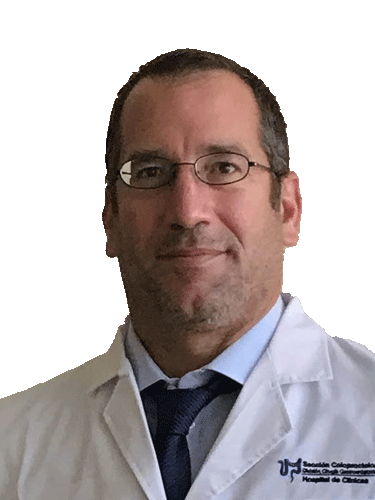
Dr. Alejandro Moreira Grecco is the Chief of the Gastrointestinal Surgery Division at the “Hospital de Clínicas de Buenos Aires”, University of Buenos Aires, in Argentina. Until 2021, he oversaw the Colon and Rectal Unit at the same Hospital.
Dr Moreira is a board member of the Argentine Surgical Association (AAC), the Argentine Society of Colon and Rectal Surgeons (SACP) and the Brazilian Colorectal Society (SBCP). He has also actively participated in the Latin-American Society of Colon and Rectal Surgeons (ALACP).
As a professor at the University, he leads the gastrointestinal surgery curricula for pre-grade students, contributes to the training of 12 surgical residents and oversees the Gastrointestinal Surgery Fellowship. At the Division, he receives several visiting students, residents and fellows per year.
He had an important role in the implementation of fluorescent-guided surgery, robotics and other minimally invasive surgeries in Argentina.
He is the author of several scientific papers, book chapters and books.
His main professional and scientific interests focus on colon and rectal surgery, robotic surgery minimally invasive surgery, cancer prevention and surgical training.
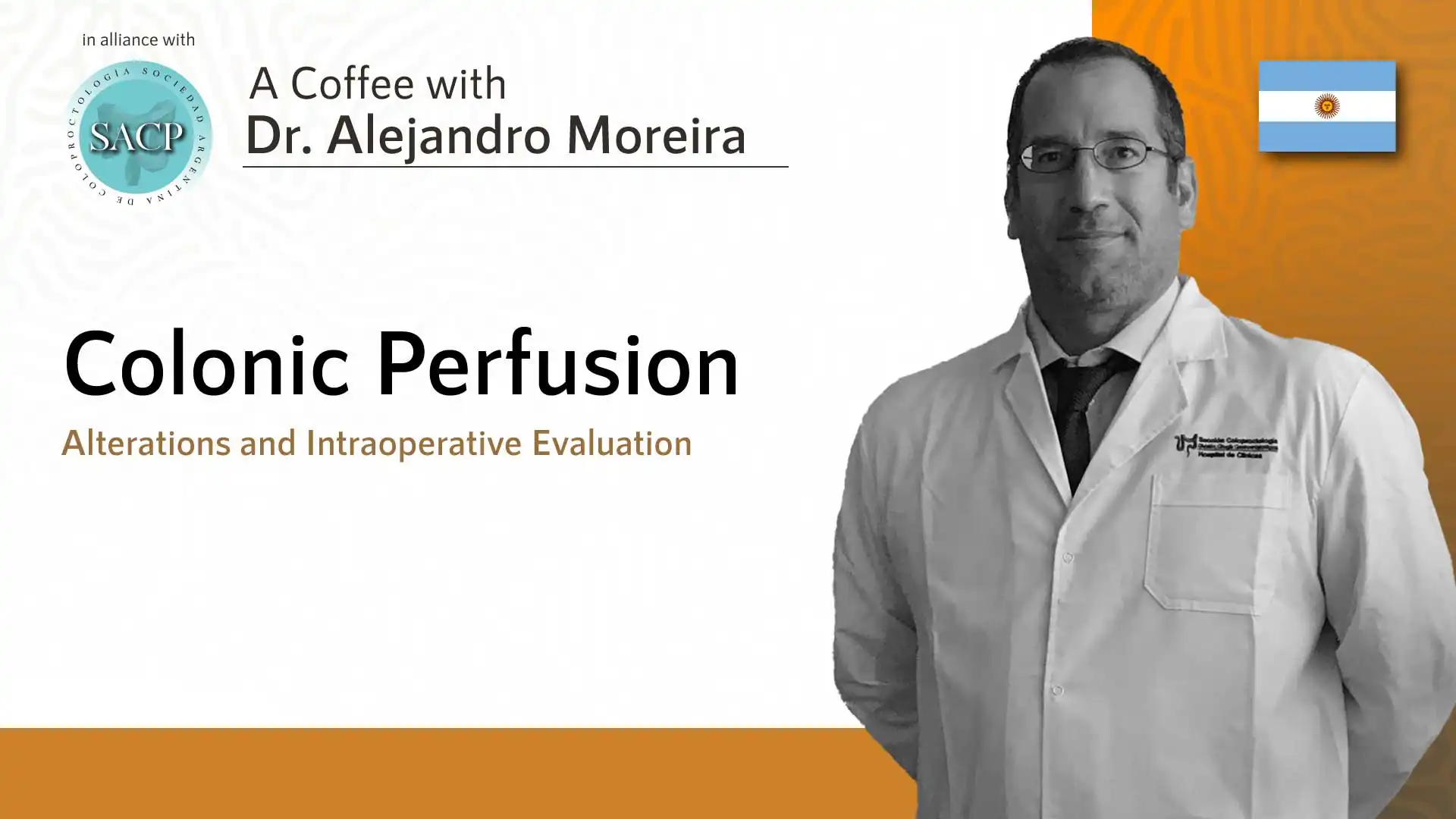
In this A Coffee With session, Dr. Alejandro Moreira, Chief of Gastrointestinal Surgery at Hospital de Clínicas, Buenos Aires., a pioneer in minimally invasive and robotic surgery, with extensive experience in colon and rectal surgery, cancer prevention, and surgical training, will delve in Join us for an insightful event on Colonic Perfusion - Alterations and Intraoperative Evaluation.
With Sociedad Argentina de Coloproctología
Published
Aug 2024

This session will be about transanal minimally invasive surgery for rectal polyps and cancer, and some tips to improve in terms of prevention and identification of this cases. It is very important to diagnose in the early steps of the disease to treat it faster. Rectal polyps present with complications such as bleeding or rectal obstruction. Every symptom must be a warning signal, and the patient must perform a quick examination. The doctor highlights the importance of the preoperative steps. The surgical procedure is a complex intervention where there are many crucial steps. The main common postoperative complication is hemorrhage that is self-contained, starts bleeding spontaneously, and in some cases requires operating on the patient again. In these cases, mesorectum infection requires intravenous administration of antibiotics during the surgery and one week after. To sum up, it is essential to prevent rectal polyps because, depending on the size of the polyps, the surgical approach will vary. Most polyps are removed by performing a colonoscopy.
Published
May 2022

With Sociedad Argentina de Coloproctología
Published
Mar 2022
Help your network discover Dr. Alejandro Moreira's clinical expertise.