
Roel Hompes, MD, PhD, FASCRS (Hon), an honorary fellow of the American Society of Colon and Rectal Surgeons (ASCRS) awarded in 2019, works as a consultant colorectal surgeon at the Academic Medical Center Amsterdam, University of Amsterdam, Netherlands. He specializes in minimally invasive surgery (laparoscopy and TAMIS), management of colorectal cancer, inflammatory bowel disease, and chronic pelvic sepsis. Roel Hompes, MD, PhD, FASCRS (Hon) graduated in 2008 and obtained his PhD in 2019. He has done extensive research in colorectal surgery and has over 200 peer-reviewed publications in the field. Dr. Hompes is a member of the European Society of Coloproctology (ESCP) Educational Committee. He is the ESCP representative in the European Society for Surgery of the Alimentary Tract (ESSAT) and member of the scientific committee of the United European Gastroenterology (UEG).
Selected publications from PubMed
Adaptive anastomosis for anterior resection in sigmoid and proximal rectal cancer or premalignant lesions: protocol for a multicentre, non-randomised, clinical effectiveness trial (ADAPT).
Grosheide L, Lameris W, Tuynman JB, D Apos Hoore A, Hompes R
Dig Surg. 2026 Aug 20;:1 doi: 10.1159/dsu/acoag002.
Authors' reply to Dr Bujko.
van der Schee L, Albers SC, Hompes R, Richir M, Tuynman JB, Bastiaansen BAJ, Moons LMG
Gut. 2026 Aug 6;75(9):1869-1870 doi: 10.1136/gutjnl-2025-337204.
Laparoscopic Versus Robot-Assisted Low Anterior Resection With Mesorectal Excision for Rectal Cancer (2014-2021): A Propensity Score-Weighted Multicenter Cohort Study of Long-term Oncological Outcomes (RESOLUTION).
Geitenbeek RTJ, Duhoky R, Burghgraef TA, Piozzi GN, Fleming CA, Masum S, Hopgood AA, Rockall TA, Denost Q, Taoum C, Hompes R, Briggs J, Khan JS, Consten ECJ, RESOLUTION and EUREKA study groups
Dis Colon Rectum. 2026 Aug 1;69(8):2052-2066 doi: 10.1097/DCR.0000000000004231.
Adjuvant chemoradiotherapy versus completion total mesorectal excision after local excision for early rectal cancer (TESAR): a multicentre, randomised, controlled, phase 3, non-inferiority trial.
Moolenaar LR, Ali M, Aufenacker TJ, Beets GL, Bosker RJI, Buffart TE, Burger JW, Dekker E, Denost Q, Doornebosch PG, Duijvendijk PV, Fabry HFJ, Geijsen ED, Gerhards MF, van Grevenstein WMU, Grotenhuis BA, Hoff C, Leijtens JWA, Peeters KCMJ, Pronk A, van der Schelling GP, Sietses C, Smits AB, Toorenvliet BR, van de Ven AWH, Verdaasdonk EGG, Vuylsteke RJCLM, van Westreenen HL, de Wilt JHW, Zimmerman DDE, Lange MM, van Grieken NCT, Bastiaansen BAJ, Hompes R, Marijnen CA, Dijkgraaf MGW, Moons LMG, Tanis PJ, Cunningham C, Tuynman JB, TESAR Study Group
Lancet Gastroenterol Hepatol. 2026 Jul;11(7):557-569 doi: 10.1016/S2468-1253(26)00109-3.

Anastomotic leaks are among the most dreaded complications in surgical practice. Leaks in colorectal surgery operations are more common when a distal colorectal, coloanal, or ileoanal anastomosis is fashioned. The high financial, medical, and functional costs which ensue following anastomotic leaks have been the impetus for continued research into methods to reduce the incidence of or ideally prevent leaks. The faculty of internationally acclaimed experts in this program address the gamut of leaks from incidence and cost to avoidance, diagnosis and treatment.
With Johnson & Johnson MedTech
Published
Feb 2022

Dr. Roel Hompes, Dr. Masaaki Ito, Dr. Antonio M. Lacy, Dr. Yves Panis, Dr. Nicolas Rotholtz and Dr. Patricia Sylla present the "Should We Change the Strategy in Patients with Compromised Tissue in Colorectal Surgery?" event.
With Johnson & Johnson MedTech
Published
Sep 2020

In the 6th episode of the Ileal Pouch Series, Dr. Roel Hompes MD PhD explains the arguments in favor of close rectal dissection in cases of protectomy for benign disease. Dr. Hompes highlights the benefits of this technique over TME dissection, mainly, less bleeding, nerve preservation, leak prevention and mitigation.In cases of FAP, close dissection is only beneficial if there is no suspicion of cancer, but more data is required.
Published
Aug 2019

Roel Hompes from the Academic Medical Center of Amsterdam talks about the lessons learned from the international TaTME registry for benign disease. After making a comprehensive review of all the developing phases of TaTME, Dr. Hompes explain how the international registry was designed as well as which were the initial variables that were studied. TaTME cases for benign disease represent less than 10% of all the registered data with high variability of indications. Technical variations when compared to TaTME for cancer, learning curve issues, postoperative outcome are discussed. Some of the current drawbacks and areas for improvement of the TaTME benign disease registry are also reviewed.
Published
Aug 2019

In this first lecture, Dr. Roel Hompes speaks about the construction of the ideal ileal pouch. He defends that the transanal approach is the logical next step after the transabdominal subtotal colectomy, since it allows for a total proctectomy under direct vision and facilitates the pouch construction and anastomosis. He also presents the first data from a collaborative study between centers all over Europe that show positive results for the transanal approach.
Published
Jul 2019
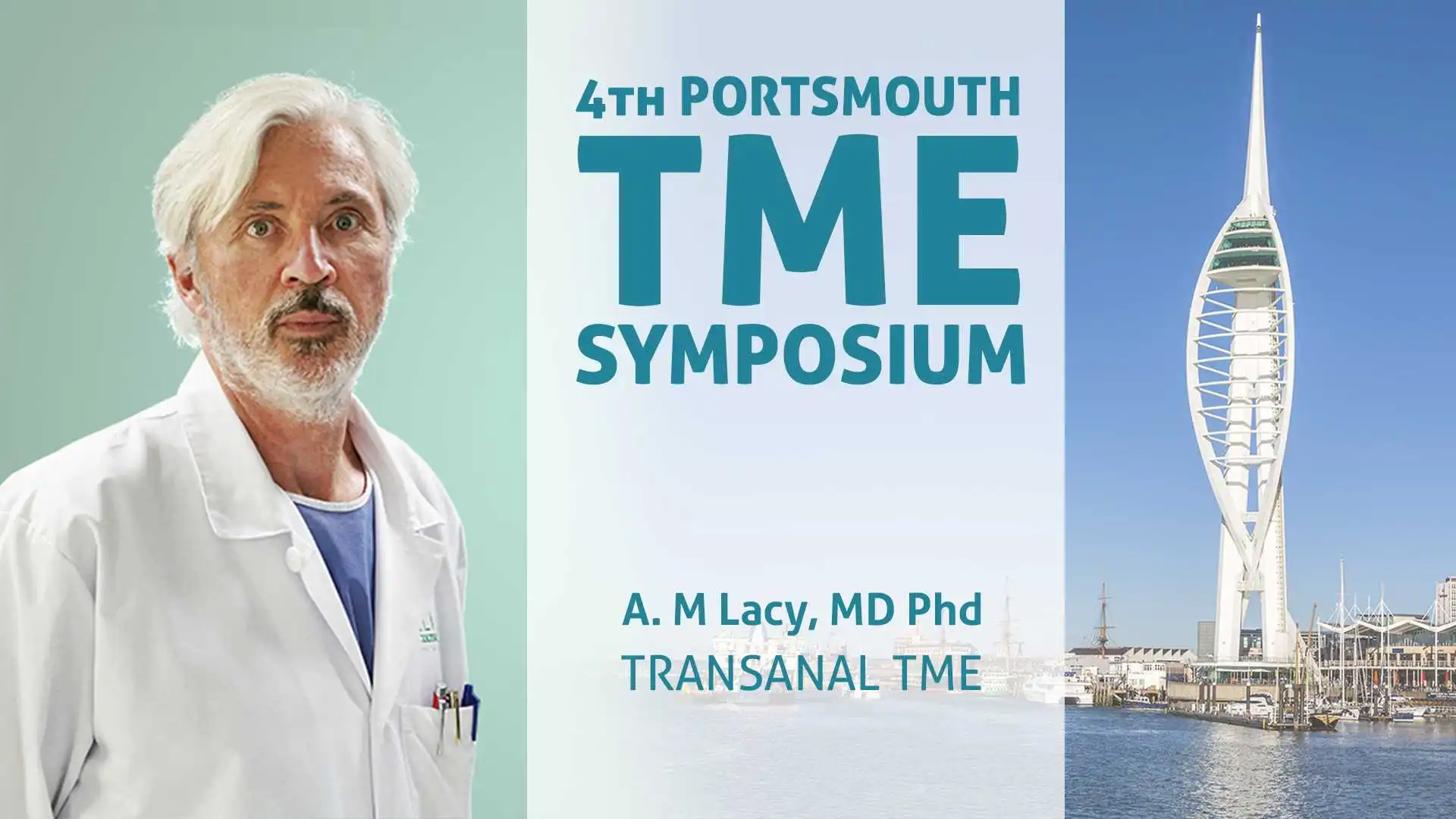
TME surgery for rectal cancer remains the gold standard. The application of laparoscopy to the management of colorectal cancer is increasing, however the rates of laparoscopy in the management of rectal cancer remain low. Narrow pelvis, obese patients and bulky rectal cancers pose serious challenges to the operating surgeon. There is a definitely a steep learning curve and the expert laparoscopic surgeon seem to get much better results from Lap TME than the others. Transanal access for TME surgery is a newer technique, which allows improved access, better vision and clarity of distal resection margin in these challenging cases.
With Intuitive
Published
Mar 2018
Help your network discover Dr. Roel Hompes's clinical expertise.