
GT Metabolic Solutions Inc. is leading the world with its development of magnetic compression anastomosis technologies. An elegant approach that uses magnets to help achieve anastomosis, the incisionless technique leaves behind no foreign material to impede the natural tissue healing process.
Our team has engineered a magnetic compression solution called delayed anastomosis technology (DAT) that surgeons can use to create consistent anastomosis while helping minimize potential complications, such as leaks and bleeds. Our solution democratizes the surgical approach to anastomosis.
GT Metabolic Solutions Inc. is disrupting the market by introducing magnetic compression anastomosis technologies to bariatric, metabolic and digestive health providers globally.
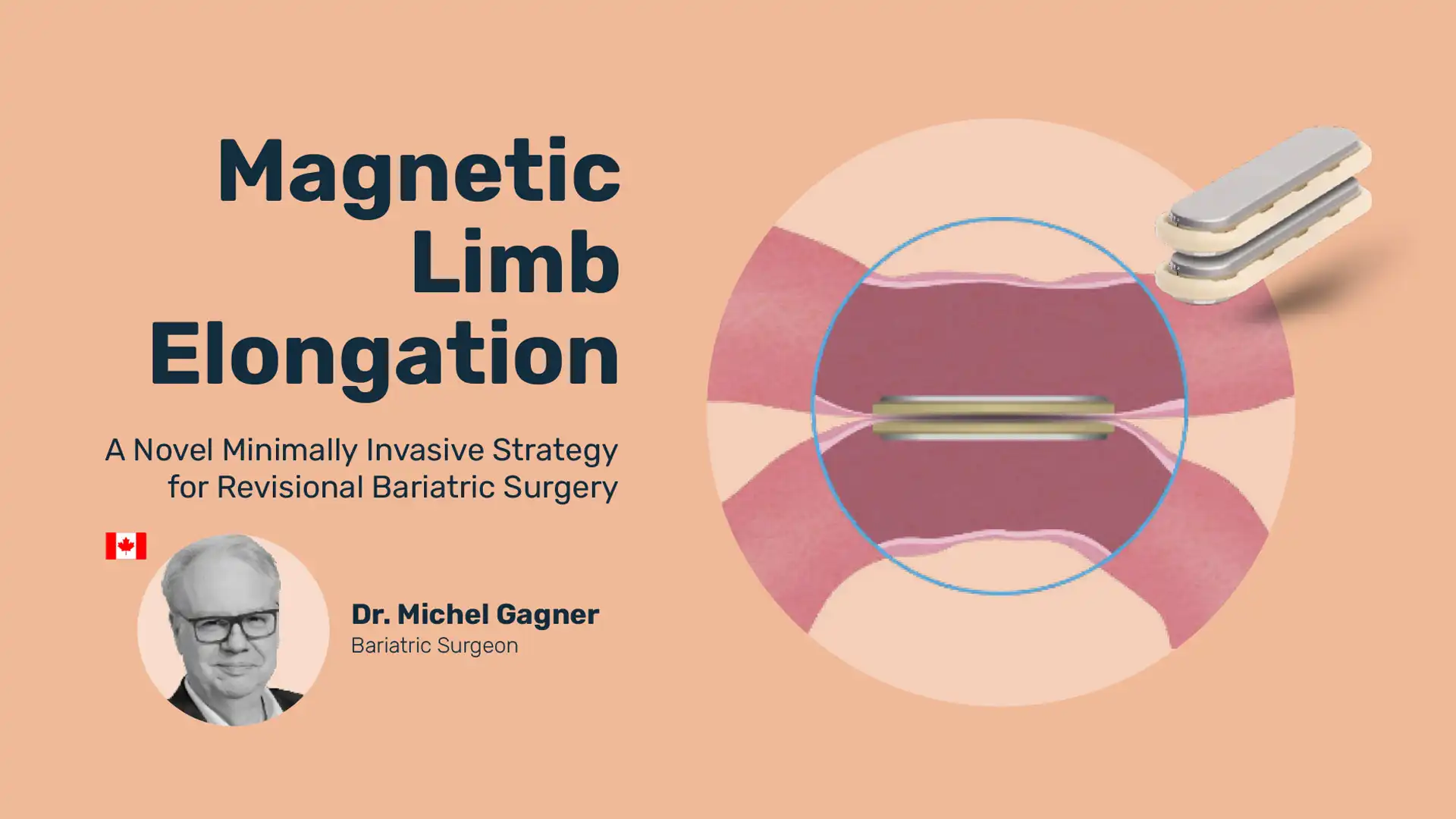
Dr. Michel Gagner (Canada) and his team at the Westmount Square Surgical Center (Canada) will perform a Magnetic Limb Elongation: A Novel MinimalIy Invasive Strategy for Revisional Bariatric and answer all your questions. Clinical Background A 66-year-old woman with an initial body mass index (BMI) of 45 kg/m² underwent a laparoscopic duodenal switch in 2000. Her BMI decreased to 22 kg/m² and remained stable for over 25 years. With advancing age, she expressed concern about the long-term nutritional demands of the procedure, particularly lifelong protein and micronutrient supplementation. Technique Description Rather than a complete reversal, a selective elongation of the common channel was considered. A laparoscopic magnetic jejuno-ileostomy was performed using paired magnets delivered into the alimentary jejunum and distal ileum, each positioned approximately 100 cm proximal to the jejuno-ileal “Y”.
Published
Jun 2026
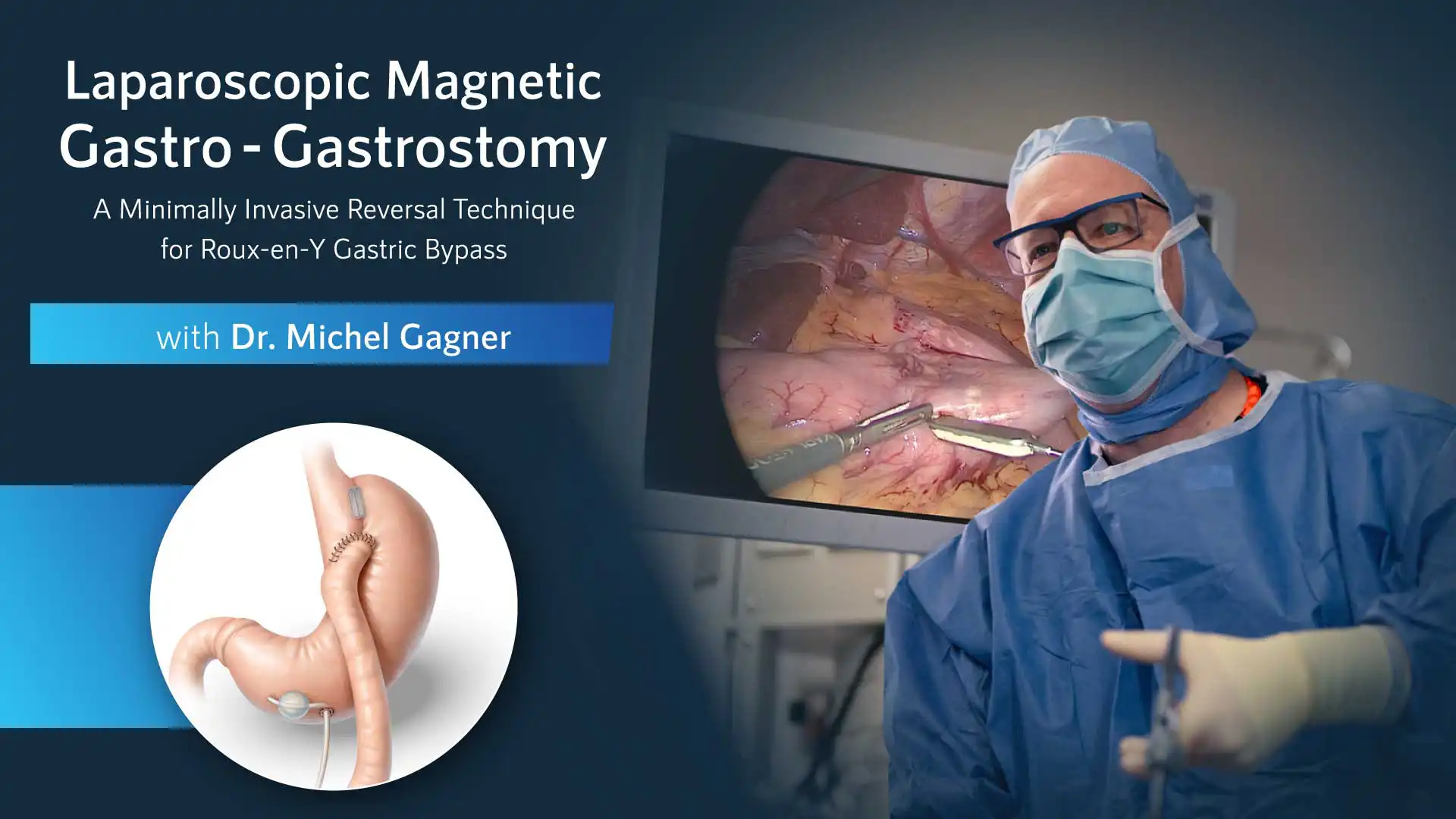
Dr. Michel Gagner (Canada) and his team at the Westmount Square Surgical Center (Canada) will perform a Laparoscopic Magnetic Gastro-Gastrostomy: A Minimally Invasive Reversal Technique for Roux-en-Y Gastric Bypass and answer all your questions. Clinical Background A 55-year-old woman with an initial body mass index of 48.6 kg/m² underwent a Roux-en-Y gastric bypass in 2021. Twelve months later, following an 80 kg weight loss, her BMI had decreased to 23.8 kg/m². In October 2025, she required emergency extensive open small-bowel resections for ischemia secondary to an internal hernia, leaving approximately 200 cm of residual small intestine. Technique Description The ensuing short-bowel syndrome prompted consideration of gastric bypass reversal because of severe anemia (hemoglobin 89 g/L), hypoproteinemia, hypoalbuminemia, hypoxemia, and peripheral edema. After several weeks of total parenteral nutrition, a magnetic gastro-gastrostomy with placement of a feeding gastrostomy was planned.
Published
Apr 2026
-for-revision-of-gastric-bypass.webp)
In this live surgery, Dr. Michel Gagner discusses the Magnetic Jejuno-Ileostomy (MagJI) as a specialized technique for the revision of gastric bypass. Developed in collaboration with GT Metabolic, the presentation details the clinical application of magnetic compression in creating anastomoses, providing surgeons with a technical overview of this minimally invasive approach for complex bariatric revisions. Dr. Michel Gagner (Canada) and his team at the Westmount Square Surgical Center (Canada) will perform a Magnetic Jejuno-Ileostomy (MagJI) for Weight Regain Post Gastric Bypass and answer all your questions. Clinical Background A 34-year-old woman, weighing 189 lb and measuring 5' 3" in height (BMI 33.5 kg/m²) at the time of consultation, has type 2 diabetes treated with dapagliflozin and a prior trial of tirzepatide. She underwent Roux-en-Y gastric bypass in 2014. Her preoperative weight was 240 lb (BMI 42.5 kg/m²), with a postoperative nadir of 128 lb (BMI 22.7 kg/m²), followed by a weight regain of 61 lb. Technique Description The procedure to be demonstrated is a Laparoscopic-Endoscopic Assisted Magnetic Jejuno-Ileostomy (MagJI). This technique is presented as a minimally invasive, non-stapled revisional option for treating weight regain and type 2 diabetes in patients with prior Roux-en-Y Gastric Bypass, creating a side-to-side anastomosis through magnetic compression to enhance malabsorption and metabolic signaling. Procedure Steps Laparoscopic Access & Identification: Mapping of the previous Roux-en-Y anatomy and measurement of bowel limbs. Proximal Magnet Delivery: Endoscopic placement of the first magnet into the jejunal Roux limb. Distal Magnet Delivery: Laparoscopic placement of the second magnet into the distal ileum. Magnetic Coupling: Alignment and "clicking" of magnets to create side-to-side serosal apposition. Seromuscular Fixation: Security suturing and mesenteric closure to prevent internal hernia. Spontaneous Anastomosis: Ischemic tissue fusion and natural evacuation of magnets. Training Objectives Understand the principle of distalisation Review recent literature on the subject Present technical details of side-to-side magnetic jejuno-ileostomy
Published
Feb 2026
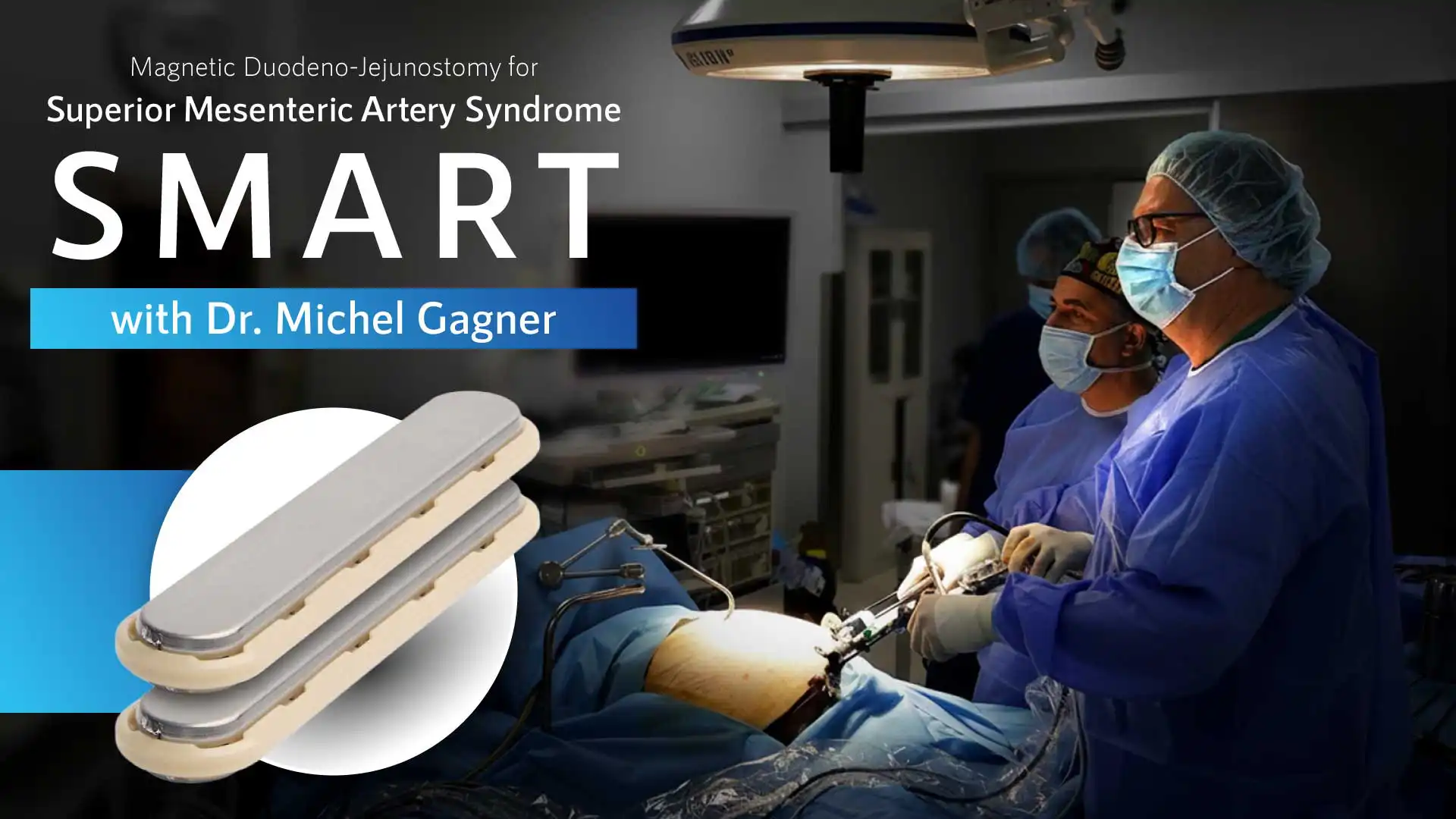
Dr. Michel Gagner (Canada) and his team at the Westmount Square Surgical Center (Canada) will perform a Magnetic Duodeno-Jejunostomy for Superior Mesenteric Artery Syndrome (SMART) and answer all your questions. Clinical Background This procedure is a treatment for Superior Mesenteric Artery Syndrome (SMAS). SMAS is a rare condition where the third portion of the duodenum is compressed by a decreased space between the superior mesenteric artery and the aorta. Common Symptoms: It often presents with symptoms of proximal small bowel obstruction , such as postprandial epigastric pain, early satiety, nausea, vomiting , and significant weight loss. Typical Patient Profile: SMAS preferentially occurs in adolescents and young adults, with a general age range of 10 to 39 years. Complications: If diagnosis is delayed, it can lead to malnutrition and dehydration , sometimes requiring enteral support or TPN. Technique Description The procedure to be demonstrated is a Laparoscopic-Endoscopic Assisted Magnetic Duodeno-Jejunostomy Side-to-Side. This technique is presented as a new option for treating SMAS. Procedure Steps The SMART procedure aims to create a patent bypass of the duodenal obstruction. The general steps are: A magnet is delivered endoscopically into the compressed third portion of the duodenum. A second magnet is delivered laparoscopically into the proximal jejunum. The two magnets self-align and attract , creating a side-to-side compression anastomosis (a new connection) between the duodenum and the jejunum. Training Objectives To demonstrate how to create a patent duodeno-jejunostomy without enterotomies (incisions into the bowel). To understand the minimally invasive aspects of this technique for treating SMAS. To learn the setup and use of the magnetic delivery system and accessory instruments.
Published
Nov 2025
Share it with your network and help spread clinical knowledge.